






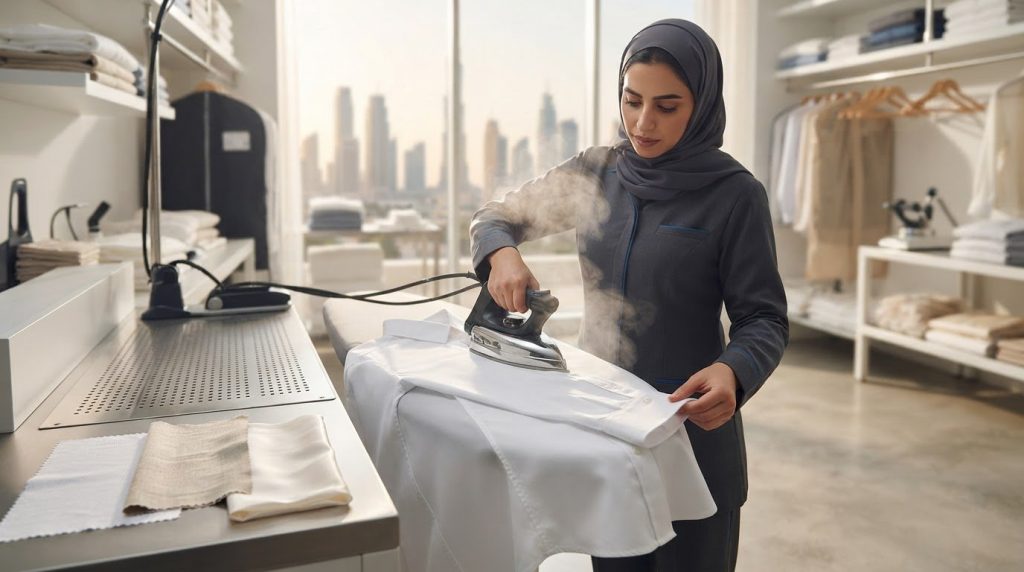
A crisp finish starts with the fabric, not the starch. For crisp shirt starch and press in Dubai, The Laundry Hub offers Steam Pressing, with handling guided by each shirt’s care label and construction. Delicate fabrics and structured garments need particular care.
Starch can give a shirt a sharper feel, but it is not suitable for every fabric or garment. The right finish depends on the material, construction and care instructions, so share your preference rather than assuming every shirt should be starched.
This guide explains which garments are suited to steam pressing, how fabric care shapes the pressing process and what affects the price of shirt pressing in Dubai. The price depends on the garment, fabric and requested finish, and is given after a quote request. You’ll also find out what to expect from turnaround, so you can plan around your wardrobe without relying on a one-size-fits-all estimate.
Key Takeaways
- Learn what affects per-item pressing costs, including garment type, fabric and the finish requested.
- Plan collection around the service’s turnaround process rather than assuming every order follows the same schedule.
- Use garment care instructions to help decide whether steam pressing is suitable for shirts and other clothing.
- Understand how laundry and pressing differ, and what to consider when comparing shirt-care options.
- See how starch level influences a shirt’s finish and why fabric care matters when choosing a crisp look.
Per-item garment pressing prices
Per-item pricing reflects the work each garment needs. A shirt, trousers and a dress can require different handling, and the requested finish also matters. Fabric, construction and starch preference help define the service requested, so include these details when asking for a quote.
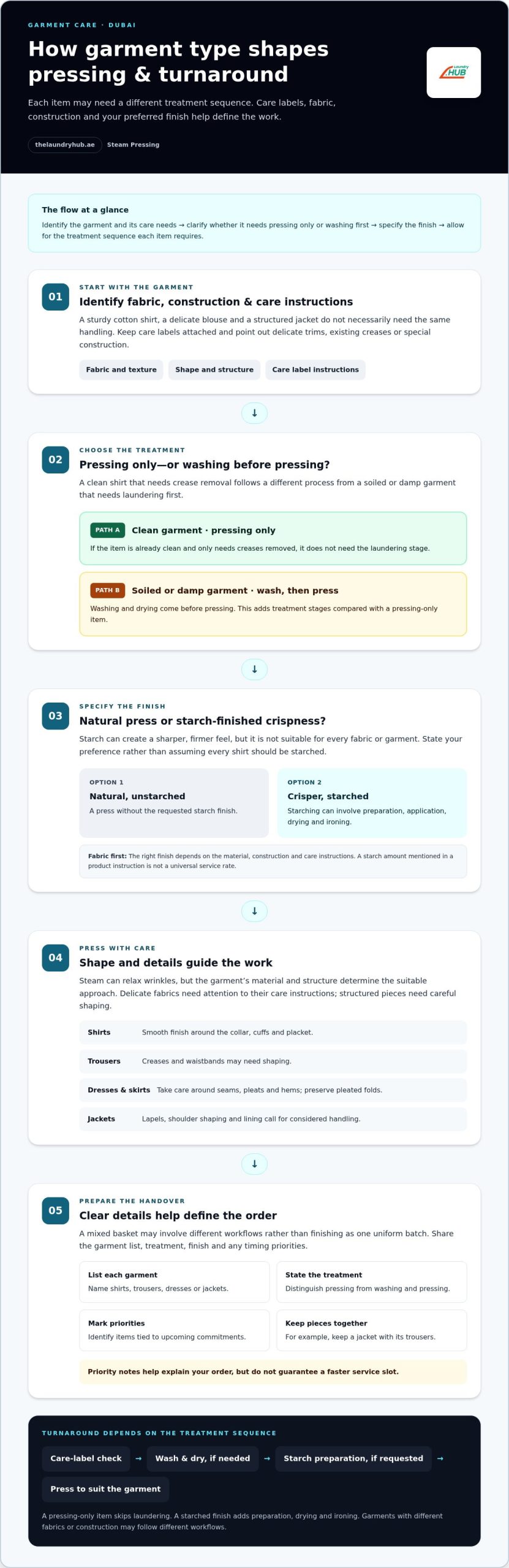
First, distinguish pressing from washing. A clean shirt that needs crease removal is different from one that needs laundering before pressing. A delicate blouse may need gentler handling than a sturdy cotton shirt, while a pleated skirt needs its folds preserved. These differences affect the work required, so an item’s category alone does not define its treatment.
Starch is another relevant detail. A firmer finish can require different preparation from a natural, unstarched press. One product description recommends 15 grams of starch per kilogram of dry laundry. That ratio is a product instruction, not a per-shirt charge or universal service rate. The amount of fabric and the requested finish help explain why starch preferences matter to a quote.
For hand washing, product instructions may call for rinsing garments in a starch solution, drying them on a washing line without rinsing, then ironing. This illustrates how starching can involve preparation beyond pressing alone. It is not a price list. When requesting service, say whether the garment is clean and whether you want starch.
- Garment: identify each item, such as a shirt or dress.
- Fabric: note delicate, textured or structured material.
- Finish: state whether you prefer starch or no starch.
- Service: distinguish pressing from washing and pressing.
Item counts help clarify an order, but a bundle does not automatically mean a lower per-item rate. List the garments and the finish you want, especially if shirts need different treatments. That gives your quote request a clear scope without relying on an assumed rate.
Home ironing offers a useful time comparison, not a price benchmark. One page estimates that ironing eight shirts at home takes more than 45 minutes. The time varies with shirt details and the finish expected. Compare that effort with the value of having the garments professionally pressed, but don’t treat home time as a service fee.
To understand a quote, consider what each garment needs. A shirt requiring pressing alone is different from one needing laundry and starch preparation. A structured garment may need more careful shaping than a simple cotton shirt. Describe each item and its desired finish so the request and quote reflect the same work.
Collection and turnaround times
Plan around the treatment each garment needs. A clean shirt requiring pressing follows a different process from one that needs washing and starch. A silk blouse, structured jacket or pleated skirt also needs careful handling. When arranging your order, share the item types, care instructions and preferred finish.
Start by identifying when you need each item. Separate essential workwear from garments with flexible timing. For example, note which shirt you need for a morning meeting and which can wait until later in the week. Clear priorities help explain your order, though they do not guarantee a faster service slot.
Turnaround depends on the treatment sequence. A soiled or damp garment needs washing and drying before pressing. Starching adds preparation, drying and ironing. A pressing-only item does not need laundering, while delicate fabrics require attention to their care instructions. A mixed basket may therefore involve different workflows rather than finishing as one uniform batch.
- List each garment: name shirts, trousers, dresses or jackets.
- Note the treatment: distinguish pressing from washing and pressing.
- State the finish: specify starch or a natural, unstarched look.
- Mark priorities: identify items linked to upcoming commitments.
Make the handover clear. Keep matching pieces together, such as a jacket and its trousers. Point out stains, delicate trims or existing creases, and keep care labels attached, especially when they include special fabric instructions. These details help define the requested work and result.
A starch-finished shirt needs more than pressing alone: it requires suitable preparation, starch application, drying and ironing. When requesting a crisp finish, say whether the shirt is already clean. This clarifies the service needed and helps set realistic expectations.
Before collection, consider how you’ll transport the finished garments. Bring hangers or a garment carrier if you need to keep collars, cuffs and pressed creases neat. At handover, count the items and review any special instructions. For a convenient next step, explore garment-care options suited to your pressing needs.
Plan around the garment mix, not just the item count. Similar shirts may follow a more consistent workflow than a basket containing shirts, dresses and structured pieces. Clear instructions, attached care labels and identified priority items help define the order from the start.
Garment types available for pressing
Shirts are a common choice for Steam Pressing. Cotton work shirts may need a smooth finish around the collar, cuffs and placket. Trousers may need their creases and waistbands shaped, while dresses and skirts require care around seams, pleats and hems. Follow the garment’s care label for suitable heat and steam.
Structured garments need a more considered approach. A jacket has lapels, shoulder shaping and lining that can lose definition under excessive heat. Pleated skirts need their folds preserved, rather than flattened during pressing. For these pieces, check the care label and point out delicate construction before treatment. Steam can relax wrinkles, but the garment’s material and structure determine the appropriate handling.
Fabric content matters as much as garment type. Cotton and linen often crease visibly, while synthetic blends may respond differently to heat. Silk, wool and embellished materials need particular attention to care instructions. Don’t assume that every fabric can take the same steam setting. Read the label first, then identify any trims, prints or decorative details that may need protection.
- Shirts: identify collar, cuffs and any starch preference.
- Trousers: point out the crease or finish you want preserved.
- Dresses: mention pleats, layered skirts or delicate trims.
- Jackets: note structured shoulders, lapels and lining.
- Delicate pieces: share the care-label instructions and fabric details.
Uniforms and everyday workwear can also benefit from a neat finish. A cotton uniform shirt, for example, may need pressing after washing, while a tailored jacket needs different handling from a simple shirt. Identify these items separately when describing your order. Starch is a finish choice, not a requirement for every garment.
Before handing over a garment, take three practical steps. Read its care label, point out stains, loose buttons or delicate trims, then say whether you want a natural or crisper, starched finish. These details help clarify the treatment and preserve features you want retained.
Starch can add firmness to a crisp shirt, but the fabric sets the limits. A lightweight shirt and a heavier cotton shirt may need different handling. Starch should not override care instructions. If the label advises against heat or steam, follow it. The same applies to dresses, trousers and jackets.
Consider Steam Pressing garment by garment. Shirts, trousers, skirts, dresses and jackets each have distinct construction details. Care labels, fabric, trims and the preferred finish guide suitable handling. Describe these features clearly so the pressing request matches the garment.
Shirt laundry and pressing prices
For a clear comparison, distinguish shirt washing from pressing. The requested treatment and finish determine the work included in the quote.
Shirt Laundry Charges
Laundry cleans a shirt; pressing smooths and shapes its appearance. A worn shirt with marks needs a different process from a clean one that only needs crease removal. Say whether the shirt needs washing, dry cleaning or another laundry treatment. The quote depends on the garment, condition, treatment and order details.
Shirt Pressing Charges
Pressing focuses on smoothing the shirt and shaping details such as its collar, cuffs and placket. A clean, dry shirt needing pressing differs from one requiring laundry first. Include any starch preference, since a crisp finish involves additional preparation. The quote should reflect the requested work, not an assumed washing charge. Compare the service scope, garment condition and finish together.
Use the same shirt to compare requests. For a clean cotton shirt that only needs a fresh finish, request pressing alone. For a shirt worn through the day, specify laundry and pressing. This avoids comparing pressing-only work with a combined cleaning-and-finishing service. List the work needed for each shirt, especially when fabrics or conditions differ.
Check that each quote covers the treatment you want. Name the garment, its condition and the desired result. For example, say “clean shirt, press only, no starch” or “worn shirt, wash and press, crisp finish.” Clear descriptions make the scope easier to compare; “shirt service” alone may not specify the same work.
Order size can affect the overall quote, but don’t assume a bundle discount or flat rate. A set of shirts may contain different fabrics, finishes or cleaning needs. Separate the items that need washing from those needing pressing only. If every shirt needs the same treatment, state that clearly. If one needs starch, identify it separately to keep the request precise.
- For laundry: describe whether the shirt is worn and needs cleaning.
- For pressing: state whether the shirt is already clean.
- For starch: identify the desired finish for each item.
- For comparison: match treatment, fabric and order size.
Care-label details make a quote request more useful. Cotton, linen and blended fabrics can have different care requirements, so mention the material, delicate trims and noticeable stains. For shirts needing both cleaning and pressing, request the combined treatment rather than adding an assumed laundry fee to a separate pressing rate.
The practical rule is simple: compare like with like. A clean shirt needing pressing is not the same request as a worn shirt needing washing, starch and pressing. Describe each item and finish, then compare quotes for the same scope of work. This gives you a sounder basis for budgeting than an assumed per-shirt rate.
Which Dubai laundries offer different shirt starch levels?
Describe starch by the finish you prefer, such as light, medium or firm. These terms communicate your preference, not a universal grading system. In Dubai, compare shirt-care services by how clearly they distinguish laundry, pressing and starch instructions.
A light finish keeps a shirt relatively soft while adding some structure. It may suit a cotton shirt worn under a jacket when you do not want a very firm collar. A medium finish gives everyday workwear more noticeable body. A firmer finish creates a more structured feel, which may suit formal shirts and sharply defined collars.
Let the fabric guide your choice. A sturdy cotton shirt may feel different after starching from a lightweight blend. A shirt with a soft drape may not suit the same finish as a crisp work shirt. Read the care label and identify the material. Starch should never override the garment’s care instructions or construction.
- Light: request a softer feel with restrained structure.
- Medium: describe a balanced finish for regular work shirts.
- Firm: request a more structured feel for formal wear.
- No starch: specify a natural finish without added stiffness.
Give a clear instruction for each shirt. For example, describe one cotton shirt as “medium starch, smooth collar” and another as “no starch, soft finish.” This is more useful than simply asking for a crisp result. If a bundle contains mixed fabrics, state the preference item by item so one finish is not assumed for every garment.
When comparing shirt-care services in Dubai, look for a clear distinction between washing and pressing. A clean shirt needing pressing differs from a worn shirt requiring laundry first. State whether you want starch and describe the result plainly. The quote depends on the garment, its condition and the requested treatment.
Starch changes how a shirt feels after ironing. A heavily starched collar may hold a sharper shape, while an unstarched shirt feels softer. Consider comfort, use and fabric before choosing. For a shirt worn all day, you may prefer less stiffness; for a formal occasion, a firmer finish may better suit your preference.
Choose your preferred finish, then describe it alongside each garment’s fabric and cleaning needs. For shirt laundry and finishing, request shirt-care service with clear instructions about starch and the result you want.
The Laundry Hub: Laundry and Dry Cleaning
The Laundry Hub provides Laundry & Dry Cleaning and Steam Pressing for garment care in Dubai. Choose Laundry & Dry Cleaning when shirts need cleaning, Steam Pressing when they need a pressed finish, or both when they need cleaning and pressing. Share the care instructions and preferred result, from a natural look to a crisper finish.
The Laundry Hub also provides Home Care, including curtain and carpet cleaning, and Shoe & Bag Care. Describe each item and its needs clearly, whether you are arranging care for a work shirt, an accessory or a household textile.
Contact The Laundry Hub to discuss your garment-care needs.
Make Your Next Garment-Care Step Simple
A sharper shirt starts with choosing the finish you want. For crisp shirt starch and press in Dubai, decide whether you prefer a soft, natural feel or a more structured look. Follow the care instructions and explain your preference when requesting Steam Pressing. That preparation makes your request specific to your wardrobe.
The Laundry Hub provides Laundry & Dry Cleaning, Shoe & Bag Care, and Home Care, including curtain and carpet cleaning. These services address garment, accessory and household textile needs alongside laundry. Choose the care suited to each item and share the relevant details.
Take the next step at a pace that suits you. Contact The Laundry Hub about pressing to discuss your shirt-care needs. With a clear request and the right finish in mind, you can move forward with confidence and make garment care easier to plan.
Frequently Asked Questions
What garment types can you steam press?
Steam Pressing can suit shirts, trousers, dresses, skirts and jackets, depending on each garment’s care label and construction. A pleated skirt, for example, needs its folds retained, while a jacket has shaped lapels and shoulders. Check the label before requesting pressing and point out delicate trims. The garment’s fabric and structure guide its handling.
What’s Included?
The requested service determines the treatment. Laundry & Dry Cleaning covers garment cleaning, while Steam Pressing focuses on smoothing and finishing clothing. If a shirt needs both, describe both needs in your request. State whether you prefer starch or a natural finish, rather than assuming starch is included in every pressing service.
Where can I get a shirt starched and pressed in Dubai?
The Laundry Hub provides Steam Pressing in Dubai for crisp shirt starching and pressing. It also provides Laundry & Dry Cleaning for garments that need cleaning before pressing. Share the shirt’s fabric, care-label instructions and preferred finish, such as a crisp or natural look. If it is already clean, say so. These details distinguish pressing alone from a request that also needs laundry.
What is the price to starch and press a shirt in Dubai?
For crisp shirt starch and pressing in Dubai, request a quote based on the shirt and treatment needed. The work may include laundry as well as pressing, and fabric, condition and preferred finish help define the request. Describe whether the shirt is clean, mention delicate details and state your starch preference rather than relying on an assumed per-shirt rate.
How long does shirt starching and pressing take in Dubai?
Standard delivery time for garments is 48 hours. The Laundry Hub also states that same-day or next-day options depend on location and booking time. For a shirt with starch, give the requested finish and say whether it needs cleaning first. That clarifies the treatment sequence when planning around a workday or event. Share any date-related priority with your service request.
How do Dubai laundries price shirt pressing versus washing and pressing?
Pressing-only and washing-and-pressing requests involve different work, so describe what each shirt needs. A clean shirt requiring a smooth finish is not the same as a worn shirt that needs cleaning before pressing. Fabric, condition and preferred finish help define the quote. Compare requests with the same treatment scope, rather than treating pressing alone as equivalent to combined care.
