
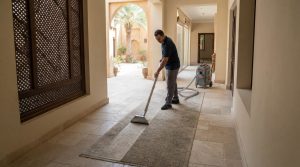






Wool rug deep cleaning in Dubai helps remove embedded soil that routine vacuuming can leave behind. For residential carpets in Dubai, professional deep cleaning is often recommended every six to twelve months, but a wool rug’s fibres, dyes and construction should guide the cleaning method. Delicate rugs need careful treatment, not simply more water or stronger products.
It’s understandable to want a thorough clean without risking a treasured rug’s texture or colour. Regular care helps manage accumulated dirt and spills, but the right approach depends on the rug and the stain.
This guide explains why carpet cleaning matters, how hand washing and dry cleaning differ, which stains may respond to treatment, and how delicate wool rugs are handled. You’ll also learn what to consider when arranging professional rug care in Dubai, so you can make an informed choice with greater confidence.
Key Takeaways
- Match the cleaning approach to the carpet’s material, construction and level of soiling; wool and other delicate fibres need particular care.
- Hand washing and dry cleaning work differently, so understanding the process helps you choose suitable care for your rug.
- Blot spills promptly and identify the stain before treatment; results depend on the stain and the rug’s fibres and dyes.
- Protect delicate wool rugs by avoiding rough handling and ensuring the rug and backing are fully dry before returning it to the floor.
Why is it important to clean carpets?
Professional deep cleaning for wool rugs in Dubai involves inspecting the rug, removing dry soil, treating suitable stains, choosing a fibre-appropriate method and drying it fully. For a Persian or handmade rug, the cleaner should consider its fibres, dyes, backing, construction and existing damage before choosing full washing or a lower-moisture method.
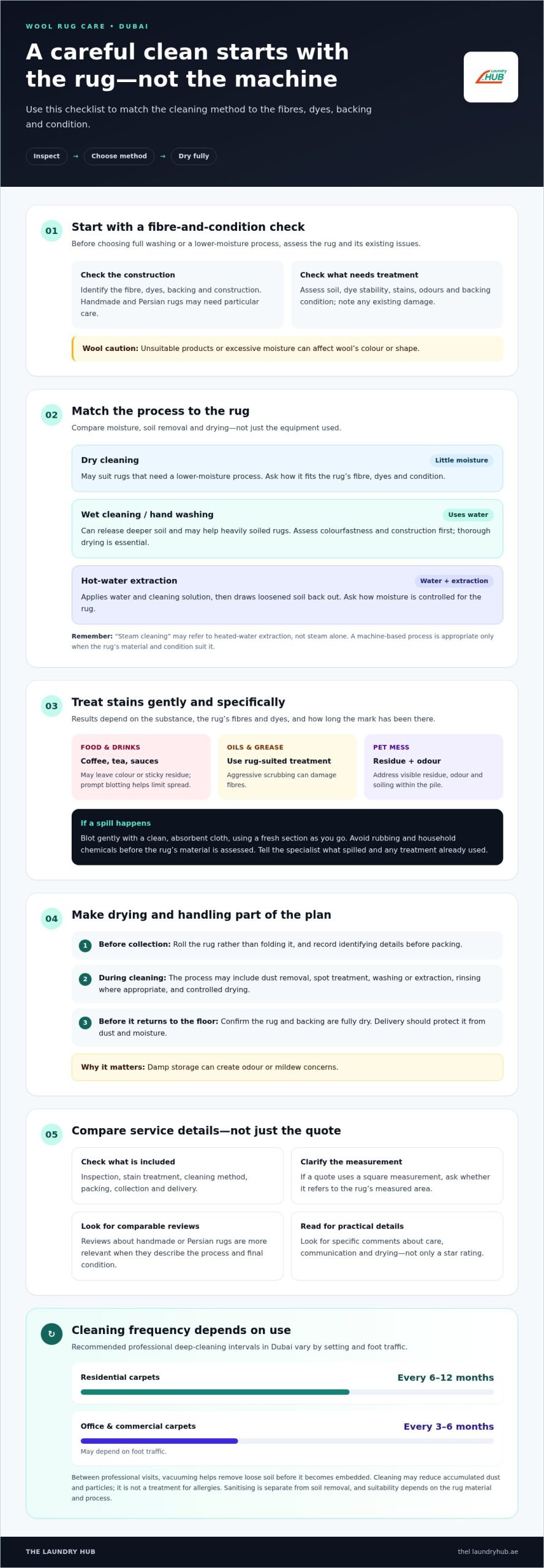
Cleaning recommendations vary by material and use. Wool can shrink or lose colour if exposed to unsuitable products or excessive moisture, while synthetic fibres may tolerate different processes. Silk and other delicate fibres also need careful assessment. In Dubai, residential carpets are commonly recommended for professional deep cleaning every six to twelve months. Office and commercial carpets may need cleaning every three to six months, depending on foot traffic. Between visits, vacuuming helps remove loose soil before it becomes embedded.
A soiled carpet can hold dust and particles that become airborne when people walk across it. Removing accumulated soil may help reduce these particles indoors, although cleaning isn’t a treatment for allergies. Sanitising is separate from soil removal: it addresses microorganisms on treated surfaces, and its suitability depends on the carpet’s material and cleaning process. Full washing can reach deeper into a rug than surface cleaning, but requires controlled drying. The backing must be fully dry before the carpet returns to the floor.
Method selection starts with an inspection. A cleaner can assess fibre type, dye stability, stains, odours and backing condition, then match the process to those findings. For collection, the rug should be rolled rather than folded, with its identifying details recorded before packing. After cleaning and drying, delivery should protect it from dust and moisture. Careful handling helps avoid damp storage, which can cause odour or mildew concerns.
Cleaning methods, including hand washing and dry cleaning
The right method depends on fibre, dye stability, backing and soil. For wool rug deep cleaning in Dubai, compare the cleaning process, drying plan and stain treatment approach, not just the equipment.
Steam and Hot-Water Extraction
Hot-water extraction applies water and cleaning solution, then uses a machine to draw loosened soil back out. Steam cleaning is often used as a general label, but the process may involve heated water rather than steam alone. Ask how the method will be used on the rug and how moisture is controlled. Wool needs careful assessment because excess heat or water can affect its fibres, shape or dyes.
Dry and Wet Cleaning Options
Dry cleaning uses little moisture and may suit rugs that need a lower-moisture process. Wet cleaning, including hand washing, uses water to release deeper soil and requires thorough drying. Washing can help with heavily soiled rugs, but the cleaner should assess colourfastness and construction first. The rug must be fully dry, including its backing, before it returns to the floor.
Professional carpet cleaning may involve dust removal, spot treatment, washing or extraction, rinsing where appropriate, and controlled drying. Hand washing lets the cleaner work carefully across the pile and fringes. A machine-based process can be efficient for suitable rugs, but equipment alone doesn’t determine whether it’s appropriate. The rug’s material and condition should guide the choice.
Compare quotes by checking what each includes: inspection, stain treatment, cleaning method, packing, collection and delivery. If a quote uses a square measurement, clarify whether it refers to the rug’s measured area. Reviews are more useful when they describe comparable carpets and rugs, such as handmade or Persian pieces, and mention the process and final condition. Look for specific comments about care, communication and drying, rather than relying only on a star rating.
What types of stains can you remove?
Common rug stains include coffee, tea, food, grease, ink and pet mess. Removal depends on the substance, the rug’s fibres and dyes, and how long the stain has set. A fresh spill may respond differently from an older mark that has bonded with the pile. A specialist begins by identifying the stain and testing a suitable treatment in an inconspicuous area.
For a spill, blot gently with a clean, absorbent cloth; rubbing can push residue deeper or distort the pile. Use a fresh section of cloth as you blot, and avoid applying household chemicals before the rug’s material is assessed. Pet accidents need attention to both visible residue and lingering odour. Deep cleaning can extract embedded soil, but the stain’s age, previous treatments and dye stability affect the result.
- Food and drinks: Coffee, tea and sauces may leave colour or sticky residue; prompt blotting helps limit spread.
- Oils and grease: These need a treatment suited to the rug, since aggressive scrubbing can damage fibres.
- Pet mess: Remove surface residue carefully, then address odour and soiling within the pile.
Dubai’s fine sand and dust can settle between rug fibres, beyond the reach of surface vacuuming. Thorough professional cleaning removes accumulated particles and may reduce allergen-bearing dust held in the pile. Sanitisation is a separate treatment, not another name for stain removal. It addresses microorganisms on treated surfaces, while the cleaning method and rug material determine which products are appropriate. Neither step should be described as a cure for allergies.
Before arranging rug cleaning in Dubai, describe the stain, its location and any treatment already used. A clear account helps the specialist plan the inspection, stain removal and cleaning. Ask how the rug will be protected during packing and delivery, and whether drying is part of the process. That practical sequence matters for wool, where damp storage can create odour or mildew concerns.
Cleaning wool and delicate rugs
In Dubai, choose a rug cleaner who assesses wool and natural fibres before selecting a method. Key risks include dye bleeding, shrinkage, pile distortion, abrasion and moisture trapped in the backing.
Wool and Natural-Fibre Expertise
A specialist should identify the rug’s material, construction, dyes, backing and existing condition before cleaning. Ask how these findings guide the method, products and drying plan. For example, a handmade wool rug with loose dyes needs a different assessment from a firmly woven rug with stable colours. Carpet cleaning should be tailored to the actual rug, rather than assuming every carpet responds alike.
Inspection also helps identify weak fringes, worn edges, previous repairs and colour changes. Share any past cleaning treatments and point out areas with stains or odours. Before pickup, photograph the rug and note visible marks; these details help record its condition during handling.
Risks During Deep Cleaning
Excessive moisture can affect wool’s shape and leave dampness in the backing. Strong or unsuitable chemicals may alter dyes, weaken fibres or leave residues. Rough brushing and aggressive stain treatment can abrade the pile, especially on delicate handmade rugs. A careful method considers how the fibres may respond and tests treatment discreetly before broader application.
Drying matters as much as washing. A rug should not return to the floor until it is fully dry, including the backing. Don’t fold a damp rug, as trapped moisture can cause odour or mildew concerns. During packing and delivery, protect it from moisture and avoid tight folds that stress the pile.
Before booking, describe the rug’s material, visible damage and any previous treatment. A useful assessment explains the planned cleaning method and how the cleaner will manage moisture, chemicals and drying. For professional handling of carpet and rug care, explore delicate rug cleaning.
The Laundry Hub: Laundry and Dry Cleaning
The Laundry Hub provides curtain and carpet cleaning for household textiles, alongside Laundry and Dry Cleaning. If a wool rug has accumulated embedded soil or needs more than routine vacuuming, its carpet cleaning service is a relevant next step. Share the rug’s material, visible stains and condition when arranging care to help guide the cleaning plan.
For everyday household care, The Laundry Hub also offers wash and fold service and Steam Pressing. Shoe & Bag Care is available for accessories that need dedicated attention. These services address different items, while curtain and carpet cleaning is the relevant offering for rugs and carpets.
For a wool rug that needs professional attention, contact The Laundry Hub to discuss its curtain and carpet cleaning service.
Choose the Next Step for Your Rug
A well-kept wool rug can remain part of your home for years, so make its care routine deliberate. Before arranging wool rug deep cleaning in Dubai, note what matters most: preserving the rug’s feel, addressing a particular mark, or refreshing a piece that has collected everyday soil. Share those priorities when discussing the service, along with any previous treatments or visible wear. Clear details help make the conversation about its care more useful.
The Laundry Hub offers curtain and carpet cleaning for household rugs, alongside Laundry and Dry Cleaning and Shoe & Bag Care for other items. Choose the service that matches what you’re looking after, then take the next step at a pace that suits you.
Contact The Laundry Hub to discuss carpet cleaning for your rug. Thoughtful care starts with a clear plan, and your next step can be simple.
Frequently Asked Questions
When Should You Use a Professional Rug Cleaner?
Use a professional cleaner when a rug has embedded soil, persistent odours, a difficult stain or signs of delicate construction. A handmade wool rug, for example, needs a different assessment from a synthetic hallway carpet. Professional care can also help when an at-home treatment leaves residue or changes the pile’s appearance. Describe the material, stain and cleaning products already used to help guide the assessment.
Do you collect and deliver rugs?
Yes, The Laundry Hub provides pickup and delivery across Dubai. For a rug, share its approximate size, material and condition when arranging the service. Mention access details, such as building entry or stairs, to help plan collection. Before handover, photograph existing marks or worn edges and point them out. This creates a helpful record of the rug’s condition.
What pro cleaning methods do you use?
Professional rug care may use dry cleaning or water-based washing, selected according to the textile and its condition. The Laundry Hub offers curtain and carpet cleaning, with the method guided by the item being treated. A Persian wool rug and a flat synthetic rug have different construction needs. Share fibre details, dyes, backing concerns and the type of soiling when discussing care.
How much does wool rug deep cleaning cost in Dubai?
The price depends on the rug and is provided after a quote request. Relevant factors include its measured area, fibre, construction, condition, soil level and the cleaning work required. A rug with delicate dyes or a heavily soiled section may need a different assessment from a simpler piece. Describe the rug accurately when requesting a quote, including any stains or previous treatments.
How do Dubai rug cleaning companies clean wool rugs safely?
Safe handling starts with assessing the wool, dyes, backing, pile and existing wear before choosing a process. For example, a rug with loose colour needs careful testing before broader stain treatment. The cleaning plan should account for moisture and drying, as well as the rug’s edges and fringes. Tell the cleaner about past treatments, repairs or areas that already feel weak.
How long does wool rug deep cleaning and drying take in Dubai?
Cleaning and drying time depends on the rug’s size, pile density, backing, cleaning method and drying conditions. A thick wool rug retains more moisture than a thin, flat-weave piece. Drying also depends on airflow and humidity where the rug is handled. Keep it off the floor until the backing is dry, and avoid folding it while damp to prevent trapped moisture.
