





A regular carpet cleaner isn’t automatically safe for wool. Careful coffee stain removal from a wool rug in Dubai starts with blotting, not rubbing, and using a mild, pH-neutral wool cleaner instead of pouring product onto the fibres. Test the solution on a hidden area first.
It’s understandable to reach for a familiar household cleaner after a coffee spill, but wool and handmade rugs need gentler care than many synthetic carpets. The wrong product or technique can affect the rug’s colour or weave. Here’s how to handle a fresh coffee or beverage stain, choose a cleaner carefully, and know when professional carpet cleaning is the better next step.
Key Takeaways
- Blot coffee spills with a clean white cloth instead of rubbing, which can spread the stain and drive it deeper into wool fibres.
- Use a gentle approach for beverages: apply an appropriate solution to a cloth, not directly onto the rug, and avoid soaking the fibres.
- Check a cleaning solution on a hidden area first, especially on handmade or naturally dyed rugs where colours and weave can be vulnerable.
- If careful attempts don’t lift the stain, professional carpet cleaning can help address it without repeated home treatment.
How To Get a Stain Out of a Wool Rug?
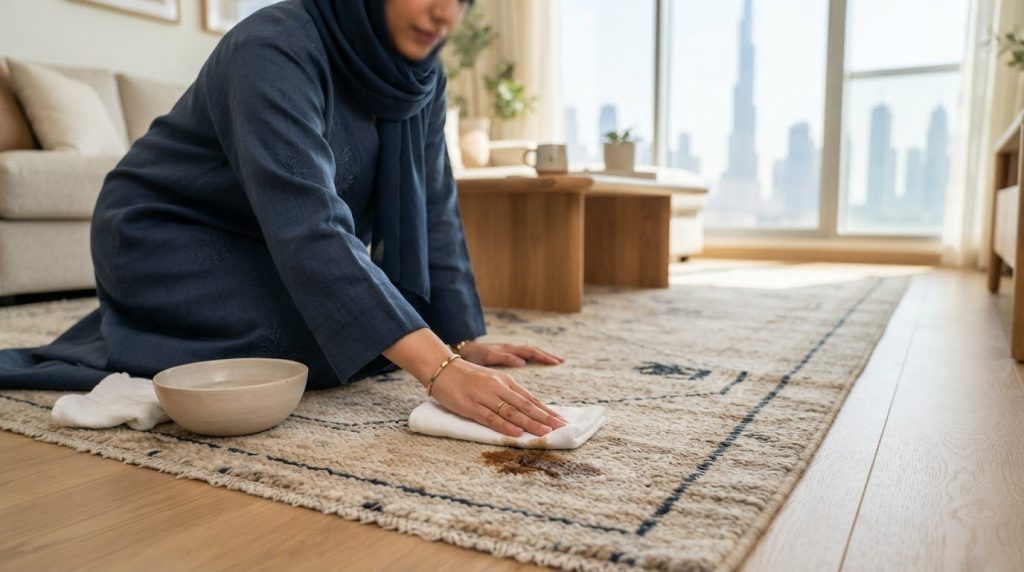
- Lift any excess gently. For a fresh spill, place a clean white towel over the wet area and press lightly. Work from the stain’s outer edge towards its centre, using a fresh part of the towel as it absorbs liquid. Don’t scrub, rub, or press hard; friction can spread the mark and push it deeper into wool fibres.
- Choose a cautious cleaning approach. Wool is more sensitive than synthetic carpet, so use a mild, pH-neutral wool cleaner for food or beverage marks. Follow the product’s instructions for mixing with warm water. Before applying it to the stain, test the solution on a hidden part of the rug and check for colour changes.
- Apply solution without soaking the rug. Dampen a clean cloth with the diluted cleaner, then gently dab the stained fibres. Don’t pour the mixture onto the rug or saturate its backing. After dabbing, use a separate clean, damp cloth to lift away residue. Keep blotting with clean cloth sections rather than rubbing back and forth.
- Adjust for the stain and rug. If the stain’s origin is unclear, use room-temperature water first; hot water can make some stains permanent. For oil or grease, blot excess promptly, then apply talcum powder, baking soda, or cornstarch for at least 20 minutes. Handmade Afghan rugs with natural dyes need particular care around heat and chemicals.
- Dry fully and prevent another spill. Let the rug air-dry completely, away from direct heat. To help prevent coffee stains and protect a wool rug after cleaning, place doormats at entrances, keep outdoor shoes off the rug, and vacuum at least once a week. These steps help limit sand, dust, and moisture settling among the fibres.
Coffee and beverage stain removal
- Identify what spilled. Note whether the coffee was black, milky, or sweetened. A latte or sweetened coffee can leave more than a dark mark. This detail helps you judge whether the visible stain has cleared or whether residue remains in the fibres. Treat the spill promptly, before it dries and becomes harder to lift.
- Use a measured coffee-cleaning approach. For coffee on carpet, a recommended solution combines white vinegar, mild dish soap, and lukewarm water. Don’t guess at proportions or pour the mixture onto wool. Apply it sparingly with a clean cloth, and gently dab the affected fibres. Keep the rug from becoming saturated, especially around its backing.
- Lift the solution and residue. After treating the mark, dab the area with a separate clean, damp cloth. This helps remove remaining cleaner and coffee residue. Use a dry towel afterwards to absorb moisture, pressing gently rather than scrubbing. Check the cloth as you work; a fresh section prevents transferred coffee from returning to the rug.
- Handle other drinks according to their stain. Red wine needs a different first step: cover the area with salt and leave it for 10 minutes to absorb some wine. Remove the salt carefully, then assess the mark. On wool or handmade rugs, test any cleaning solution in a hidden area first, since dyes and fibres may react differently.
- Stop before repeated treatment causes damage. If the stain remains after a couple of careful attempts, don’t keep adding cleaner or moisture. Repeated dabbing can leave residue or affect delicate fibres. For a persistent beverage mark, professional carpet cleaning is a sensible next step, particularly for a handmade rug or one with natural dyes.
For a coffee spill on carpet, blot first, then gently dab with a mixture of white vinegar, mild dish soap, and lukewarm water. For food and beverage stains, mix a mild, pH-neutral wool carpet cleaner with warm water according to the manufacturer’s instructions. Don’t estimate the dilution, and use the cleaner as directed for the stain.

Removing coffee stains from carpets
- Check the rug before choosing a method. Identify whether it’s wool, synthetic carpet, or handmade. Wool fibres need milder solutions than synthetic fibres. A handmade Afghan rug may contain natural dyes that react to heat or chemicals. For coffee stain removal from a wool rug in Dubai, start by checking the material before selecting a cleaner.
- Test the product away from view. Apply a small amount of your chosen solution to a hidden area. Follow its instructions, then inspect for colour change before treating the coffee mark. This matters especially for handmade rugs, where the wrong product or technique can cause colours to bleed or weaken the weave. Don’t skip this test because the stain looks small.
- Match the water to what you know. If the stain’s origin is uncertain, start with room-temperature water; hot water can make some stains permanent. For a known coffee spill, one method uses white vinegar, mild dish soap, and lukewarm water. On wool, use a wool-safe cleaner mixed with warm water according to its manufacturer’s instructions.
- Apply cleaner in controlled amounts. Dampen a clean cloth with the selected solution, then gently dab the stain. Avoid pouring liquid directly onto the carpet or soaking its backing. After treatment, blot with a clean, damp cloth to lift cleaner and loosened coffee. Use fresh cloth areas as the mark transfers, rather than rubbing it across the fibres.
- Stop if careful treatment isn’t working. Check the stain after each attempt, once the area has been blotted and allowed to dry. If it remains after a couple of tries, don’t add more products or pressure. Repeated treatment can leave residue or damage wool. For coffee stain removal from a wool rug in Dubai, consider professional care if a delicate or handmade carpet still shows a mark.
How to remove a fresh coffee stain from a wool rug safely
- Clear the area and absorb the spill. Move cups, furniture, and other items away from the wet spot. Lay a clean white towel over the coffee, then press gently to draw up liquid. Start at the stain’s edge and work inward. Replace the towel section as it darkens, so absorbed coffee doesn’t transfer back onto the wool.
- Check the rug and cleaner before treating it. Confirm the rug is wool, and note whether it’s handmade or naturally dyed. Choose a mild, pH-neutral cleaner made for wool carpet, then follow its label for mixing with warm water. Test the mixture on a hidden area first. Look for colour transfer or a change in the fibres.
- Dab the stain without saturating the rug. Dampen a clean cloth with the prepared solution. Press it gently onto the coffee mark, lifting and repositioning the cloth between dabs. Don’t scrub or pour cleaner directly onto the wool. Keeping the solution controlled helps limit moisture reaching the rug’s backing and surrounding fibres.
- Remove cleaner and check the result. Use a separate clean cloth dampened with water to dab the treated area. Then press with a dry towel to absorb remaining moisture. Inspect the fibres in good light. If a brown outline remains, avoid adding stronger chemicals or more heat; either can make delicate wool or natural dyes harder to manage.
- Let the rug dry naturally. Keep people and furniture off the damp spot, and allow the wool to air-dry fully. Don’t use a hair dryer, heater, or direct heat. For a persistent mark or a valuable handmade rug, arrange professional carpet cleaning instead of repeating increasingly strong home treatments.
Apply the solution sparingly rather than pouring it onto the rug and saturating the fibres. Let the wool air-dry fully, away from direct heat.
The Laundry Hub: Laundry and Dry Cleaning
The Laundry Hub provides curtain and carpet cleaning for household rugs and carpets in Dubai. If a coffee mark remains after careful home treatment, or the rug is handmade, naturally dyed, or particularly delicate, professional cleaning is a practical next step. Repeatedly applying household products can leave residue or affect the fibres, so stop before trying a stronger cleaner.
For a fresh spill, gently blot the area while arranging the next step. Tell the cleaning team what was spilled and what you have already applied, so they have useful context about the stain. The Laundry Hub also provides Laundry and Dry Cleaning for garments and household textiles.
Contact The Laundry Hub to arrange carpet cleaning for your rug.
Choose a careful next step for your rug
A coffee mark on wool can be more than a surface issue. The rug’s dye, weave, and previous cleaning treatments all affect how it responds to further care. If the stain remains, don’t move on to stronger household products. Protecting the fibres and preserving the rug’s appearance matter as much as treating the visible mark.
Careful coffee stain removal from a wool rug in Dubai means knowing when to stop home treatment. If the rug is handmade, naturally dyed, or still marked after cautious cleaning, professional carpet care is a considered next step. When arranging cleaning with The Laundry Hub, share what was spilled and which products you’ve already used.
For help with your rug, contact The Laundry Hub about carpet cleaning. A thoughtful next step can help you care for the rug with greater confidence.
Frequently Asked Questions
Are regular carpet cleaners safe for wool or handmade rugs?
No. A regular carpet cleaner isn’t automatically suitable for wool or handmade rugs. Formulas designed for synthetic carpet may be too strong for wool fibres or natural dyes. Check that the label specifically says the product is suitable for wool, and follow its directions. For an Afghan rug or one with uncertain dyes, avoid trying several products, as extra treatment can complicate later stain removal.
How do I remove a stain that has already dried?
Gently loosen dried residue without scraping the rug’s pile. Use a barely damp, clean cloth to soften the mark, then dab with a wool-safe cleaning solution applied to the cloth. Work in small areas and proceed gently. If the stain resists, stop rather than applying more force or layering different cleaners.
What are the risks of color bleeding, shrinkage, or mildew when cleaning wool rugs
The wrong product or technique can cause colours to bleed or weaken a handmade rug’s weave. Wool and natural dyes can also be sensitive to heat, chemicals, and aggressive cleaning methods.
Which rug cleaning companies in Dubai specialize in wool rugs and coffee stains
The Laundry Hub provides carpet cleaning for household rugs and carpets in Dubai, including care for delicate or handmade rugs.
Can vinegar or baking soda damage a wool rug
For coffee stains, the guide recommends a mixture of vinegar, mild dish soap, and lukewarm water, tested on a hidden area and applied sparingly. Baking soda is suggested for oil or grease stains; test it on a hidden area first, especially on wool or handmade rugs.
