






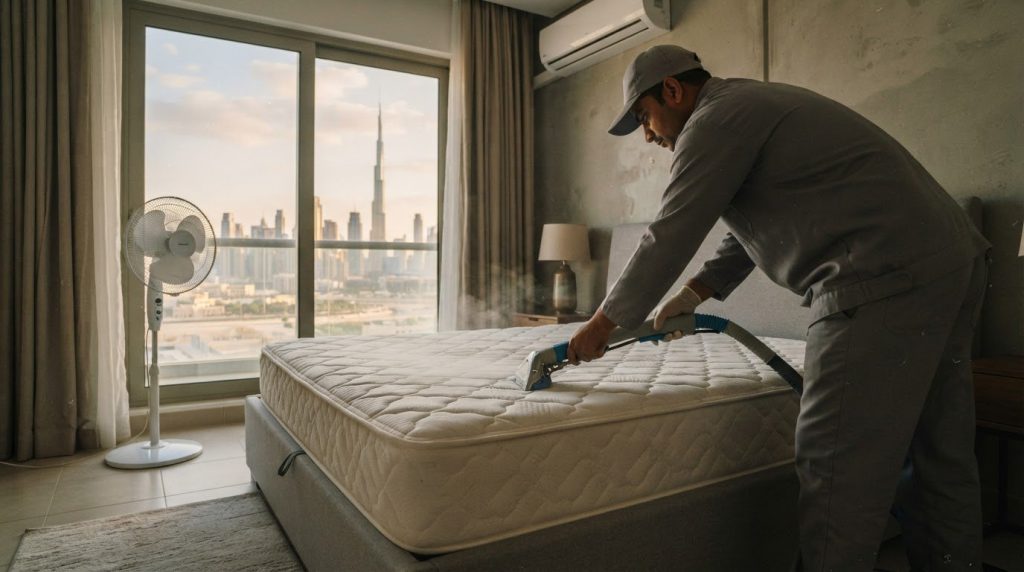
Drying time matters as much as the steam treatment itself. After bedding allergen steam treatment in Dubai, a mattress may remain slightly damp for 2-4 hours, while complete drying typically takes several hours. Good airflow helps, and bedding should go back on only once the mattress is fully dry.
Plan for drying time, especially if the bed is needed that evening. Drying depends on airflow and how much moisture the cleaning method leaves in the mattress, so allow extra time before putting sheets back on.
This guide explains what to expect from steam treatment, how it may reduce dust mites and allergen particles, and why it is not a cure for allergies or a stand-alone bed bug treatment. It also covers odours, drying factors, and when professional care for household textiles may help.
Key Takeaways
- Plan mattress cleaning as part of routine home care, adjusting the interval to household needs such as pets or dust sensitivity.
- Steam can reduce dust mites and allergen particles, but mattress cleaning alone does not cure allergies or reliably resolve a bed bug infestation.
- Understand how moisture, airflow and cleaning methods affect odours, and let the mattress dry fully before replacing its bedding.
- For related fabric care, The Laundry Hub’s steam pressing serves garments, while curtain and carpet cleaning covers other household textiles.
Is mattress cleaning a treatment for bed bugs or an allergy cure?
Mattress cleaning can reduce dust and allergen buildup, but it does not cure allergies or reliably treat bed bugs. In Dubai, cleaning needs depend on the household, the mattress condition, and its care instructions. For bedding allergen steam treatment in Dubai, the mattress material should guide the method.
Cleaning Cot Mattresses and Sensitive Households
For cot mattresses and beds used by children, pets, or allergy-sensitive people, consider the material and manufacturer’s instructions before choosing a cleaning method. A household with asthma, eczema, dust allergies, or a pet sleeping on the bed may schedule deep cleaning every six months. Others can use once or twice yearly as a practical starting point. Let the mattress dry fully before use.
Dust Mite and Allergen-Focused Cleaning
Deep vacuuming and controlled steam cleaning can reduce dust mites and their waste particles inside a mattress. Steam at 180°C is described as killing dust mites and denaturing waste proteins linked to allergic reactions. Dust mites die instantly above 60°C. These steps target specific allergen sources, not every trigger in a bedroom. Wash sheets weekly in hot water when fabric instructions allow.
Bedding Steam Treatment Options in Dubai
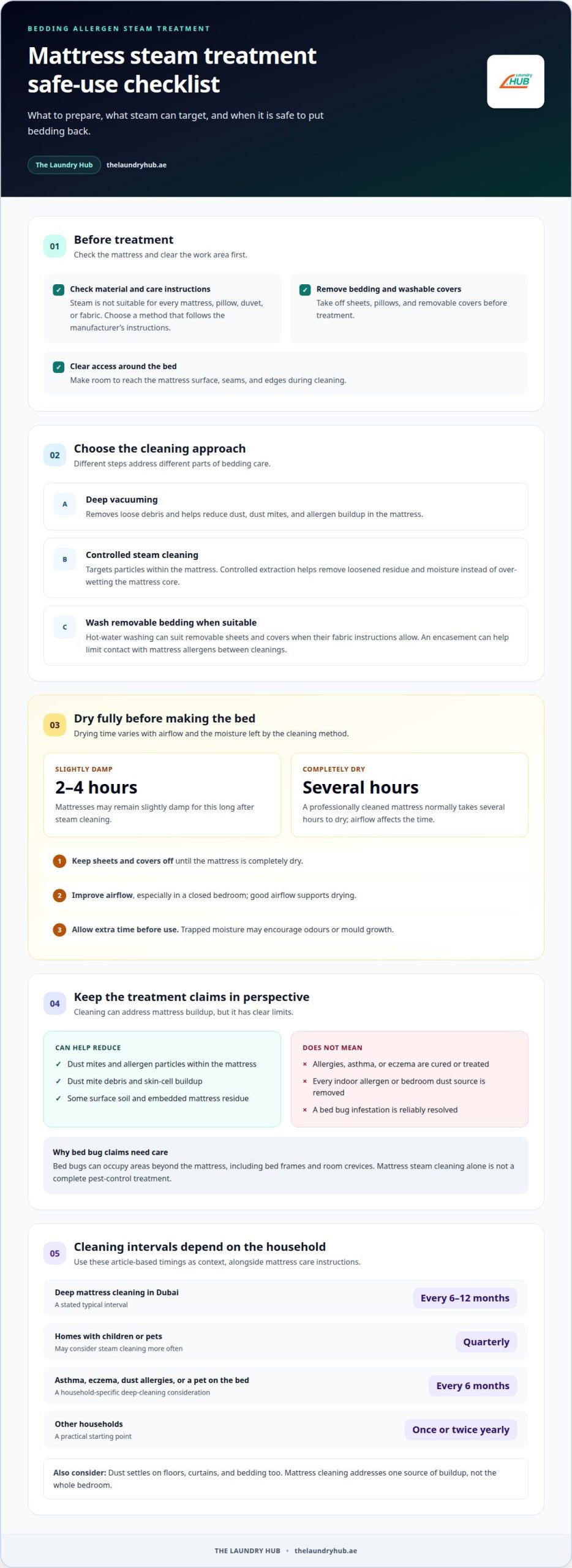
A bedding allergen steam treatment in Dubai may combine deep vacuuming with controlled steam cleaning. Vacuuming removes loose debris, while steam targets particles within the mattress. Hot washing suits removable sheets and covers; encasements help limit contact between cleanings. Deep mattress cleaning every 6-12 months is typical in Dubai. Homes with children or pets may consider quarterly steam cleaning.
Bedding Preparation, Fabric Safety, and Treatment Choices
Before treatment, remove sheets, pillows, and washable covers, then clear access around the bed. Steam is not suitable for every mattress, pillow, duvet, or fabric. Follow the material and manufacturer’s care instructions when choosing a method. Whether treatment is chemical-free depends on the products used. Let the mattress dry completely before replacing the bedding, as trapped moisture may encourage odours or mould growth.
Limits of allergy and pest-treatment claims
Mattress deep cleaning can reduce dust mite debris and skin cells, but it cannot remove every indoor allergen. Dust also settles on floors, curtains, and bedding, so cleaning one mattress does not address exposure throughout the home. In Dubai’s warm, dusty environment, dust and moisture can build up in mattresses. Vacuuming and controlled steam cleaning target particles in the mattress, but do not prevent new dust from settling. Start by noting where dust collects, including the bed, nearby carpet, and other fabric surfaces.
Allergy symptoms can have multiple triggers, so cleaning should not be presented as a cure. Reducing particles in a mattress may limit one source of exposure, but it does not diagnose or treat asthma, eczema, or allergies. Keep the purpose clear: mattress cleaning addresses buildup on or within the mattress, while other household sources need separate care. Washing removable bedding and cleaning adjacent surfaces can complement mattress care. Wash sheets weekly in hot water if the fabric instructions allow. A mattress encasement can also limit contact with mattress allergens between cleanings.
Bed bug claims need even greater care. Standard mattress cleaning alone may not eliminate an infestation; bed bugs can occupy areas beyond the mattress, including bed frames and room crevices. Steam or vacuuming on a mattress should not be described as a complete pest-control treatment. If signs appear, such as live insects or clustered bites, distinguish cleaning from pest treatment rather than relying on a mattress service alone. Odour removal, stain treatment, and sanitization also don’t prove that an allergy trigger or infestation has been eliminated. For dust settling beyond the bed, curtain and carpet cleaning can address those separate household textiles.
Sanitization and odor control
Steam cleaning targets surface soil and some embedded mattress buildup. Body oils, sweat, and dust can contribute to stale bedroom odours. Extraction removes loosened residue and moisture instead of masking smells with fragrance. Odour control depends on cleaning the affected area and drying the mattress thoroughly. A lingering smell may come from beneath or beside the mattress, not just its surface. Mattress cleaning in Dubai should distinguish removable surface residue from deeper moisture or contamination.
Steam at 180°C is claimed to achieve a 99.9% pathogen elimination rate. That figure describes a sanitization claim, not a guarantee against every germ or a substitute for pest treatment. The cleaning process also matters: controlled extraction helps avoid over-wetting the mattress core. Before treatment, the mattress material and condition guide the method. This distinction is important because excessive moisture can remain inside, even when the outer surface feels dry.
After steam cleaning, upholstery and mattresses may stay slightly damp for 2-4 hours. A professionally cleaned mattress normally takes several hours to dry, with airflow affecting the time. Keep sheets and covers off until the mattress is completely dry. Trapped moisture may encourage odour or mould growth. In a closed bedroom, improving airflow supports drying; avoid covering a damp mattress with bedding. Allergy-sensitive households should allow extra drying time before use.
Are there health or mould risks from steam-cleaning bedding? The main moisture concern is dampness trapped in the mattress, which may encourage odours or mould growth. Let the mattress dry completely before use to reduce that risk. Steam treatment is not suitable for every mattress, so check the material and manufacturer’s instructions. After cleaning, inspect the whole surface, including seams and edges. If a musty smell persists once dry, the source may need separate assessment. Sanitisation, stain removal, and odour control are related aims, but they are not interchangeable results.
Potential allergy and asthma relief
Reducing bedroom allergens means addressing more than the mattress. Dust mites and particles can collect in bedding, upholstery, curtains, and nearby furniture. Steam cleaning targets mattress buildup, while cleaning other fabric surfaces addresses separate sources. Reducing particles in one area can support a cleaner sleep space, but cannot remove every trigger throughout the home. Dust entering through windows or settling on other surfaces can increase indoor exposure again.
A practical routine pairs mattress care with regular fabric cleaning. Wash sheets weekly in hot water when their care labels allow. Use an encasement to limit contact with mattress allergens between cleanings. Vacuum nearby furniture and upholstery, then consider carpet care where dust gathers. Professional carpet cleaning every 6-9 months is suggested for Dubai’s dusty environment. Follow fabric care instructions, since heat and moisture suit some materials better than others.
For an allergy-sensitive household, consider what each cleaning step targets. Mattress cleaning can reduce dust mites and their waste particles, but it does not treat asthma or eliminate every possible trigger. A cleaned mattress may still be surrounded by dust on curtains, carpets, or upholstered furniture. Include those surfaces in the household cleaning plan, and let treated items dry completely. Trapped moisture can encourage odours or mould growth.
Steam treatment also has limits: it isn’t suitable for every mattress or fabric. The material, condition, and manufacturer’s care instructions guide the method. Keep washable bedding care separate from surface treatment, and replace bedding only after the mattress is fully dry. If curtains and carpets also hold household dust, arrange curtain and carpet cleaning as part of a broader bedroom-care routine.
The Laundry Hub: Steam Pressing
The Laundry Hub offers Steam Pressing for garments that need a neat, refreshed finish. Although it is separate from mattress treatment, it can complement a laundry routine when clean bedding and clothing are both priorities. Laundry and Dry Cleaning provides care for washable household fabrics, while Curtain and carpet cleaning addresses dust on room textiles.
Choose a service that matches the item: garment pressing for creases, laundry care for washable fabrics, or Curtain and carpet cleaning for room textiles. Mattress allergen concerns need mattress-specific care guided by the material and manufacturer’s instructions.
For garment or household fabric care, contact The Laundry Hub to discuss the service that suits your items.
Build a More Manageable Textile-Care Routine
Treat bedroom care as a household routine, rather than a single appointment. When planning bedding allergen steam treatment in Dubai, distinguish mattress-specific decisions from care for washable bedding, clothing, and room fabrics. This keeps expectations clear and helps you organize care according to the materials and items that need attention.
The Laundry Hub supports wider textile care with Laundry and Dry Cleaning, Shoe & Bag Care, and Curtain and carpet cleaning. These services are useful when garments, accessories, or soft furnishings also need professional care. Make a list of the items and their care needs, then choose the service that fits each category. This is a practical way to avoid treating every fabric alike.
For help arranging care for these items, Contact The Laundry Hub. A considered routine can make household textile care easier to manage.
Frequently Asked Questions
How long does it take for surfaces to dry after steam cleaning?
Drying time varies by surface, moisture level, and airflow. Upholstery and mattresses may remain slightly damp for 2-4 hours, while carpets typically need 6-8 hours. A bedroom with limited airflow may take longer than a well-ventilated space. Keep fabric surfaces uncovered as they dry, and avoid placing items back on damp upholstery or carpet.
How long until the mattress is dry?
A professionally cleaned mattress usually takes several hours to dry, and airflow affects the time. It may feel only slightly damp while its inner layers are still wet, so touch alone is not a reliable way to decide whether to remake the bed. Leave sheets off until the mattress is completely dry to avoid trapping moisture beneath the bedding.
Can Mattress Cleaning Help With Dust Mite Allergies?
Mattress cleaning can reduce dust mites and their waste particles, which contribute to allergen buildup in bedding. It can support a cleaner sleep environment, but it does not diagnose or cure allergies. A cleaned mattress, for example, will not remove dust from curtains or upholstered furniture. Keep washing removable bedding according to its care label.
How much does bedding steam cleaning cost in Dubai?
The cost depends on the service, item size, material, condition, and treatment required. The Laundry Hub uses item-by-item pricing for its services. Mattress treatment, removable bedding, and other household textiles are different items with different cleaning requirements, so identify what needs care when choosing a service.
Which Dubai companies offer mattress and bedding allergen treatment?
The Laundry Hub provides laundry and dry cleaning, Curtain and carpet cleaning, and other textile-care services in Dubai. These services cover washable bedding and household fabrics, while mattress treatment requires a mattress-specific method. Match the care to the item: launder removable sheets according to their fabric instructions, and handle mattress materials appropriately.
Does steam treatment kill dust mites and remove allergens from bedding?
Steam treatment can kill dust mites and reduce allergen particles in a mattress. It cannot remove every allergen in a bedroom or prevent new dust from settling. Dust on nearby curtains, for example, remains a separate source. Pair mattress care with washing removable bedding when its care label permits, and make sure the mattress is dry before replacing the bedding.
