






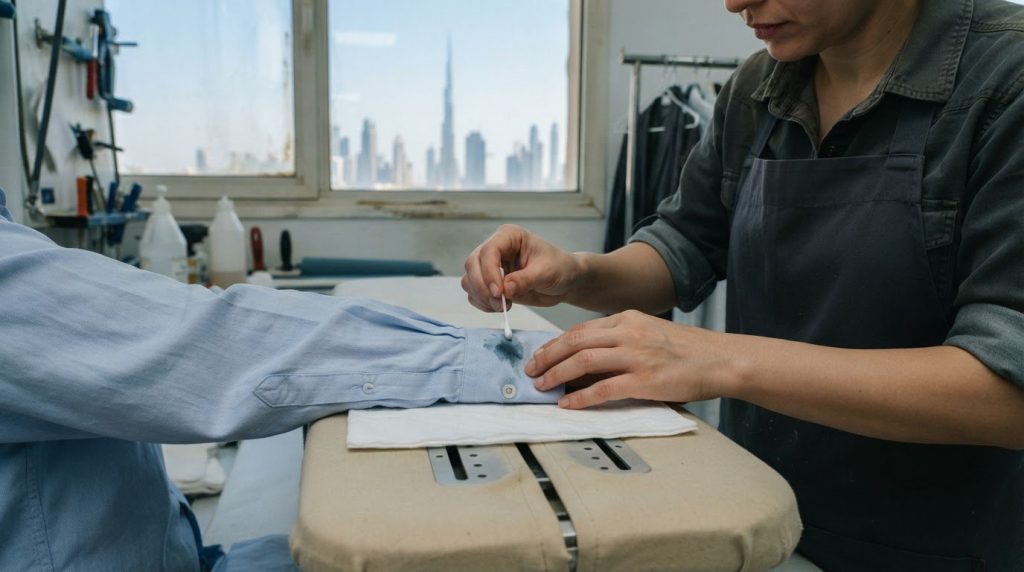
An old ink stain doesn’t automatically mean a dress shirt is beyond saving. Professional ink stain removal for dress shirts in Dubai may lift an older mark, but the result depends on the ink, fabric, how deeply the stain has set, and whether heat has reached it. Heat can make ink more difficult to remove, so avoid ironing or drying a stained shirt before it’s assessed.
A pen mark can make it seem as though a dress shirt is ruined, especially when the ink type is unclear or the stain has dried. This guide explains what affects removal and why different inks need different treatment.
Learn what to do with a fresh stain, when home treatment could risk delicate fabric, and how professional dry cleaning handles ink marks. The goal is to help you choose a careful next step without making the stain harder to treat.
Key Takeaways
- Older ink marks may still respond to treatment; the ink’s composition, stain depth, and shirt fabric help determine the approach.
- Different ink types can call for different stain treatments, so identifying the mark helps avoid choosing an unsuitable method.
- For a fresh stain, blot gently instead of rubbing, which can spread ink across the fabric.
- Delicate shirts, persistent marks, and uncertain home treatments are situations where professional dry cleaning can provide a more considered approach.
Can Old Stains Be Removed?
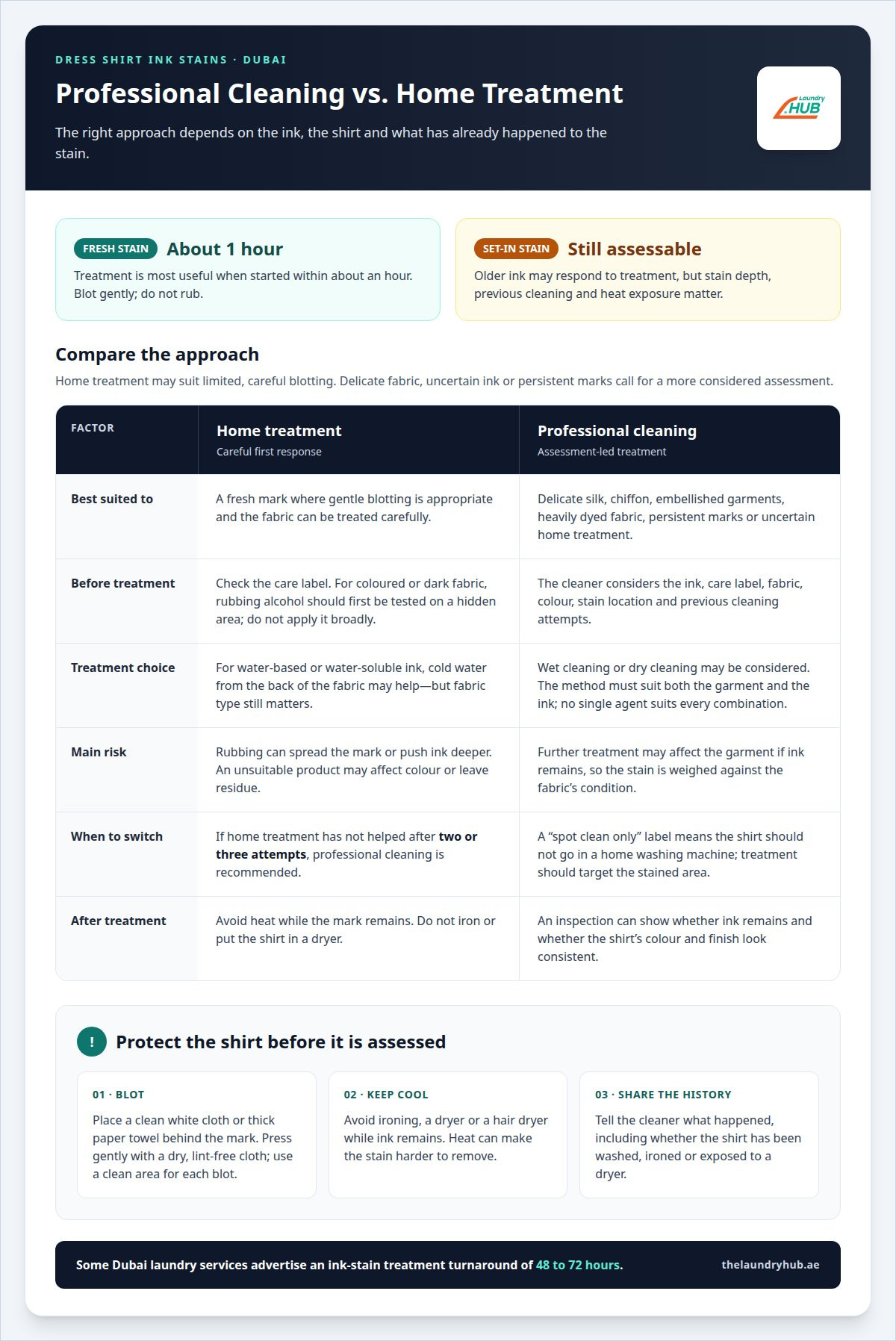
A dried ink mark may still respond to treatment, although age and heat can make removal more difficult. For a formal shirt, the approach depends on the ink, fabric, stain density, and any previous cleaning.
Treating Dried or Set-In Ink
A professional assesses the stain and shirt before choosing a method. Permanent marker may need targeted treatment with a suitable solvent, followed by wet cleaning or dry cleaning, depending on the garment. No single agent suits every ink and fabric combination. Rubbing can spread the mark, while heat from ironing or drying can make ink harder to remove and may set it permanently.
Older stains from clothes aren’t automatically beyond treatment, but their history matters. Tell the cleaner if the shirt has been washed, ironed, or exposed to a dryer; each step can affect how deeply the ink has bonded. A Dubai laundry service advertises an ink-stain treatment turnaround of 48 to 72 hours. Pickup and delivery are also advertised by Dubai laundry services, though coverage differs by service.
Fabric-Specific Treatment Methods
Cotton, silk, and blended formal shirts can react differently to moisture, solvents, and stain treatments. A professional considers the care label, colour, weave, and stain location before choosing wet cleaning or dry cleaning. A treatment suitable for a white cotton shirt, for example, could affect the colour or delicate fibres of a silk shirt. The same assessment applies to cuffs, collars, and pocket linings, where layered fabric can hold ink.
Professional treatment aims to remove the mark without compromising the shirt’s fabric or finish. No cleaning agent is safe for every ink stain, so the method must suit the material. Stain-removal results and damage coverage are separate matters, with coverage governed by the service’s stated terms. Ink stain removal for dress shirts in Dubai should begin with an assessment of both the stain and the garment, not the same solvent applied to every shirt.
Professional dry cleaning versus DIY methods
Professional treatment can help when a ballpoint mark remains after washing or the care label limits cleaning. A cleaner assesses the garment, ink, colour, and previous attempts before choosing a technique. This matters because a product suited to one shirt may cause colour loss or change another fabric. Home experiments can complicate later treatment, especially if they spread ink or leave residue.
For coloured or dark fabric, test rubbing alcohol on a hidden area before use. A professional can assess whether the solvent suits the shirt and help limit visible colour changes. Do not apply alcohol broadly: ink and dye may react differently. Avoid rubbing the stain, which can enlarge the mark and push it deeper.
Choose professional cleaning for delicate silk, chiffon, embellished garments, or heavily dyed fabric. A “spot clean only” label means the shirt should not go in a home washing machine; treatment should target the stained area. If home treatment has not helped after two or three attempts, professional cleaning is the recommended next step. Grease or other marks alongside ink can also affect the treatment plan.
Both dry cleaning and wet cleaning can be used to treat stains. The method depends on the garment’s care instructions, fabric, colour, and how the ink responds. After cleaning, an inspection can show whether ink remains and whether the shirt’s colour and finish look consistent. If the mark persists, further treatment may affect the garment, so the cleaner weighs the stain against the fabric’s condition.
For a considered assessment instead of another home attempt, use a professional Laundry and Dry Cleaning service. A careful process can address the ink stain while taking the shirt’s material and care label into account.
Rubbing alcohol may suit some shirts, but test it on a hidden area first because ink and dye can react differently.
Emergency blotting and stain-prevention steps
With fresh ink, timing and careful handling matter: treatment is most useful when started within about an hour. Professionals first limit transfer between shirt layers, then consider the fabric and ink before choosing further treatment.
Blotting Fresh Ink Without Rubbing
A professional places a clean white cloth or thick paper towel behind the mark to help stop ink reaching other shirt layers. The stain is then gently pressed with a dry, lint-free cloth, using vertical pressure instead of circular rubbing. Each blot uses a clean area of cloth to avoid transferring ink back onto cotton or delicate fabric.
For water-based or water-soluble ink, a professional may flush the mark with cold water from the back of the fabric. This directs loosened ink away from the shirt’s surface. Fabric type still matters: a delicate dress shirt needs treatment suited to its material, not an automatic rinse or detergent.
Avoiding Risky Stain-Treatment Steps
Professionals avoid rubbing, which can spread ink and push it deeper into the fibres. They also keep heat away from the stain. A dryer, hair dryer, or iron can make ink harder to remove, so do not heat the shirt while the mark remains. These precautions help prevent an emergency laundry attempt from setting the stain further.
Professional dry cleaning may be suitable when the shirt is delicate, the ink type is uncertain, or blotting has not lifted the mark. A professional assesses the stain and fabric before choosing treatment rather than adding an unknown cleaning agent. One method may suit cotton but be unsuitable for another fabric.
Tell the cleaner what happened, including whether the shirt has been washed or exposed to heat. This helps guide the next treatment step. Until the stain is assessed, avoid rubbing, ironing, or putting the shirt in a dryer; these actions can make the mark significantly harder to treat.
Identifying water-based, oil-based, and permanent ink
Ink type helps a professional determine which treatment to consider. Details about the pen, care label, and any previous washing can guide the assessment; the stain’s appearance alone may not identify the ink reliably.
Water-Based Ink
Water-based or water-soluble ink may respond to cold water directed through the fabric from the back. A professional considers the shirt’s colour and fabric before choosing this approach, since delicate materials need careful handling. The pen or marker that caused the stain can offer a useful clue. Share that detail before making another cleaning attempt.
Previous washing also matters. It can change the stain’s condition, and heat may make ink harder to remove. If the ink type is uncertain, explain what happened so the cleaner can assess the mark before treatment.
Oil-Based Ink
Oil-based ink may need a different approach from water-soluble ink. A ballpoint pen can help identify the likely source, but the stain’s appearance alone does not establish its composition. A professional considers the garment, care instructions, and any earlier cleaning before choosing a method. Avoid applying an untested product, especially to a coloured or delicate shirt.
When arranging service, share details about the pen and any previous treatment. This helps distinguish a fresh mark from ink altered by washing or other attempts.
Permanent Ink
Permanent marker is designed to resist ordinary removal, so repeated washing may not clear it. A professional assesses the fabric and stain before considering targeted treatment. The solvent and process must suit the shirt; an unsuitable product can affect its colour or finish. Do not treat a delicate dress shirt as if it were washable cotton.
For an ink stain, share the suspected source, when it happened, and whether washing or heat has already occurred. Those clues help guide treatment, whether the shirt is prepared for pickup or brought in directly. If the ink remains unidentified, don’t guess with household products. Arrange professional garment care for a considered assessment of the stained shirt.
The Laundry Hub
The Laundry Hub is a practical next step if ink remains on a dress shirt or you are unsure which treatment is suitable. Its Laundry & Dry Cleaning service provides garment care, including professional handling of stained clothing. Share what caused the mark, whether the shirt has been washed or heated, and any details about its fabric. This helps guide a considered approach to the stain and garment.
Professional care is especially useful for delicate shirts, persistent marks, or stains already treated at home. Avoid further rubbing or applying products before the shirt is assessed, as these attempts can complicate treatment. Contact The Laundry Hub to arrange care for your ink-stained dress shirt.
Take the Next Step With Confidence
A stained dress shirt does not need another round of guesswork. Before arranging professional ink stain removal for dress shirts in Dubai, note what caused the mark and whether the shirt has been washed or treated. The outcome depends on the fabric, ink, and previous treatment, so sharing those details helps guide the assessment.
The Laundry Hub provides Laundry & Dry Cleaning for garment care, along with Shoe & Bag Care and curtain and carpet cleaning for other items. Choose the service that suits the item you need cared for, and leave further treatment of the shirt to a professional assessment.
For a clear next step, contact The Laundry Hub about your stained dress shirt. A careful assessment can help you move forward with greater confidence.
Frequently Asked Questions
Do you need dry cleaners in Dubai to treat stains?
Not every stain needs dry cleaning, but professional treatment makes sense for delicate shirts, persistent ink, or care labels that limit washing. A cleaner considers the fabric and stain before choosing dry cleaning or wet cleaning. A silk shirt and a washable cotton shirt, for example, may need different handling. If you have treated the stain at home, describe what you used.
Is it safe to use bleach on ink stains?
Bleach is not a reliable all-purpose solution for ink stains. It may alter a shirt’s colour or damage its fabric, especially if the care label excludes bleach. Do not test it on a coloured or delicate shirt. Instead, leave the mark untreated and share the garment’s care instructions with the cleaner, who can choose an approach suited to the material and stain.
What should you do immediately when an expensive garment gets stained before taking it to a professional cleaner?
Keep the garment away from heat and avoid adding stain removers, detergent, or other products. If the ink is still wet, place a clean white cloth behind the affected area and gently press with another clean cloth. Keep the shirt separate from other clothes. Tell the cleaner what caused the mark and whether you applied anything, so they can take it into account.
How do professionals remove ballpoint pen ink from a dress shirt without spreading the stain?
Professionals isolate the marked area and use controlled treatment instead of scrubbing across the shirt. They may place an absorbent barrier behind the stain, then apply a suitable cleaning agent to a limited area. The shirt’s colour, fabric, and care label help guide the method. Checking the pocket lining and nearby seams can also reveal ink transferred beyond the visible mark.
Can ink stains be removed from cotton, linen, silk, and polyester dress shirts?
Ink stains can be treated on cotton, linen, silk, and polyester, but each fabric responds differently. A cleaner assesses the shirt’s construction, colour, care label, and stain before choosing a process. A treatment appropriate for cotton, for instance, may not suit silk or a polyester blend. This assessment helps balance stain treatment with preserving the shirt’s appearance and finish.
How do professionals treat a dried or set-in ink stain on a dress shirt?
A cleaner first examines the stain and asks about previous washing, products, and heat exposure. They then choose a method suited to the ink and fabric, which may involve dry cleaning or wet cleaning. Dried ink can be harder to treat, particularly after heat exposure. The shirt’s condition and the stain’s response help determine whether further treatment is appropriate.
