
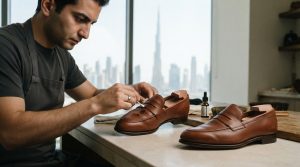


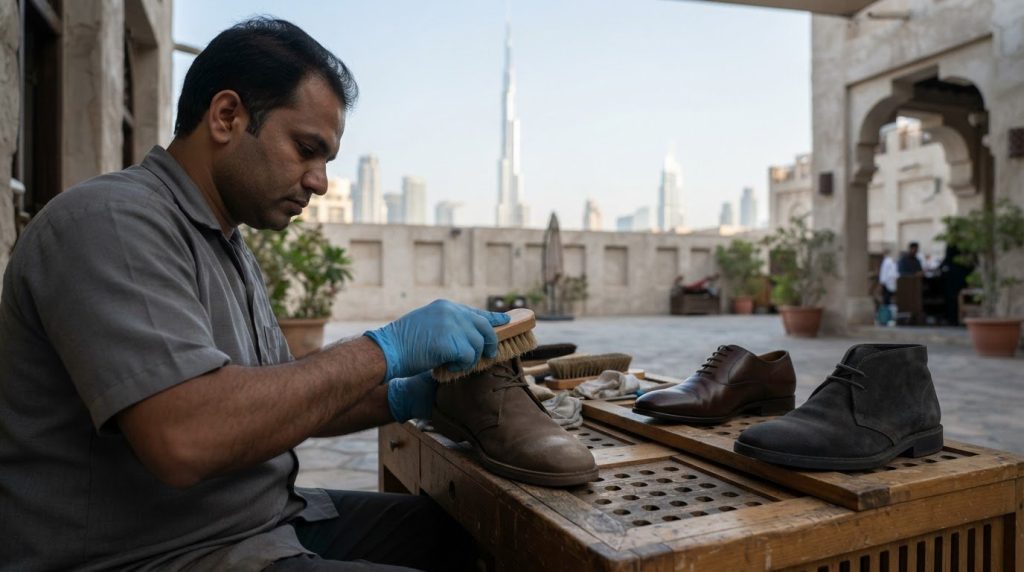
Safe mold removal from leather shoes in Dubai starts with identifying the material and choosing a method that will not damage its finish. Handle affected shoes outdoors or in a well-ventilated area, then gently brush away surface mold. For smooth leather, test any cleaning solution on a hidden area first. For suede and nubuck, use a dry suede brush and avoid water unless the product and method suit the material.
It’s understandable to want to remove visible mold quickly, but too much moisture or the wrong treatment can mark delicate leather or change its texture. Take a gradual approach: carefully remove surface growth, use a method suited to the material, and let the shoes dry naturally in a shaded, well-ventilated place.
This guide explains how restoration works and how to clean smooth leather, suede, and nubuck more safely. You’ll also learn how airflow, dry storage, and allowing shoes to dry fully between wears can help reduce the chance of mould returning.
Key Takeaways
- Keep shoes fully dry before storing them, and leave space around pairs so air can circulate.
- Use silica gel only as a moisture-absorbing aid; it doesn’t replace ventilation or dry storage.
- Consider how deeply mould has affected the shoe’s material and condition when deciding whether cleaning is worthwhile.
- Mould spores may be more concerning for people with asthma, mould allergies, weakened immune systems, or certain respiratory conditions.
Preventing mould through airflow and drying
- Dry each pair naturally after wear or cleaning. Leave leather shoes in a shaded, well-ventilated area until fully dry. Avoid direct sunlight and heaters, since intense heat can dry leather unevenly and cause damage. In Dubai’s hot climate, choose a cool, airy spot rather than a closed cupboard.
- Keep the storage area ventilated. Dubai’s average humidity is stated as 50-75%, while coastal humidity can reach 90% or higher. Air movement helps moisture escape, so avoid sealed cabinets where dampness can linger. Open cupboard doors periodically to let trapped air move out.
- Avoid storing shoes in plastic bags, which can trap moisture around the leather and create conditions for mold and odor. Choose breathable storage, and don’t put shoes away after rain, cleaning, or a long day until the lining and seams feel dry.
- Arrange shoes with space between pairs. Keep them on a rack rather than stacking them tightly, so air can circulate around the uppers and soles. This matters especially in a non-climate-controlled space, which can reach interior temperatures of 50-55°C in summer.
- Silica gel packets can help absorb small amounts of residual moisture. Place one inside each shoe or in the cabinet, but don’t rely on silica gel instead of ventilation or humidity control. Keep the storage space open to airflow, too.
- Rotate between pairs of leather shoes, letting each pair dry fully between wears rather than wearing the same pair every day. This gives moisture inside the lining time to escape before the shoes go back into storage.
- Care for the leather finish without treating polish as a drying method. Conditioning every 7 to 10 days is recommended for Dubai heat, and wax-based polish for leather office shoes once a week. Apply care products only to dry shoes; neither replaces airflow.
Natural drying, airflow, spaced rack storage, silica gel, and rotating pairs all help limit lingering moisture without relying on sealed storage or direct heat.
Safe mould removal from leather shoes
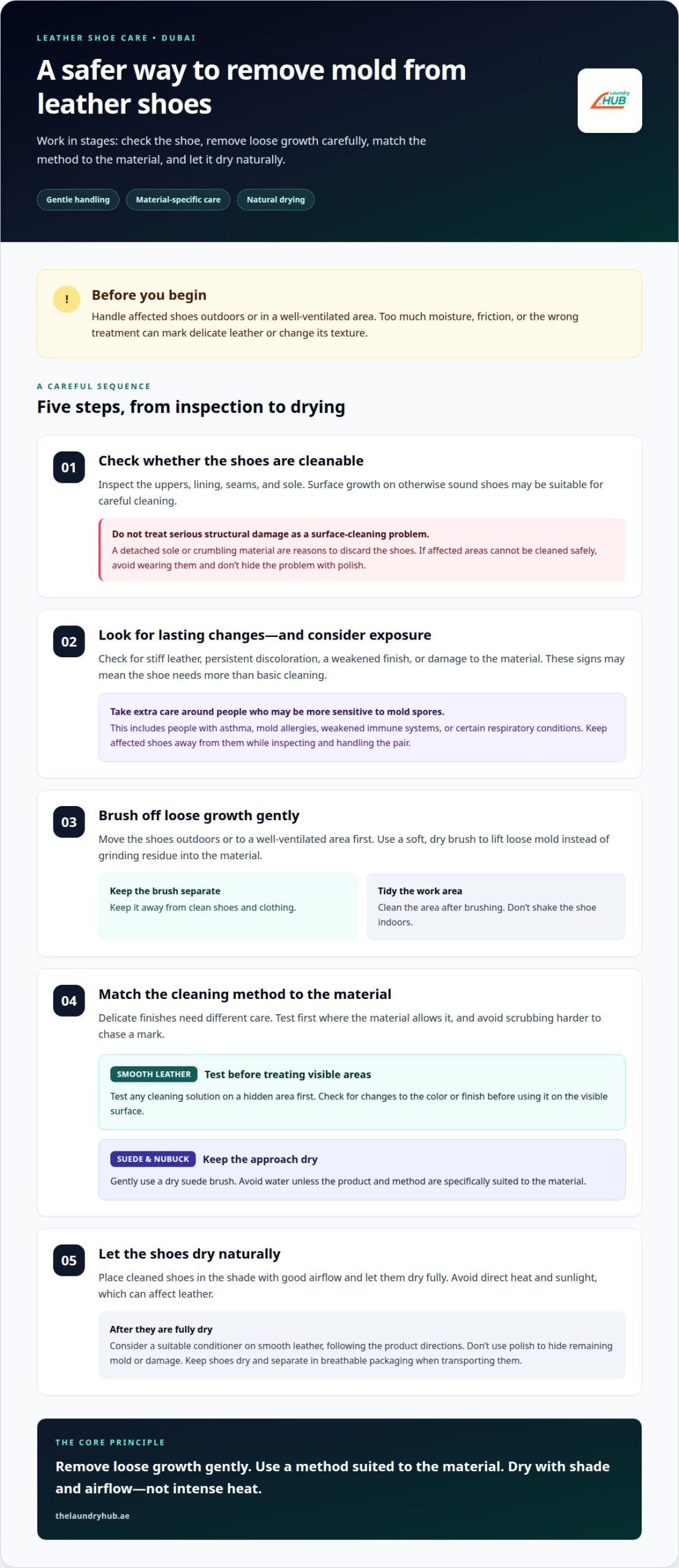
Work in stages: assess the material, remove loose growth, then choose a suitable cleaning method. A cautious approach can reduce the risk of spreading spores or changing the shoe’s finish.
-
Assess Whether Shoes Can Be Cleaned
Before cleaning, inspect the uppers, lining, seams, and sole. Discard shoes if mold is accompanied by serious structural damage, such as a detached sole or crumbling material. Surface growth on otherwise sound shoes may be suitable for careful cleaning. If the damage reaches areas you can’t clean safely, avoid wearing the pair and don’t hide it with polish.
-
Consider Leather Damage and Health Risks
Look for lasting changes, including stiff leather, persistent discoloration, or a weakened finish. Leather can develop lasting damage in the UAE climate when shoes aren’t cared for. Mold spores may be more concerning for people with asthma, mold allergies, weakened immune systems, or certain respiratory conditions. Keep affected shoes away from them while handling the pair.
- Move the shoes outdoors or to a well-ventilated area before brushing to reduce exposure to airborne spores indoors. Use a soft, dry brush to gently lift loose mold instead of grinding residue into the material. Keep the brush away from clean shoes and clothing, then clean the work area.
- Match the method to the material. For smooth leather, test any cleaning solution on a hidden area and check for changes to the color or finish before treating visible areas. For suede and nubuck, gently use a dry suede brush. Avoid water unless the product and method are specifically suited to the material.
- Let cleaned shoes dry naturally in the shade with good airflow. Avoid direct heat and sunlight. Once fully dry, consider using a suitable conditioner on smooth leather, following the product directions. Don’t use polish to hide remaining mold or damage. For pickup and delivery, keep shoes dry and separate in breathable packaging.
Can mold permanently damage leather shoes or cause health risks
- Inspect each shoe in bright, even light. Check the vamp, seams, lining, and sole for changes beyond loose surface growth. Leather can develop lasting damage in the UAE climate when it isn’t cared for. A finish that remains discolored, cracked, or stiff after surface mold is removed may need more than basic cleaning.
- Distinguish surface residue from changes to the material. A light patch on smooth leather may sit on the finish, while persistent marks or altered texture can indicate deeper damage. On suede and nubuck, check for flattened, stained, or uneven nap. Don’t scrub harder to remove a mark, since friction can further affect delicate fibers.
- Consider the shoe’s construction before deciding to keep wearing it. Check that the seams are intact and the sole remains firmly attached. If the leather is crumbling, the lining is badly affected, or the shoe no longer holds its shape, cleaning may not restore its function. An improved appearance doesn’t necessarily mean the material damage is reversed.
- Reduce exposure while handling affected footwear. Mold spores from shoes may be more concerning for people with asthma, mold allergies, weakened immune systems, or certain respiratory conditions. Keep the pair away from them during inspection and cleaning. Brush outdoors or in a well-ventilated area, and don’t shake the shoe indoors, as this can disperse loose residue.
- Decide what to do based on the shoe’s condition and household sensitivities. If it is structurally sound and growth appears limited to the surface, careful, material-specific cleaning may be appropriate. If damage is extensive, the finish remains altered, or handling could expose someone sensitive to mold, don’t assume cleaning alone has resolved the concern. Store the pair separately until addressed.
When should moldy leather shoes be discarded instead of cleaned
- Check the shoe’s structure before treating its appearance. Make sure the sole remains firmly attached and the seams hold. If the leather crumbles or splits, or the shoe no longer holds its shape, cleaning won’t restore its structure. Retire a pair if damage affects safe, stable wear.
- Look beyond the outer surface. Check the lining, tongue, stitching, and areas beneath removable insoles. If mold is widespread through the lining or embedded in inaccessible layers, surface brushing won’t reach it. Don’t cover persistent marks with polish or wear the shoe while its condition remains unresolved.
- Consider the material before deciding. Smooth leather may tolerate careful, suitable cleaning when growth is limited and the finish remains intact. Suede and nubuck have a raised nap that can retain visible marks or change texture during treatment. If the nap remains badly altered or cleaning would require aggressive scrubbing, set the pair aside.
- After careful cleaning, let the shoe dry completely and check for persistent odor, discoloration, stiffness, or weakened seams. A remaining cosmetic mark alone doesn’t mean the shoe must be discarded. However, multiple signs combined with structural deterioration make continued use a poor choice.
- Keep questionable footwear separate from clean pairs while deciding what to do. This prevents contact with other shoes and makes the affected pair easier to inspect. If the damage is limited and the construction remains sound, material-specific cleaning may be worthwhile. If the shoe is crumbling, misshapen, or affected throughout its lining, discard it instead of repeating surface treatments.
- For a valuable pair with uncertain damage, arrange professional shoe and bag care before attempting a harsher treatment. A careful assessment can distinguish surface residue from damage that compromises the material. Don’t continue experimenting with household cleaners on delicate leather, suede, or nubuck.
The Laundry Hub: Shoe & Bag Care
The Laundry Hub provides Shoe & Bag Care for footwear that needs careful attention after mold appears. Professional care can be a practical next step if your shoes are valuable, made from suede or nubuck, or still show marks after cautious cleaning. Consider it as well if you’re unsure whether further home treatment could affect the material.
Keep the pair separate from clean shoes and share whether it is made of smooth leather, suede, or nubuck when arranging care. This helps guide appropriate handling. Shoes with crumbling leather or major structural damage may not be suitable for cleaning, so assess their condition first.
Contact The Laundry Hub to discuss Shoe & Bag Care for your shoes.
Choose a careful next step for your shoes
A mould-affected pair doesn’t always need to be discarded, but repeated home treatments can make delicate materials harder to assess. If you’re uncertain about the finish, lining, or construction, pause before applying another cleaner. A material-conscious assessment can help you decide whether further care is suitable for the shoes.
For help with mold removal from leather shoes in Dubai, The Laundry Hub provides Shoe & Bag Care. Its Laundry and Dry Cleaning and curtain and carpet cleaning services can also help with other household care needs. When you get in touch, share whether your shoes are smooth leather, suede, or nubuck so the material is clear from the start.
Contact The Laundry Hub to discuss care for your shoes. A considered next step can help you protect the pair where possible and make a clearer decision about its future.
Frequently Asked Questions
How long will I be without them?
The time depends on the shoe material, mould coverage, and drying needs. Suede and nubuck require different handling from smooth leather, while mould inside the lining can add care stages. Drying also depends on airflow and how much moisture the shoes absorbed. The Laundry Hub provides Shoe & Bag Care, but no fixed turnaround time applies to every pair.
How much will mine cost?
The price depends on the case and is given after a quote request. Factors include the shoe material, the extent of visible mould, and whether the issue affects the lining or finish. For example, a pair of smooth leather shoes with surface marks differs from suede shoes with widespread staining. Share the shoe type and condition to receive a case-specific quote.
What supplies are needed to clean mold off leather shoes?
For home cleaning, prepare a soft brush for smooth leather, a dry suede brush for suede or nubuck, and a cleaning solution suited to smooth leather. Keep a clean cloth nearby for controlled application, along with breathable packaging to separate the affected pair afterward. Don’t combine household cleaners or apply them together. A hidden-area test can show whether a solution changes the leather’s color or finish.
Best professional leather shoe mold removal services in Dubai
The Laundry Hub provides Shoe & Bag Care for mold-affected footwear. Professional care may be a practical next step for valuable shoes, suede or nubuck, or shoes that still show marks after cautious cleaning.
