



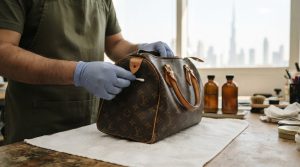


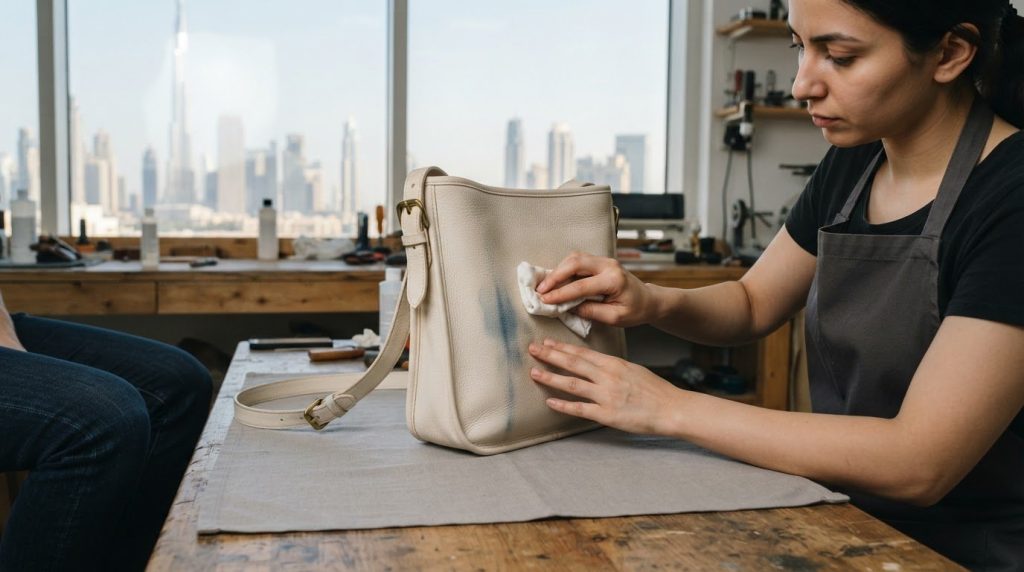
Don’t scrub a denim mark with a stronger cleaner. For leather bag dye transfer removal in Dubai, start with a soft, dry white cloth to lift very light surface residue. Fresh transfer can sometimes respond to a leather cleaner suited to the bag’s finish. Transfer older than 24 hours usually calls for professional colour restoration, especially on delicate, pale, suede or nubuck surfaces.
A denim mark on a light bag can feel urgent, but hard rubbing or household products may damage the finish. Keep pressure and moisture low, and stop before repeated cleaning makes things worse. This guide explains how to handle fresh dye transfer, when to seek colour restoration, and how to clean ink, oil and everyday dirt gently. You’ll also find ways to reduce colour transfer and care for your bag between cleanings.
Key Takeaways
- Reduce denim-to-leather rubbing where possible, and take extra care with pale or textured finishes.
- Use a cleaner formulated for the bag’s leather type, apply it to a cloth, and test it discreetly first.
- Avoid household cleaners, baby wipes, bleach and solvents, which can affect the leather’s finish.
- For delicate materials or persistent marks, professional shoe and bag care can help protect the bag while addressing the stain.
1. How do I remove colour transfer (denim stains) from a light bag?
New or heavily dyed indigo denim can transfer colour onto a light leather handbag. Pale leather can absorb pigments readily, so marks may appear after one wear. Straps are especially exposed because they rub against clothing. Crossbody bags also tend to spend more time in contact with garments than top-handle bags carried by hand.
For a fresh mark, start with a soft, dry white cloth. Wipe lightly once, using a clean section of cloth as colour lifts. Avoid vigorous rubbing, which can spread pigment or affect the finish. If the mark remains, stop rather than applying more pressure. Leather bag dye transfer removal in Dubai starts with gentle handling, not stronger household products.
Direct contact between fabric and leather is the main cause, but moisture can worsen transfer. Rain, perspiration and humidity can encourage dye to migrate from denim onto a pale bag. Suede and nubuck need particular care because their textured surfaces are more prone to colour transfer. If a white cloth picks up blue dye when rubbed over new jeans, keep them away from light bags until less dye comes off.
To help prevent transfer, wash new jeans several times before pairing them with a light-coloured handbag. A leather protector may add protection on some leather types, but cannot guarantee that transfer will be prevented. Choose a product suitable for smooth, pale finishes and test it discreetly first. Protectors are not interchangeable across leather finishes.
Store the bag away from direct sunlight and heat, and keep denim separate from its surface. Conditioning the leather every few weeks can help reduce dryness and absorbency. After cleaning, let the leather dry fully before applying conditioner. These steps help preserve a light bag’s finish and limit repeated contact with transferring dyes.
Because light-colored leather is more porous, pigments from other materials can enter it readily, making prevention important. SATRA notes that handbag straps can be especially susceptible to colour transfer because they rub continuously against garments; a crossbody bag generally spends more time rubbing against clothing than a top-handle bag carried by hand.
A clean white cloth can help check whether a garment may release dye onto a handbag. During display or storage, leather conditioner can be applied every few weeks to help prevent leather from drying and becoming more absorbent. Leather protectors may provide additional protection on some leather types, but they are not guaranteed to prevent colour transfer.
2. When older dye transfer needs professional colour restoration
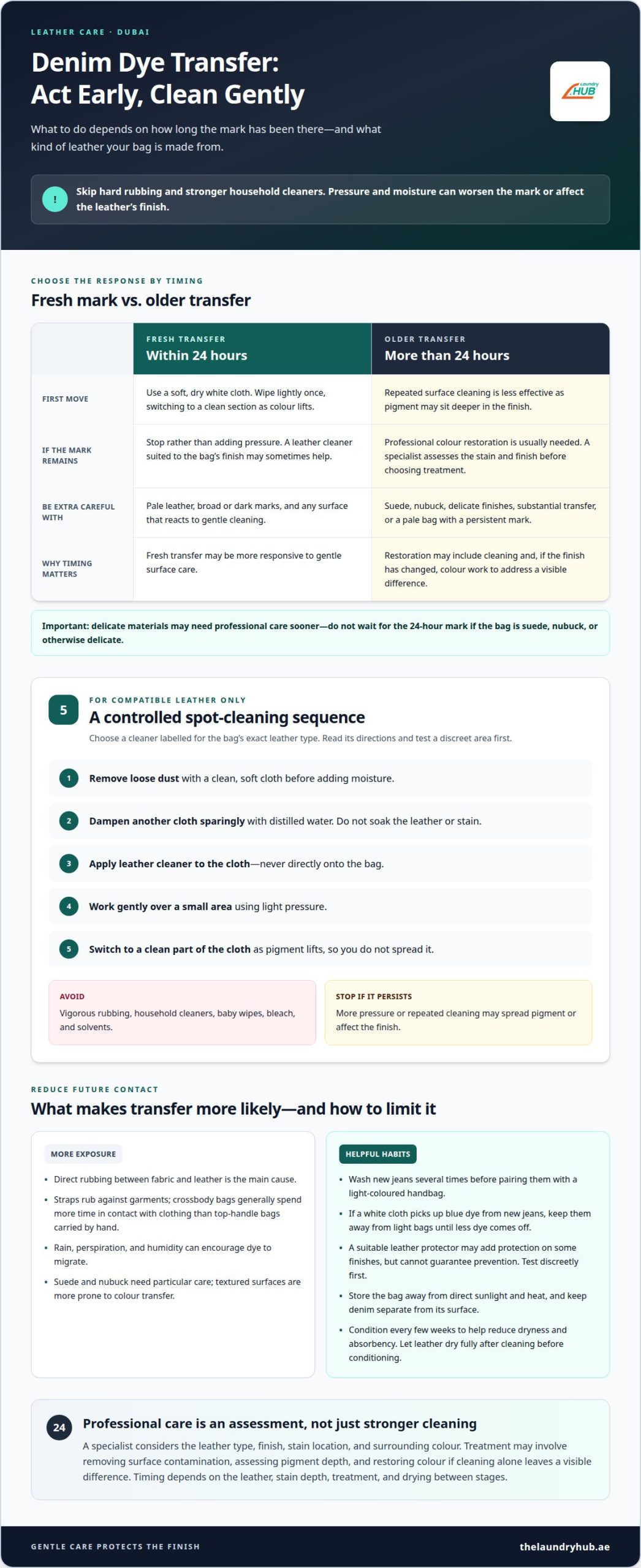
Transfer older than 24 hours usually needs professional colour restoration. By then, denim pigment can sit deeper in the leather’s finish, making repeated surface cleaning less effective. A dark mark on a pale handbag, especially across a broad panel, deserves careful assessment before further treatment. Stop home cleaning if the stain remains after gentle attempts.
Seek professional care sooner for suede, nubuck, delicate finishes or substantial dye transfer. These materials respond differently to moisture and rubbing, so one cleaning method won’t suit every bag. A specialist assesses the leather type, finish, stain location and surrounding colour before choosing a treatment. This helps protect the original texture while addressing the mark.
Colour restoration is not simply stronger cleaning. It can involve removing surface contamination, assessing how deeply pigment has penetrated, and restoring colour if cleaning alone leaves a visible difference. For example, a faded patch beside a denim stain may need attention to blend the treated area with the bag’s existing tone. The bag’s condition and finish guide the process.
How long does professional leather colour transfer removal take in Dubai? It depends on the leather, stain depth, treatment required and drying between restoration stages. A surface mark and a deep stain requiring colour work involve different processes, so there is no single fixed duration.
For dye transfer, choose a Dubai specialist offering leather cleaning and colour restoration for handbags. Relevant expertise includes handling pale finishes, delicate leather, suede or nubuck while preserving texture during treatment. Ask how the approach will be chosen and what factors may affect the result. Cleaning a stain and restoring colour where the finish has changed are different tasks.
Professional leather cleaning or handbag restoration is often the safer option for delicate leather, suede, nubuck, light-coloured bags or significant dye transfer. Don’t wait until repeated home attempts have made the problem worse. Ask the professional to assess the material and transfer, explain whether cleaning or colour restoration is appropriate, and describe how the treatment will suit the bag. This helps set clear expectations before work begins.
3. Gentle cleaning with distilled water and leather cleaner
Choose a leather cleaner labelled for the bag’s specific leather type. A product suitable for smooth finished leather may not suit suede, nubuck or another delicate surface. Don’t assume a general-purpose cleaner is safe for every finish. Read the directions and patch-test a discreet area before cleaning the visible stain.
Which leather cleaners remove colour transfer without damaging leather? Use a cleaner made for the exact leather type, and patch-test it first. The leather’s finish and the product’s instructions determine whether it is appropriate for the bag.
For a small mark on compatible leather, keep the process controlled:
- Remove loose surface dust with a clean, soft cloth before adding moisture.
- Dampen a separate cloth sparingly with distilled water. Avoid soaking the leather or stain.
- Apply leather cleaner to the cloth, never directly onto the bag.
- Gently work the cloth over the mark, using light pressure and a small area.
- Use a clean part of the cloth as pigment lifts, so you don’t spread it.
Distilled water can help limit mineral residue during spot cleaning, but use only a little. Excess moisture may affect the appearance of leather, especially around seams or edges. Keep the damp cloth on the marked area rather than wiping the whole handbag. A pale finish can look uneven if one section gets wetter than another.
After cleaning, let the bag air-dry for 15 minutes, away from direct sunlight and heat. Check the surface in natural light before deciding whether another careful pass is needed. If the leather looks darker while damp, allow it to dry fully before judging the result. A cleaner that changes the finish during a discreet patch test isn’t suitable for the bag.
4. Removing stains, ink marks, oil, and dirt
Identify the mark before cleaning: surface dirt, an ink line and an oily spot need different handling. On finished leather, begin with a soft white cloth and light pressure. A coloured or patterned cloth may leave residue, making a pale surface harder to assess. Use a clean section of cloth for each pass.
For loose dirt, gently wipe the affected area without soaking it. If the mark remains, apply a leather cleaner suited to the bag’s finish to the cloth, not directly to the leather. Patch-test first. A cleaner meant for smooth leather may not suit suede or nubuck, and rubbing an ink mark can spread pigment.
Avoid household cleaners, bleach, solvents and stain removers unless the handbag manufacturer or a leather-care professional recommends them. Baby wipes are also best avoided because their chemicals can strip the finish or change the leather’s appearance over time. These products may seem convenient for a small ink mark or oil spot, but can leave a larger, harder-to-correct problem.
Limit cleaning attempts. Try the recommended leather-cleaning method no more than twice; if ink, oil or another stain remains, stop and seek expert help. Repeated rubbing can affect the finish, and additional products may leave residue. For a persistent mark on pale leather, a professional can assess the stain and surface before choosing a suitable treatment.
After cleaning, let the bag air-dry away from direct sunlight and heat. Don’t use a hair dryer or place it near a heater to speed drying. Heat can affect the leather’s appearance, while direct sunlight may cause uneven fading. For difficult stains or marks that remain after two careful attempts, get help with stubborn leather stains rather than adding another household product.
The Laundry Hub
The Laundry Hub provides Shoe & Bag Care for handbags affected by denim transfer, everyday dirt or other marks. It’s a practical next step when a stain remains after gentle cleaning or the bag’s delicate finish makes home treatment risky. Avoid further rubbing and describe the leather type and stain when you get in touch, so the care can be suited to your bag.
The Laundry Hub also provides Laundry and Dry Cleaning, Curtain and carpet cleaning, and Steam Pressing for other care needs. Each service addresses a different task, while Shoe & Bag Care is the relevant service for a marked handbag. Contact The Laundry Hub to discuss care for your bag.
Choose a careful next step for your bag
A light leather bag is made for everyday use, so consider its material and finish before choosing a care method. If the mark has changed the surface or you’re concerned about risking further damage, pause before trying another product. The right approach depends on the leather and the condition of the affected area.
For leather bag dye transfer removal in Dubai, sharing clear details about the bag and the mark can help focus the conversation on appropriate care. The Laundry Hub offers Shoe & Bag Care, alongside its other cleaning services. Contact The Laundry Hub to discuss your bag and its care. A measured next step can help you feel more confident about looking after it.
Frequently Asked Questions
How do I remove colour transfer (denim stains) from a light bag?
For a faint mark, make one careful, limited cleaning attempt and inspect the whole contact area, not just the stain’s centre. Check the underside of the strap, piping and points where the bag rests against clothing, as transfer may appear in several places. Let the surface dry before judging its appearance: damp leather can look darker and make the mark appear different.
