



Hard water can gradually affect the look and feel of everyday clothes. In Dubai, calcium and magnesium in the water can settle on fabric, leaving garments rough or dull and contributing to fiber wear over repeated washes. Understanding how Dubai hard water damages clothes starts with spotting these gradual changes.
If laundry feels less soft or looks less fresh despite regular washing, mineral buildup may be one cause. This article explains what hard water is, how deposits affect fabric, and which household signs can help you identify it. You’ll also learn why the effects may appear on clothes and around taps, showerheads, and other fixtures.
Key Takeaways
- Learn why mineral-rich water can make detergent less effective and what that means for everyday washing.
- Recognize fabric changes that may point to mineral deposits, including stiffness and lingering odours.
- Understand how repeated washing can contribute to fiber wear and affect how long garments stay in good condition.
- Use clues around your home, from limescale to soap that barely foams, to help identify hard water.
What Is Hard Water?
Hard water contains minerals, mainly calcium and magnesium. Dubai tap water can be hard, with hardness varying by location and season.
Hard Water’s Effect on Detergent Performance
Calcium and magnesium can interact with detergent and reduce its cleaning effectiveness. Stains may remain, odours may linger, and garments may not rinse cleanly. This can affect everyday loads, including work clothes carrying sweat and dust. Follow the detergent pack’s guidance for water hardness, load size, and soil level to choose an appropriate amount.
Water-softening systems can help reduce hard-water laundry problems. Improvements may become noticeable within 3-4 wash cycles.
Fabric-specific detergents and washing cycles still matter: a delicate garment and a heavily soiled work shirt need different care. Follow each clothing label and select a cycle suited to the fabric. For most everyday laundry, washing at 30-40°C is recommended; the right detergent dose also depends on the load’s dirt level.
Residue and White Marks on Clothes
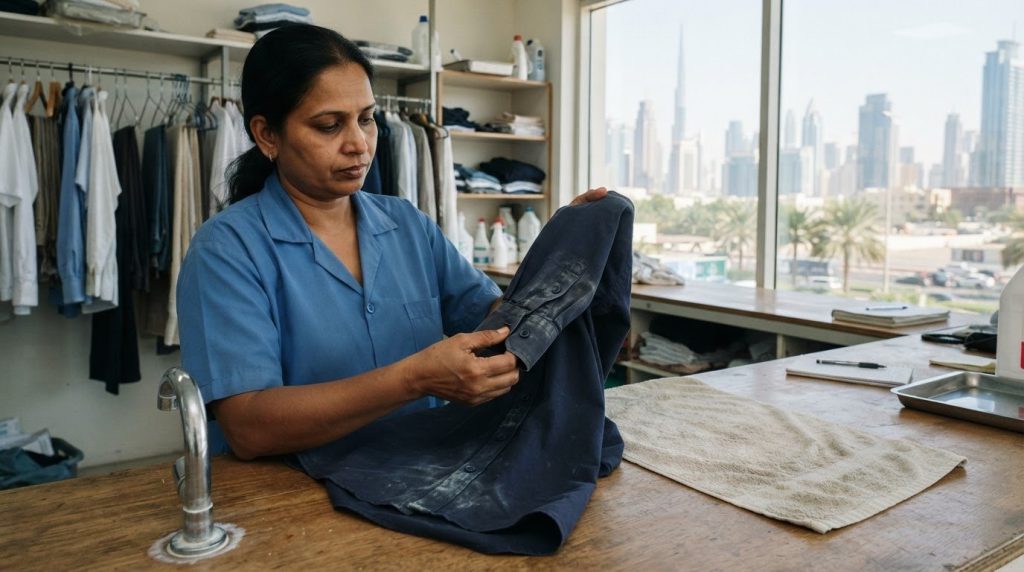
When cleaning and rinsing are less effective, hard water can leave detergent film or white mineral marks. Deposits may show as streaks on dark clothes; other fabrics can develop a dull, soapy finish. Persistent marks may point to a washing issue rather than a garment’s colour or fabric.
Minerals can build up inside a washing machine and on clothes over repeated loads. Avoid overloading the drum so garments can move and detergent can dissolve and circulate. If white marks appear, review the detergent amount, load size, and care label together instead of automatically adding more detergent.
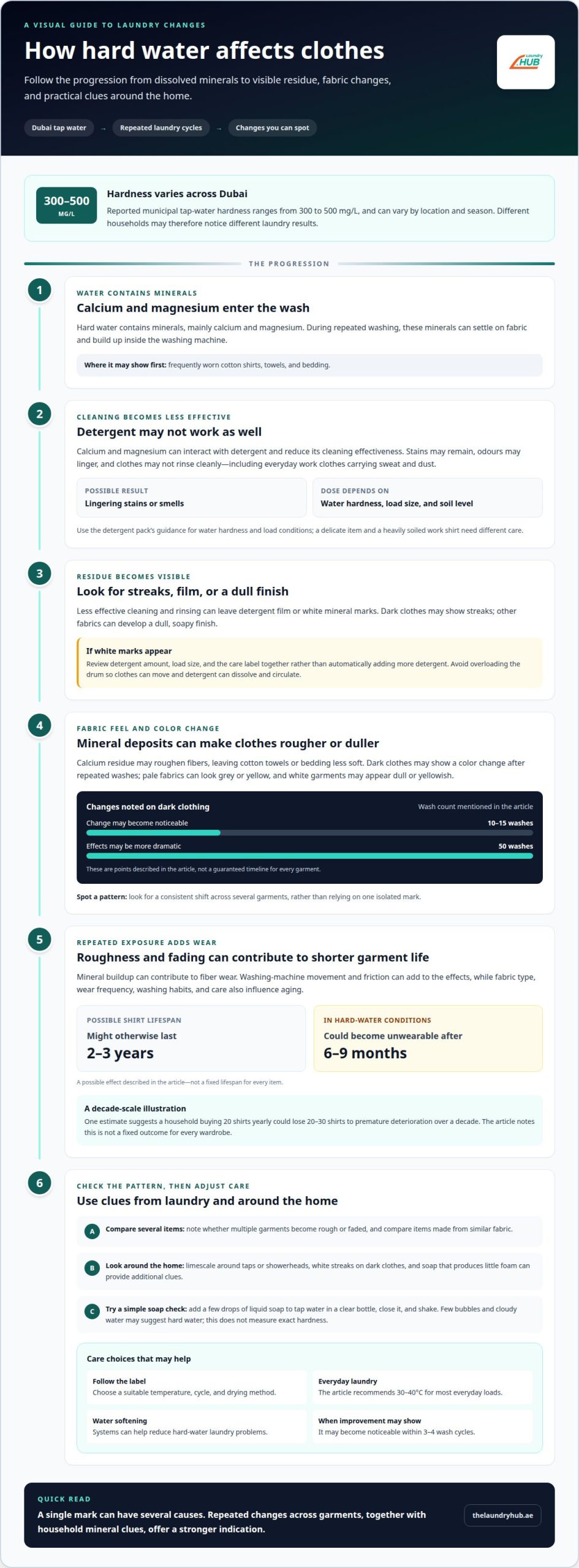
Dubai municipal tap water hardness varies by area and season, with reported levels ranging from 300 to 500 mg/L. That variation means households may notice different laundry results across locations or periods.
Calcium and magnesium deposits stiffening fabric
With repeated washing, calcium and magnesium deposits can cling to fabric and change its feel and appearance. In Dubai, the effects may become noticeable first on frequently worn cotton shirts, towels, and bedding.
Rough Texture and Lingering Odours
Yes. Dubai hard water can leave clothes stiff or dull as mineral deposits collect on fibers. Calcium residue may roughen fabric, making cotton towels or bedding feel less soft after repeated washes. Odours can also linger if sweat and body smells remain after laundering. Compare the texture with a freshly washed item made from similar fabric to see whether the change is noticeable.
Color Changes and Fabric Aging
Mineral deposits can gradually reduce color depth, while pale fabrics may look grey or yellow. Dark clothing may show a change after 10-15 washes, with effects potentially more dramatic after 50 washes. White garments, including thobes and kanduras, can appear dull or yellowish over time. Look for a consistent shift across several garments rather than one isolated mark. That pattern may point to ongoing mineral residue and hardness-related laundry problems.
Reduced Fabric Longevity
Repeated mineral exposure can contribute to fiber wear, so fabric may lose strength as it becomes rougher or faded. A quality shirt that might otherwise last 2-3 years may become unwearable after 6-9 months in hard-water conditions. These timeframes describe a possible effect, not a fixed lifespan for every item. Fabric type, wear frequency, washing habits, and care all influence aging. Follow the recommended care on each label, since unsuitable cycles can add avoidable stress. Deposits inside the machine can also be part of repeated laundry problems, so consider both garment changes and washing conditions together.
Fiber wear and shorter garment lifespan
Understanding how Dubai hard water damages clothes means looking beyond visible marks. Dissolved calcium and magnesium can leave deposits on fabric during repeated laundry cycles. These deposits may make fibers feel rough and contribute to wear over time. Washing-machine movement and friction can add to the effects of mineral buildup. A frequently worn and washed cotton T-shirt, for example, may show changes sooner than a rarely used item.
Fiber damage may appear gradually: fabric can lose softness, look faded, or become less comfortable to wear. One estimate suggests a household buying 20 shirts yearly could lose 20-30 shirts to premature deterioration over a decade. That figure illustrates how small changes across regular loads can add up. It isn’t a fixed outcome for every wardrobe, since fabric type, wear frequency, and washing habits also affect garment life. These gradual changes help explain how Dubai hard water damages clothes over repeated cycles.
Care labels help prevent avoidable stress on garments. Before washing, check the recommended temperature, cycle, and drying method. A delicate blouse may need gentler handling than a sturdy cotton shirt, so don’t assume one cycle suits every fabric. Following the label and the detergent-pack guidance for water hardness and load conditions supports effective cleaning while reducing avoidable wear.
Look for patterns across several items instead of judging one damaged garment alone. If multiple shirts become rough or faded after repeated washing, note their fabric types and care instructions. Compare a regularly worn work shirt with a lightly used occasion shirt, and observe their condition after washing. These comparisons can help separate ordinary wear from changes associated with hard water. Consistent care and attention to labels help protect garments during routine laundry.
Recognising hard water through household signs
One laundry problem can have several causes, so look for signs around your home as well. In Dubai, mineral buildup around taps or showerheads can be a clue to hard water. Clothes may show white streaks, particularly dark garments, and soap may produce little foam. Together, these signs offer a stronger indication than a mark on a single item.
Try a simple household check using tap water, liquid soap, and a clear bottle. Add a few drops of soap, close the bottle, and shake it. Few bubbles and cloudy water may suggest hard water, but this test does not measure exact hardness. Compare the result with recurring marks on dark clothes or limescale around bathroom fixtures.
Kitchen signs can add context. Electric kettles in Dubai may need descaling every 2 to 4 weeks, depending on use. Frequent mineral buildup inside a kettle, alongside limescale at taps, supports the possibility that household water conditions are contributing. Kettle scale alone does not explain every laundry issue, so consider it with garment changes and soap performance.
Keep a brief record of recurring signs. Note whether white streaks return after washing, soap foams poorly, or limescale collects on fixtures. A pattern across laundry, bathroom fittings, and the kettle is more useful than one isolated sign. Consider other causes of clothing marks too, such as detergent amount, an overloaded washing machine, or fabric type. Together, these observations can help distinguish recurring hard-water clues from a one-off cleaning problem.
The Laundry Hub
When signs of hard water persist across your laundry, The Laundry Hub provides professional garment care in Dubai. Its Laundry and Dry Cleaning service cares for everyday garments and delicate pieces. Steam Pressing is available for garments that need a crisp finish, while curtain and carpet cleaning provides care for household textiles.
When arranging care, describe the affected items and the changes you’ve noticed, such as stiffness, fading, or marks after washing. This helps identify the garments and textiles that need attention. For household fabrics beyond clothing, The Laundry Hub’s curtain and carpet cleaning offers a suitable option.
Contact The Laundry Hub to discuss care for your garments and household textiles.
Make Your Next Laundry Choice Count
Understanding how Dubai’s hard water damages clothes can help you make more considered garment-care choices. If fabric changes persist, avoid treating every item alike. Its material, condition, and care label all affect how it should be handled. Paying attention to these details supports thoughtful care over time.
The Laundry Hub provides Laundry and Dry Cleaning for garments, Shoe & Bag Care for accessories, and curtain and carpet cleaning for household textiles. These services offer a practical next step when clothing or home fabrics need professional attention. Choose the care that matches the items you want looked after, rather than applying one approach to every material.
For attentive care of garments and household textiles, contact The Laundry Hub. Taking the next step can make fabric care feel more manageable.
Frequently Asked Questions
How hard is Dubai tap water and what minerals does it contain?
Reported Dubai tap-water hardness ranges from 300 to 500 mg/L, depending on area and season. The minerals associated with hardness are mainly calcium and magnesium. The range gives useful context, but hardness can differ between locations and water conditions. For laundry, the practical clue is how detergent performs and whether mineral-related marks or residue keep returning across different loads.
What water hardness level is considered hard for laundry?
Water above 180 mg/L is classified as very hard under the cited hardness classification. That makes Dubai’s reported 300 to 500 mg/L range especially relevant to laundry choices. Use the water-hardness guidance on your detergent packaging rather than assuming the same dose works everywhere. The recommended amount also depends on load size and how soiled the clothes are.
How can I reduce hard-water damage to clothes in Dubai?
Start by following the detergent pack’s guidance on water hardness, load size, and soil level. Leave room for garments to move instead of packing the washing machine tightly. Wash outdoor clothes soon after wearing them to help prevent dust and stains from settling. For everyday items, follow each care label and select a suitable cycle.
Which laundry detergents or additives work best with hard water?
Choose a detergent designed for hard water, then follow its packaging instructions for the load and soil level. A water-softening agent can be used alongside detergent; the suggested amount is 30-50 g per laundry load. Don’t assume more product means cleaner clothes. Adjust the dose to the pack guidance and the actual load, rather than using one fixed amount for every wash.
Can vinegar or washing soda help with hard-water laundry problems?
White vinegar is suggested for an empty washing-machine cycle, using 250 ml on a 60°C setting. That is a machine-cleaning approach, not an instruction to add vinegar to garments. Washing soda isn’t covered by the available laundry recommendations here, so avoid treating it as a proven fabric remedy. For clothes, use detergent and any softening additive according to their packaging directions.
