



Garment care and clean city air are connected as environmental concerns, but in different ways. Chemical-free garment steaming in Dubai describes how clothes are refreshed; it does not directly reduce pollution from vehicles. The broader connection is that both raise questions about choices that affect environmental quality.
It’s understandable to seek garment care without chemical treatments, especially when looking after clothes is part of your daily routine. The Breathe Life campaign focuses on air pollution, including pollution linked to transport, rather than garment care. Understanding the distinction keeps claims about steaming clear and realistic.
This article explains what “chemical-free” can mean when steaming garments, how vehicle emissions affect urban air quality, and what the Breathe Life campaign addresses. It distinguishes the role of garment steaming from wider efforts to improve city air, so you can make informed choices without expecting a household service to solve transport-related pollution.
Key Takeaways
- Use a garment’s care label and fabric construction to judge whether steaming is suitable, especially for delicate materials and detailed finishes.
- Steaming and dry cleaning work differently: understand what each method can address before choosing care for a particular garment.
- Steam can refresh fabric and ease wrinkles, but don’t assume it removes every odour or sanitises every item.
- For professionally handled garment care, The Laundry Hub’s Steam Pressing offers a practical next step; the article also explains how vehicle emissions relate to the Breathe Life campaign.
What garments can be safely steamed without chemicals?
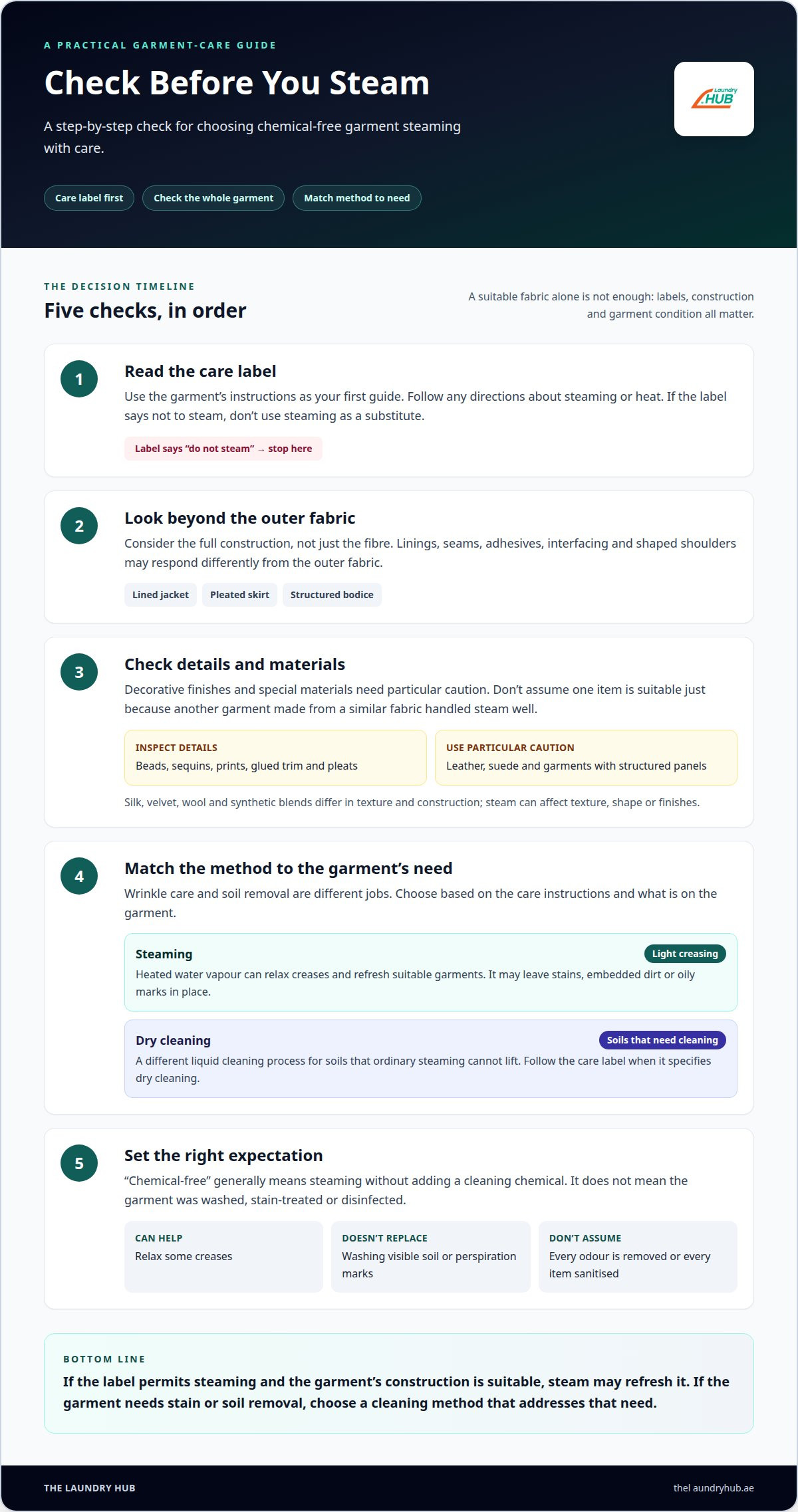
Start with the care label, not the fabric’s appearance. For chemical free garment steaming in Dubai, treat the label as your first guide. A cotton shirt and a linen dress may look straightforward, but linings, prints, and trims can affect how they respond to heat. Steaming uses water vapour, but not every garment is suitable for the same treatment.
Before steaming everyday clothes, check both the care label and the garment’s construction. A simple cotton shirt, plain linen blouse, or sturdy polyester top differs from a lined jacket or pleated skirt. Seams, adhesives, interfacing, and shaped shoulders may respond differently from the outer fabric. This matters for blazers, uniforms, and dresses with structured bodices.
- Check the care instructions: Follow any label directions about steaming or heat. If the label says not to steam, don’t use steaming as a substitute.
- Identify delicate details: Beads, sequins, printed designs, glued trim, and pleats can be more vulnerable than plain fabric. A decorated evening dress needs a different assessment from a cotton shirt.
- Consider the material: Silk, velvet, wool, and synthetic blends differ in texture and construction. Don’t assume that a garment is suitable because another item made from similar fabric handled steam well.
- Separate special materials: Leather, suede, and garments with structured panels require particular caution. Steam can affect texture, shape, or finishes.
“Chemical-free” needs a precise meaning. In garment care, it generally describes steaming without adding a cleaning chemical. It does not mean the garment has been washed, stain-treated, or disinfected. Water vapour can relax some creases, but it cannot replace washing a cotton T-shirt with visible soil or perspiration marks.
For a tailored suit, embellished gown, or silk scarf, consider the entire garment, not just its fibre. The care label, lining, finish, and decorative elements all matter. If the label permits steaming, careful treatment can refresh a suitable item. If it advises against heat, follow that instruction.
How does garment steaming compare with dry cleaning in Dubai?
Garment steaming and dry cleaning meet different care needs. Steam uses heated water vapour to relax creases and refresh fabric surfaces. Dry cleaning uses a liquid cleaning process for soils that ordinary steaming cannot lift. Neither method suits every garment, so let the care label and type of soil guide your choice.
A cotton shirt worn briefly may need pressing rather than a full cleaning cycle. A suit with visible marks, food residue, or body oils needs cleaning that addresses the soil itself. Steam may leave a stain in place, and heat can make some marks harder to remove. Treat stain care and wrinkle care as separate needs.
- Choose steaming for: suitable garments with light creasing that need a refreshed appearance. A plain blouse or a jacket with a steam-permitting label may be a candidate.
- Choose dry cleaning for: garments whose care instructions specify it, or items with soils that require a cleaning process. A tailored suit with a visible spill is different from a lightly creased jacket.
- Use the label as the deciding point: instructions can vary between garments made from similar materials. Linings, finishes, and construction may affect the appropriate method.
“Chemical-free” steaming describes a method, not a complete cleaning result. Steam may ease wrinkles without removing embedded dirt, oily marks, or residue. Dry cleaning is not steaming with added chemicals; it is a different cleaning process. For a shirt that needs both soil removal and a crisp finish, cleaning and pressing serve distinct purposes.
In Dubai, choose by the garment’s condition and care instructions, not by assuming one method is always gentler. A silk dress, structured blazer, and cotton shirt may each need different handling. If steaming is suitable, professional garment care can help address creases while respecting the garment’s construction. For visible stains or label-directed dry cleaning, select the cleaning method instead.
The Breathe Life campaign is led by the World Health Organization, UN Environment and the Climate & Clean Air Coalition.
Does steam remove odors, wrinkles, and bacteria from clothes?
Steam can relax wrinkles by adding heat and moisture to fabric. A creased cotton shirt may look smoother after steaming, while a sharp trouser crease may need pressing. Results depend on the garment’s weave, construction, and care label. Steaming changes a garment’s appearance; it does not automatically clean it.
When considering odours, distinguish a lightly worn jacket from a shirt carrying sweat or food smells. Steam may freshen some garments, but it does not remove the soil behind every odour. A lingering smell can point to residue in the fibres, underarms, or lining. Washing or dry cleaning may be needed for issues a steam-only treatment cannot address.
- Wrinkles: Steam can relax creases in suitable garments, such as a cotton blouse. Deep folds may remain, especially in structured fabric.
- Odours: A lightly worn blazer may feel fresher after treatment. Smoke, perspiration, and food odours can remain if their source is still in the fabric.
- Bacteria: Don’t treat visible steam as proof that bacteria have been removed. Garment thickness, steam contact, and treatment conditions affect what happens across the whole item.
- Stains: A mark from coffee or oil needs stain-focused care. Steam alone doesn’t lift every stain, and heat can affect some marks.
Be precise when describing results related to bacteria. Passing a handheld steamer over a sleeve is not the same as a validated disinfection process. Seams, cuffs, pockets, and layered linings may not receive equal steam exposure. For a uniform worn during food preparation, do not rely on steaming instead of the cleaning routine required for that use.
Use steaming to improve appearance and lightly refresh a garment when its care label permits. Choose washing or dry cleaning for a cotton T-shirt with visible soil or persistent odour. Check the care instructions before applying heat to a silk blouse. The distinction is practical: steam can help with creases, but cleaning and disinfection are different goals.
How to prepare garments for a steaming service in Dubai
A clear handover helps the service team assess each garment. Keep items identifiable and share their care instructions when available. Mention details such as a delicate jacket lining or a heat-sensitive print on a blouse. This helps distinguish a straightforward refresh from a garment that needs closer assessment.
Before arranging care, decide which result matters most. A blazer may need crease reduction, while a dress may need attention around its hem. Describe the areas of concern, such as a folded sleeve or crushed collar. Mention any visible stain or persistent odour separately. Steaming does not replace stain removal or washing.
- Share garment details: Identify the fabric or garment type where known, such as a wool coat, silk scarf, or uniform shirt.
- Point out special features: Note pleats, beads, printed designs, linings, or structured panels that need careful handling.
- Explain the desired finish: Say whether you want general crease reduction or attention to a specific area, such as trouser legs.
- Keep care information with the item: Include the label instructions or explain any restrictions shown there.
Keep accessories separate from the garment. A detachable belt, brooch, or removable collar piece may need different handling from the fabric. Mention these items during handover instead of leaving them attached unnoticed. For a matching outfit, identify which pieces belong together, such as a two-piece suit, so they can be considered as a set.
Dubai’s warm, humid conditions can make garments feel less fresh after wear, but preparation still starts with the item’s care needs. Present garments dry and ready for assessment; don’t cover a damp item with plastic, which can trap moisture. If a garment is heavily soiled, stained, or labelled against steaming, communicate that before treatment. For a smooth handover, arrange garment steaming and share the garment’s care details and preferred finish.
The Laundry Hub: Steam Pressing
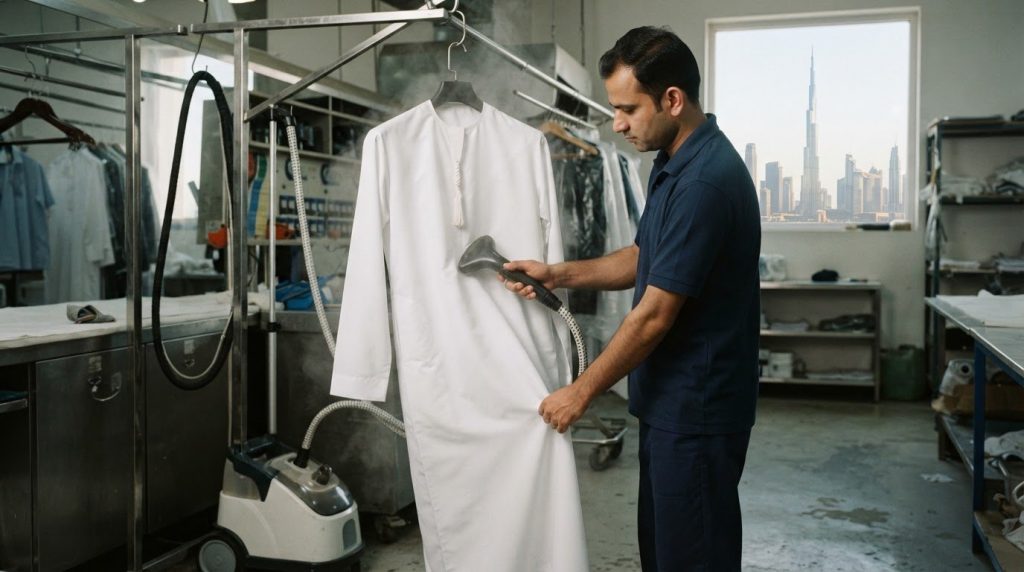
The Laundry Hub offers Steam Pressing for garments that need a neat finish and careful handling. Choose this service for suitable clothes with creases or in need of professional pressing, rather than stain removal or disinfection. Share the garment’s care-label instructions and point out details such as pleats, linings, or decorative trims to help guide the appropriate care.
For garments that need cleaning as well as finishing, Laundry and Dry Cleaning addresses a different need from steam pressing alone. Choose the service according to the garment’s condition and the result you want. Steam Pressing is one part of garment care, not a replacement for every cleaning method.
For garment-care assistance, contact The Laundry Hub.
Make garment care a considered choice
Garment care and clean urban air are related concerns, but they call for different solutions. Chemical-free garment steaming in Dubai is a garment-care choice; it does not reduce vehicle emissions or replace broader action on air pollution. The Breathe Life campaign addresses air quality, including transport-related pollution, while clothing care should suit each item’s needs.
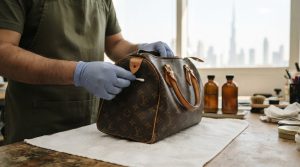
Choose care according to the garment and the result you need. The Laundry Hub also offers Laundry and Dry Cleaning, Shoe & Bag Care, and curtain and carpet cleaning for different care needs in Dubai. Keep the environmental connection in perspective: thoughtful clothing care can support your household routine, while cleaner city air depends on addressing pollution sources such as vehicle emissions.
For help with garment care, Contact The Laundry Hub today. Make your next care decision with confidence and choose the approach that fits the item.
Frequently Asked Questions
What does chemical-free garment steaming mean?
It means using steam to treat a garment without adding a chemical cleaning agent during the steaming process. For example, a steam press can refresh the appearance of a suitable jacket without washing it. The phrase describes the treatment method; it does not guarantee that the garment is free of residue or has been cleaned, stain-treated, or disinfected.
Which Dubai laundry services offer chemical-free garment steaming?
The Laundry Hub offers Steam Pressing in Dubai for garments that need a pressed finish. Appropriate care depends on the item’s construction and care instructions. A garment that needs soil removal may require Laundry and Dry Cleaning rather than pressing alone. When arranging garment care, share the item’s needs and the finish you want so the service suits the task.
