






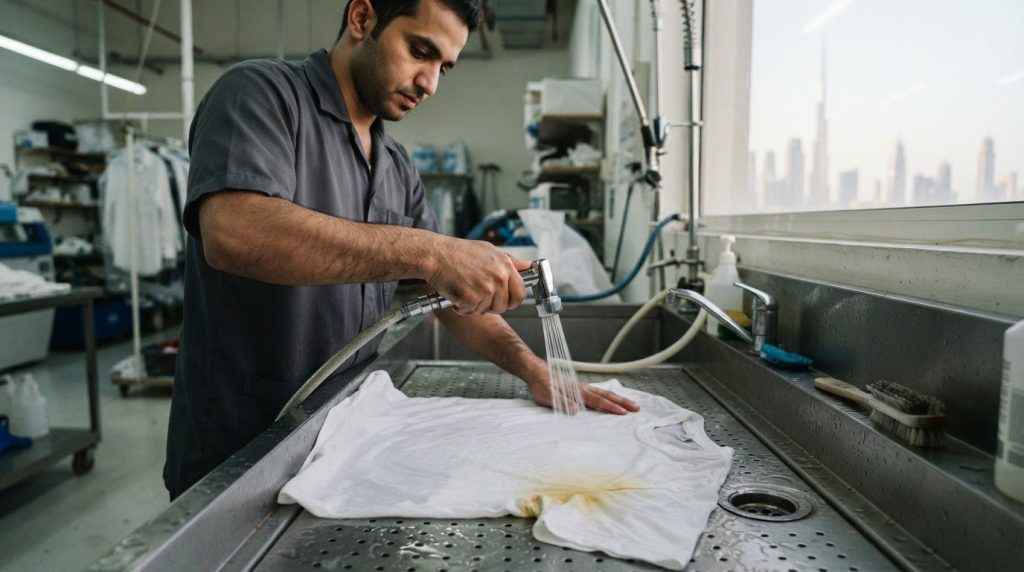
White clothes usually turn yellow because sweat, deodorant, detergent residue, minerals, or storage-related oxidation build up in the fibres, not because a single wash has failed. In Dubai, heat and frequent sweating can make underarm marks more noticeable. To understand why white clothes turn yellow in a Dubai wash, look at what may remain on the fabric and how it was cleaned.
It’s frustrating to take a garment from the wash expecting a fresh white finish and find a dull cast or yellow patches instead. The cause isn’t always bleach: too much detergent or fabric softener can leave residue, while overly strong or repeated chlorine bleach may weaken fibres and contribute to yellowing.
This guide covers common causes, including sweat and deodorant, mineral deposits, fabric-care mistakes, and long-term storage. It also explains how detergent residue and bleach can affect white clothing, and which clues can help distinguish a removable stain from yellowing linked to fabric ageing or storage.
Key Takeaways
- Use detergent and fabric softener sparingly; leftover product can combine with sweat and dirt, leaving whites looking dull.
- Wash sweat-exposed whites promptly and separately, then air-dry them to help reduce buildup and unwanted colour transfer.
- Check garment care labels before using bleach. Chlorine bleach can damage fibres, while vinegar won’t reverse every yellow stain.
- Store garments only when completely dry, in a clean, breathable cover, and look for early signs of discolouration.
Detergent and fabric-softener residue
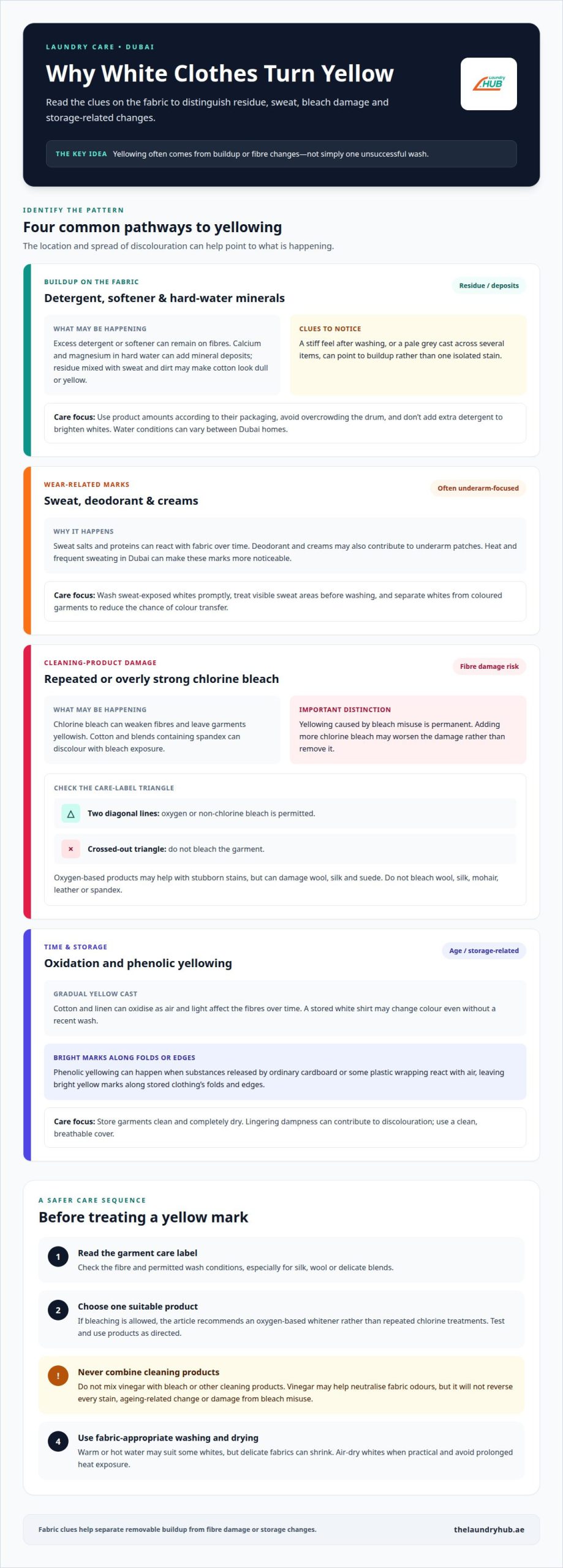
Excess detergent can stay trapped between fabric fibres after washing. When residue combines with sweat and dirt, white cotton can look dull or yellow. Calcium and magnesium determine water hardness, and deposits from hard water can add to the film. In Dubai, water conditions can vary between homes, so the same detergent dose may rinse differently. If a shirt feels stiff after washing, leftover product may be part of the cause.
Fabric softener can also leave a coating, especially when you use more than the load needs. That coating may hold onto body oils and dust instead of leaving fibres clean. Follow the detergent and softener packaging, and don’t add extra product to brighten whites. A crowded drum can also limit rinsing, so leave clothes room to move through the wash and rinse stages. A pale grey cast across several items points to buildup more than to one isolated stain.
Residue isn’t the only reason white fabric changes colour. Cotton and linen can oxidise as air and light affect the fibres over time, creating a gradual yellow cast. A stored white shirt may therefore look different even without a recent wash. Store garments clean and fully dry, since lingering dampness can contribute to discolouration. Bright yellow lines along folded edges may also indicate a storage-related reaction rather than detergent left from one wash.
Care labels indicate which wash conditions suit each fabric. Read the label before choosing a water temperature or cleaning product, especially for silk, wool, or delicate blends. Warm or hot water may suit some whites, but delicate fabrics can shrink. For example, a silk blouse needs gentler handling than a sturdy cotton towel. If the label warns against bleaching, don’t use bleach to address a yellow cast. Following the care instructions helps prevent fibre damage and additional discolouration from residue.
Why do white clothes turn yellow?
Sweat, minerals, and storage conditions can all affect white fabric. In Dubai, hard water may contribute mineral deposits, while washing and drying habits influence how much residue remains.
Hard Water and White Laundry
Hard water contains minerals, including calcium and magnesium, that can leave deposits on fabric. Those deposits may make white clothes look dull or yellow, especially when combined with detergent residue. Hard water in Dubai can contribute to yellowing, but the effect depends on the water reaching your home and your laundry routine. A mineral film across several garments may point to buildup rather than one isolated stain.
Tap Water and Water Softeners
A water softener isn’t automatically necessary for laundry. Mineral deposits can affect wash results, but whether a softener is suitable depends on whether buildup is affecting your clothes and washing machine. Follow your machine and detergent instructions, and don’t add extra detergent to compensate. A white garment’s appearance alone doesn’t establish whether tap water is suitable for drinking; that’s a separate question from laundry care.
Prompt washing matters, particularly after sweating. Sweat salts and proteins can react with fabric over time, while deodorant and creams may contribute to underarm patches. Wash sweaty shirts soon after wearing, ideally before marks become established. Treat visible sweat areas before washing, and separate whites from coloured garments to reduce the chance of colour transfer.
Choose wash conditions according to each care label. Warm or hot water may suit some whites, but delicate fabrics can shrink. A cotton towel and a silk blouse shouldn’t automatically share the same cycle. After washing, air-dry whites when practical, avoiding prolonged heat exposure that may contribute to yellowing. Before seasonal storage, make sure every item is completely dry. Even slight dampness can encourage musty odours, mould, and discolouration.
If mineral residue or recurring dullness is difficult to manage at home, professional Laundry and Dry Cleaning can help with garment care.
Vinegar, chlorine bleach, and phenolic yellowing
For safer stain treatment, start with the garment’s care label and don’t combine cleaning products. Vinegar may help neutralise fabric odours, but it isn’t bleach and won’t reverse every stain or age-related change.
Never mix vinegar with other cleaning products. Using it alongside bleach can create a hazardous combination, so use one product at a time and follow its label. Vinegar also cannot restore fibres yellowed through ageing or bleach misuse.
Chlorine Bleach Overuse
Repeated or overly strong chlorine bleach can weaken fabric fibres and leave white garments yellowish. This risk matters especially for cotton and blends containing spandex, which can discolour with bleach exposure. Yellowing caused by misuse is permanent, so adding more chlorine bleach may worsen the damage instead of removing it. A crossed-out triangle on the care label means don’t bleach the garment.
Care symbols distinguish bleach types. A triangle with two diagonal lines permits oxygen or non-chlorine bleach, while a crossed-out triangle rules out bleaching. Check the whole care label before using any whitener. Oxygen-based products may help with stubborn stains, but they can damage wool, silk, and suede. Don’t bleach wool, silk, mohair, leather, or spandex.
Safe Removal of Yellowing
For a washable white garment, identify its fibre first and follow the care label. If bleaching is permitted, choose an oxygen-based whitener rather than relying on repeated chlorine treatments. Test the product as directed, and don’t combine it with vinegar, chlorine bleach, or other cleaners. This approach reduces the risk of worsening existing fibre damage.
Phenolic yellowing has a different source: substances released by ordinary cardboard or some plastic wrapping can react with air. This reaction may leave bright yellow marks along folds and edges of stored clothing. If yellowing follows storage creases, inspect the packaging and don’t return clean whites to the same wrapping. For delicate or valuable pieces, avoid aggressive home whitening that could damage the fibres.
Common causes of yellowing in white clothes
Yellowing has several possible causes, and the stain pattern offers useful clues. Underarm patches often point to sweat, deodorant, or creams reacting with fabric. A dull cast across several garments may indicate detergent residue or mineral deposits. Bright yellow lines along folds can suggest a storage reaction. Identifying the pattern helps you avoid treating every white garment with bleach.
Look closely at the affected area before choosing a treatment. Orange-brown marks near pins, hooks, or metal trims may come from rust or metal transfer. These spots need fabric-specific rust treatment, not general whitening. Yellowing with a musty smell may indicate mould or mildew. Isolate the garment and address the mould before considering whitening products.
Fibre age matters too. The US Department of Agriculture notes that cotton and linen can yellow naturally as fabric strength declines. Air and light can also oxidise white textiles over time. For stored clothes, inspect the fold lines and surrounding fabric: isolated bright marks may reflect contact with ordinary cardboard or some plastic wrapping. Damp storage can add musty odours and discolouration.
Blended fibres create another complication. Even a small amount of spandex can yellow when washed with bleach, so a garment’s white appearance doesn’t reveal its fibre content. Check the care label and fibre information before applying whitening products. These clues can help narrow down the cause:
- Underarm yellowing: consider sweat, deodorant, or creams.
- Overall dullness: consider residue or mineral deposits.
- Rust-coloured marks: inspect nearby metal trims or fasteners.
- Folded yellow lines: review storage materials and conditions.
For stubborn marks or valuable garments, arrange professional garment cleaning rather than trying stronger bleach. Matching treatment to the cause helps protect fibres and prevents a stain from becoming permanent.
The Laundry Hub: wash and fold service
The Laundry Hub’s wash and fold service is a practical option for routine clothing care, especially when recurring residue or yellowing makes home washing difficult. For garments that need a different cleaning approach, Laundry and Dry Cleaning offers care for everyday and delicate items.
Share any visible yellowing and relevant care-label instructions when arranging garment care. These details help guide suitable handling, particularly for whites affected by sweat marks, storage, or previous bleach use. For household textiles, The Laundry Hub also provides curtain and carpet cleaning.
For help with laundry care, contact The Laundry Hub.
Give Your Whites a More Considered Next Step
Understanding why white clothes turn yellow in a Dubai wash can change how you approach garment care. Instead of treating every discoloured item the same way, use its fabric, care label, and stain pattern to guide what happens next. For delicate, valuable, or persistently marked garments, professional handling can be a sensible alternative to stronger home treatments.
The Laundry Hub offers Laundry and Dry Cleaning for garments, plus Shoe & Bag Care for accessories that need dedicated attention. Its curtain and carpet cleaning also supports household textile care. Choose the service that matches the item, and share any visible marks or care-label details when arranging it.
Keep your next step simple: discuss garment care with The Laundry Hub. With a thoughtful approach to each item, you can care for your whites with greater confidence.
Frequently Asked Questions
What is phenolic yellowing?
Phenolic yellowing is a yellow mark caused by a reaction between air and substances released by some packaging materials, including ordinary cardboard and certain plastic wrapping. It may appear on a garment that looked clean when stored, often following its folds or edges. If marks emerge after storage rather than immediately after washing, consider the garment’s packaging and storage conditions before treating them as a wash stain.
Why do white clothes turn yellow after washing in Dubai?
White garments can look yellow after washing when minerals or leftover laundry products remain on the fabric, or when pre-existing sweat and product marks become more visible. The pattern offers a clue: a general dull cast differs from concentrated underarm patches. If several items change in a similar way, consider shared wash conditions. If one shirt has local marks, examine that area and its previous wear.
Can detergent residue or too much detergent yellow white clothes?
Yes. Excess detergent can remain among the fibres and combine with soil or sweat, leaving fabric dull or yellowish. Follow the detergent packaging for the load size and machine instead of adding more to tackle a visible mark. If a garment feels coated or stiff after washing, residue may be contributing. This isn’t proof, since mineral deposits and stains can cause similar changes.
Does using chlorine bleach cause white clothes to yellow?
Yes, repeated use or an overly strong chlorine bleach solution can weaken fibres and contribute to yellowing. Check the care label before choosing bleach: a crossed-out triangle means the garment shouldn’t be bleached. If a white item has already yellowed after bleach misuse, another dose may deepen the damage. Pay particular attention to blends, since even a small amount of spandex can be affected.
Can sweat, deodorant, sunscreen, or body oils cause yellow stains on white clothes?
Yes. Sweat can react with fabric over time, and deodorant or creams can contribute to yellow patches. Sunscreen and other body products may also leave residue where they touch clothing. Look at where the mark sits: underarm stains suggest sweat or deodorant, while marks around a neckline may follow contact with skin or personal-care products. Treat visible marks before washing, using a method suitable for the garment’s care label.
How do high temperatures and humidity in Dubai affect white laundry?
Heat and humid storage conditions can matter after washing, particularly if clothing is put away before it’s completely dry. Damp fabric can develop musty odours, mould, and discolouration; prolonged exposure to air and light can also contribute to yellowing. In Dubai, avoid storing whites in humid spaces or sealed plastic bags while damp. Dry garments fully, then use a clean, breathable cover for longer-term storage.
