



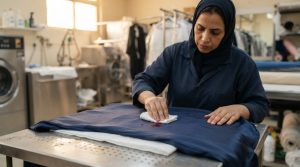
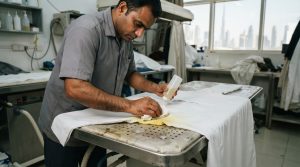
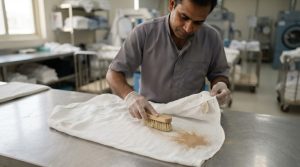
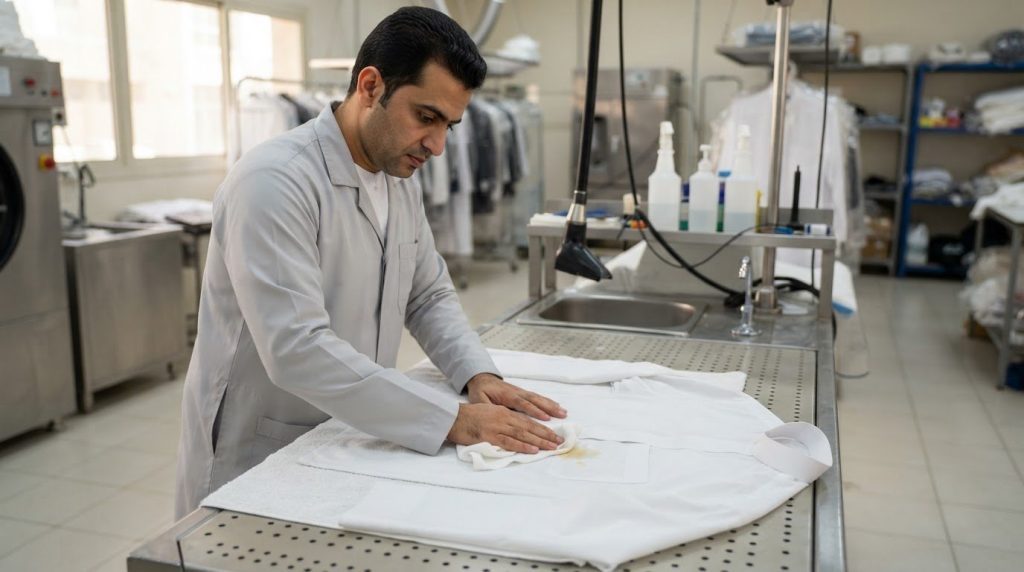
A fresh cooking oil or grease stain needs attention before heat can set it into the fabric. For cooking oil and grease stain removal, a dry cleaner assesses the garment’s care label, fabric and stain before choosing a suitable treatment, then keeps it away from dryer heat until the mark is gone.
If a stain remains after washing, avoid further heat, which can make it harder to remove. The right approach depends on the material and what has already been done. This guide explains how professionals assess grease marks, choose suitable treatments and protect garments from heat, so you’ll know what information to share when you bring in a stained item and what to expect.
Key Takeaways
- Prompt, gentle handling helps limit how far fresh cooking oil or grease spreads through a garment.
- A professional assesses the fabric, care label and stain before selecting a suitable pretreatment.
- Keep a stained garment away from dryer heat until the mark has been removed.
- Sharing what caused the stain and any treatments already tried helps guide the cleaning process.
How dry cleaners remove excess grease
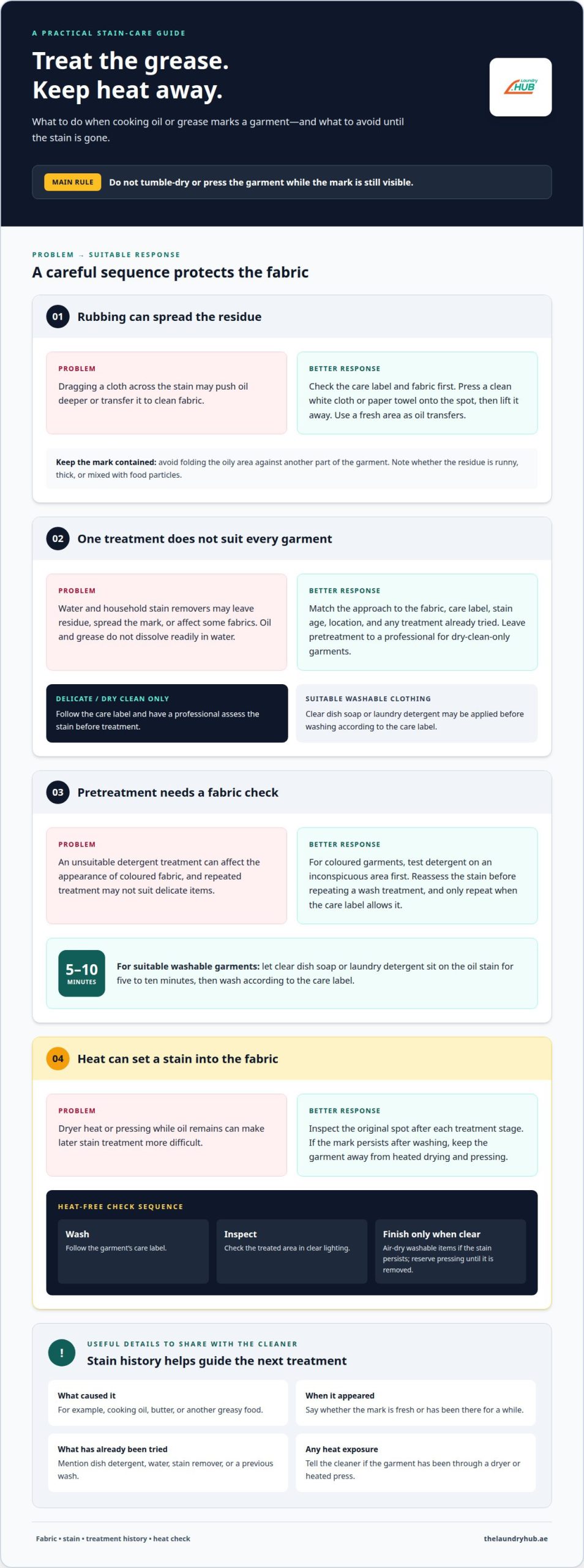
A dry cleaner should first inspect the care label and stain, then gently blot away surface oil or grease with a paper towel or clean white cloth. The aim is to lift excess residue without rubbing it deeper or spreading it across the fabric.
- Inspect the garment before treatment. Read the care label and assess the fabric, stain location and affected area. A cooking oil mark on a delicate jacket needs a different assessment from one on washable cotton. This step helps determine how to handle the garment appropriately.
- Blot excess residue gently. Press a clean white cloth or paper towel against the mark, then lift it away. Use a fresh part of the cloth as oil transfers instead of dragging residue across the fabric. Gentle blotting removes surface oil without the rubbing that can spread the stain.
- Handle oil and grease as related stains. Oil is typically liquid, while grease is semi-solid, but similar basic stain-removal methods may apply to both. Note whether the mark is runny, thick or mixed with food particles, as these details affect how residue sits on the garment.
- Limit transfer to clean areas. Keep the affected section controlled while blotting, and avoid pressing it against another part of the garment. For example, treat a mark near a shirt hem without folding the oily surface onto the fabric beneath it.
- Record the stain’s condition before cleaning. Note whether it is fresh, whether the garment has already been washed and whether you have tried any treatment. These details help the cleaner assess what remains on the fabric and plan the next stage.
How dry cleaners pretreat stains with suitable products
Tell the cleaner what caused the stain, when it appeared and which home treatments you tried. Mention, for example, dish detergent, water or a previous wash.
Water or household stain removers can leave residue, spread the mark or affect some fabrics. If the care label says dry clean only, leave pretreatment to a professional.
- Read the care label before selecting a product. The fabric type and care instructions guide pretreatment. A dry-clean-only jacket, for example, should not receive the same detergent treatment as washable cotton. This assessment helps avoid products that conflict with the garment’s care requirements.
- Match the treatment to the stain and fabric. Cooking oil and grease do not dissolve readily in water, so the cleaner selects an appropriate treatment rather than relying on water alone. The stain’s age, location and treatment history also matter. A spot treated at home may call for a different approach from a fresh, untreated mark.
- Use detergent selectively on washable garments. For suitable washable clothing, clear dish soap or laundry detergent can be applied to the oil stain before machine washing. Let the detergent sit for five to ten minutes, then wash according to the care label. This is not a substitute for professional care of dry-clean-only items.
- Test coloured fabric before detergent pretreatment. On coloured garments, test detergent on an inconspicuous area first to assess colour fastness. This is especially relevant for a vivid blouse or patterned shirt, where an unsuitable product could affect the fabric’s appearance. The cleaner can then make a more informed choice.
- Reassess before repeating treatment. If an oil mark remains after washing, repeat the pretreatment and wash process only when the care label allows it. For delicate or dry-clean-only garments, professional stain care is the more suitable next step than adding more household products.
Why dry cleaners avoid heat before stains are removed
Heat can set an oil or grease mark into fabric and make later treatment more difficult. A cleaner checks the stain before using heated drying or pressing.
There is no single fixed turnaround for professional oil-stain removal. The garment’s fabric, stain age, previous washing and response to treatment determine the cleaning and inspection stages required.
- Keep the garment away from dryer heat. If cooking oil remains visible after washing, don’t put the item in a tumble dryer. Heat may set the residue, so inspect a stained cotton shirt before using heated drying.
- Check the mark after each treatment stage. Inspect the original spot in clear lighting before deciding whether the garment is ready for finishing. A faint oily outline on a trouser leg still needs attention, even if the surrounding fabric looks clean.
- Repeat suitable treatment instead of applying heat. If a mark remains, the cleaner can reassess the fabric and stain before choosing another appropriate treatment. A cooking oil stain that has already been washed may need a different approach from a fresh mark.
- Air-dry a washable garment if the stain persists. After washing, let the item air-dry rather than using a heated dryer while the mark remains. This avoids adding dryer heat while the stain is being assessed.
- Reserve pressing until the stain is removed. The cleaner should inspect the treated area before applying heat through pressing. For example, a visible spot on a blouse should not be pressed just because the rest of the garment is ready for finishing.
- Account for earlier heat exposure. Tell the cleaner if the garment has already been through a dryer or heated press. This history helps explain why an oil mark may need closer assessment and additional treatment before finishing.
How dry cleaners remove fresh cooking oil and grease stains
Yes, professional dry cleaning can treat grease stains on silk, wool and other delicate fabrics. The cleaner follows the care label and assesses the fresh stain before choosing a suitable method.
- Identify the stain and garment promptly. Note whether the mark came from cooking oil, butter or another greasy food, and where it landed. A fresh spot on a silk blouse needs a different assessment from oil on a washable cotton shirt.
- Review the care label before treatment. The label helps establish whether the garment is washable or requires dry cleaning. Since oil does not dissolve readily in water, the cleaner considers both the fabric and stain when choosing the next step.
- Assess how fresh the mark is. A stain brought in before washing or drying has not been exposed to those processes. The cleaner can assess its condition, affected area and any food residue before choosing a suitable treatment.
- Choose treatment for the fibre. Silk, wool and delicate fabrics need an approach suited to their care instructions. For example, a detergent process intended for washable cotton should not automatically be used on a wool jacket.
- Inspect the affected area after treatment. Check the original spot rather than judging the garment by its overall appearance. A faint cooking oil mark on a cuff, for instance, may still need attention before the garment moves to finishing.
- Keep heat out of the process while the stain remains. A fresh mark should not be exposed to dryer heat or pressing before removal. If you have a newly stained delicate garment, arrange professional stain treatment before attempting a home wash.
The Laundry Hub
The Laundry Hub provides Laundry and Dry Cleaning for garments stained with cooking oil or grease. Bring the item in for professional assessment if the fabric is delicate, the care label calls for dry cleaning or a home wash has left the mark visible. Sharing what caused the stain and any treatment you have tried helps guide its care.
Keep the garment away from dryer heat until the stain has been assessed. The Laundry Hub also cares for household textiles with curtain and carpet cleaning, and offers garment services such as steam pressing. Each service addresses a different care need. For this stain, the practical next step is to arrange a professional assessment rather than applying more heat or products at home.
Contact The Laundry Hub to discuss professional care for your stained garment.
Choose a careful next step for your garment
A stain is easier to assess when its history is clear. When arranging professional care, share what caused the mark and whether the garment has been washed, dried or treated at home. This context helps the cleaner assess the fabric and choose an appropriate approach. For cooking oil grease stain removal, a dry cleaner can evaluate the garment and its care needs.
Choosing a dry cleaner for cooking oil grease stain removal gives you a professional assessment before further treatment. The Laundry Hub provides Laundry and Dry Cleaning for garments, as well as Shoe & Bag Care and curtain and carpet cleaning for other care needs. Keep the stained garment away from heat while arranging an assessment.
Contact The Laundry Hub to discuss care for your stained garment and take the next step with confidence.
Frequently Asked Questions
Grease and Oil Stains Still There After Washing and Drying?
If a grease stain remains after washing and drying, stop applying heat and have the garment professionally assessed. Tell the cleaner it has been through both processes and describe any detergent or stain remover used. For example, a cooking oil mark on a shirt may need a different assessment after tumble drying than before its first wash. Keep the care label available.
How do dry cleaners remove motor oil from a shirt?
A dry cleaner assesses the shirt’s fabric and motor oil mark before selecting a treatment. Motor oil may contain contaminants that make the stain more stubborn, so tell the cleaner what caused it rather than describing it only as grease. Mention whether the shirt has already been washed or treated, as that history helps guide the assessment.
How do dry cleaners remove oil stains from jeans?
A cleaner checks the jeans’ care label, stain location and treatment history before choosing how to handle the oil. A mark on a pocket or seam may need close inspection because fabric layers can hold residue differently from a flat area. Mention whether the jeans have been washed, dried or treated at home.
What makes oil stains difficult to remove?
Oil stains resist ordinary washing because oil does not dissolve in water. A greasy mark can also be harder to assess after other products have been applied, as detergent or stain remover may leave residue around it. For instance, if you have used several household products on a food-oil spot, tell the cleaner what they were before further treatment.
How do dry cleaners remove cooking oil and grease stains from clothes?
Dry cleaners assess the garment’s care label, fabric and stain, then select an appropriate cleaning and pretreatment approach. A silk top with a cooking oil spot, for example, needs a different assessment from washable cotton trousers. Tell the cleaner what caused the mark and what has happened since, so they can account for the garment’s condition and treatment history.
Can dry cleaners remove old or set-in cooking oil stains?
A dry cleaner can assess an old cooking oil stain and determine a suitable treatment for the garment. Share whether the item has been washed, exposed to dryer heat or treated with a household product. A set-in mark on a jacket, for example, should be assessed alongside its care label and fabric rather than sent through another heated drying cycle at home.
