






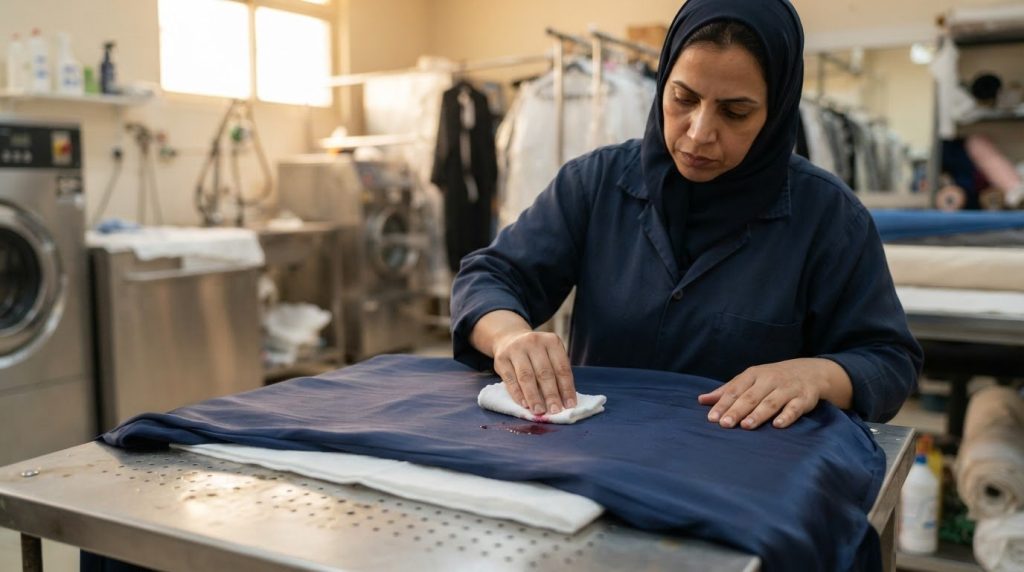
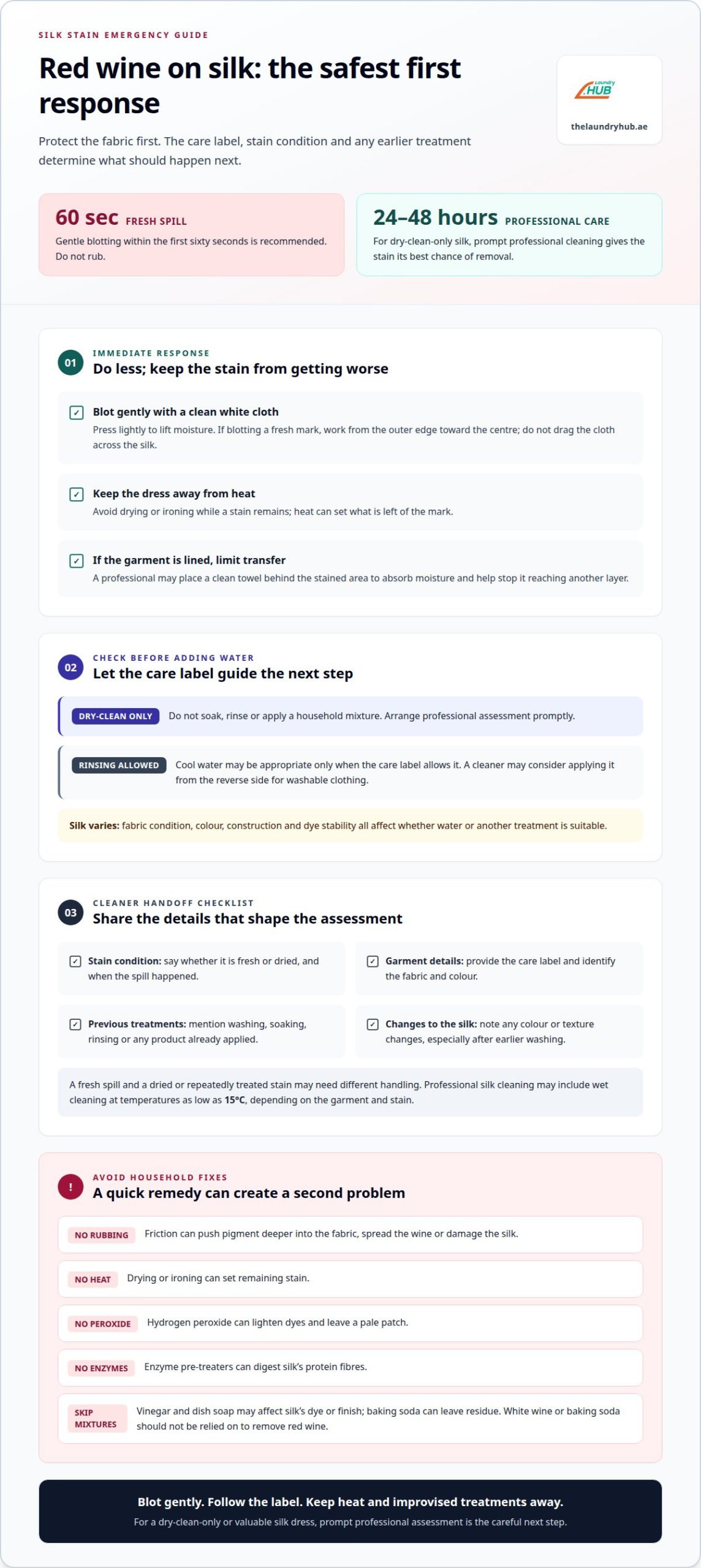
The safest emergency fix is often to do less. A red wine stain on a silk dress may be removable, but the right response depends on its care label: gently blot the spill, keep the fabric away from heat, and avoid rubbing. If the dress is marked dry-clean only, don’t soak, rinse, or apply a household mixture; prompt professional cleaning, ideally within 24 to 48 hours, gives the stain its best chance of removal.
A red wine spill on silk is stressful, especially when the dress is delicate or valuable. Acting carefully matters more than trying every remedy at hand: friction and unsuitable treatments can damage the fabric or make the stain harder to remove.
Here’s what to do immediately, which household fixes to avoid, and how professional cleaning can help care for the dress. You’ll also learn what to do if the stain has dried, so you can choose a considered next step without adding unnecessary risk.
Key Takeaways
- Silk may be salvageable after a red wine spill, but the care label and fabric condition shape the safest approach.
- Blot gently rather than rubbing, and keep the dress away from heat while the stain remains.
- Avoid household treatments that can harm delicate silk or affect its colour; some quick fixes may create a bigger problem.
- For dry-clean-only or valuable dresses, prompt professional cleaning is a careful next step, especially if the stain persists.
Can red wine stains be removed from silk?
A red wine stain can sometimes be removed from silk, but results depend on the fabric, dye and stain condition. An emergency fix for a red wine stain on a silk dress starts with sharing the care-label instructions, when the spill happened and what treatments have touched it.
-
How Professionals Treat Fresh and Dried Wine Stains
Tell the cleaner whether the wine is fresh or dried and describe any previous treatment. A fresh stain gives the cleaner a different starting point from wine that has settled into silk fibres. Red wine’s anthocyanin pigments create its deep colour, so the stain’s age and the fabric’s response help guide treatment.
For a dried mark, describe any colour or texture changes after earlier washing. Avoid heat before assessment, since drying or ironing can set remaining stain. These details help the cleaner choose an approach suited to the fabric and garment.
-
Understand Professional Treatments for Wool, Blouses, and White Clothes
Identify the garment’s fabric and colour before treatment, especially for a silk blouse or white item. A blouse made from 100% silk needs delicate handling, while wool calls for cold water, minimal friction and mild wool detergent. A treatment suited to one fabric may harm another.
For white clothes, a professional may consider an oxygen-based stain remover only when the care label permits it. That option doesn’t automatically suit silk. Share the label and colour details rather than relying on white wine or baking soda to remove red wine.
- Ask for silk-specific assessment rather than a standard washing cycle. Professional silk cleaning may include wet cleaning at temperatures as low as 15 degrees, depending on the garment and stain. The cleaner considers the label, dye stability and any effects from earlier washing before selecting a method.
Repeated washing isn’t a reliable solution for a persistent mark. Unsuitable treatment can affect delicate fabric’s appearance and feel. A cleaner assesses the stain alongside the silk itself.
- Give the cleaner a clear account of the spill and the garment’s history. Distinguish a fresh spill on a silk dress from a dried mark on a silk blouse, and mention whether white wine, baking soda or another product was applied. These details help guide the assessment.
Include the care label and disclose any previous washing, soaking or stain treatment. A careful emergency fix for a red wine stain on a silk dress depends on assessing these details before choosing a treatment method.
Professional first aid for fresh red wine stains on silk
A professional cleaner can use cool water only when the silk’s care label allows rinsing. The label, fabric condition and stain location guide whether water is appropriate. An emergency fix for a red wine stain on a silk dress starts with careful assessment, not a rushed wash.
-
How Professionals Blot a Spill Without Rubbing
Tell the cleaner when the spill happened and whether anyone has already treated it. For a fresh spill, a professional may gently blot the silk with a clean white cloth, working from the stain’s outer edge towards its centre. The aim is to lift moisture without spreading wine across the garment.
Rubbing or scrubbing can push pigment deeper into the fabric and cause damage. A cotton cloth may be used if it’s clean and colourfast, but it should be pressed lightly rather than dragged over the silk. Mention any detergent or stain remover used, since earlier products can affect the next treatment.
-
How Professionals Contain a Fresh Stain
Bring the dress in for assessment promptly and explain where the wine landed. A cleaner can place a clean towel behind the stained area to absorb moisture and help prevent transfer to another layer of the garment. This matters with a lined dress, where liquid could otherwise reach the fabric beneath the visible stain.
Professionals work carefully around the mark, avoiding pressure that might drive wine outward or deeper. Blotting a fresh silk stain within the first sixty seconds is recommended, but continued rubbing is not. If the spill happened away from home, tell the cleaner about any temporary measures, including salt or sparkling water.
-
How Professionals Assess Cold Water Treatment for the Stain
Provide the care label so the cleaner can assess whether cool-water treatment is suitable. For washable clothing, cool water may be applied from the reverse side to help move wine back out through the fabric. On a dry-clean-only silk dress, soaking or rinsing isn’t the appropriate emergency response.
A cleaner also considers the silk’s colour and construction before using water, detergent or a stain remover. A professional emergency fix for a red wine stain on a silk dress should suit the garment, not just the mark. Mention if the dress has already been rinsed, since added moisture can change how the stain appears during assessment.
- Ask for the stain to be assessed before washing or applying another product. The cleaner can examine the affected area, care instructions and any earlier treatment, then choose an approach suited to silk. A fresh mark and one that has been treated repeatedly may need different handling.
For careful professional dry cleaning, share the dress’s care label and spill history with the cleaner.
Risks of household stain-removal remedies
- Keep household mixtures off delicate silk until its care label has been assessed. Vinegar and dish soap may be suggested for other fabrics, but a DIY mixture can affect silk’s dye or finish. Baking soda can also leave residue; testing it on an inconspicuous area is advised for coloured or delicate clothing, but that doesn’t prove it will safely remove wine.
- Avoid hydrogen peroxide on silk. It can lighten dyes, leaving a pale patch where the wine stain had been. Enzyme pre-treaters are also unsuitable because enzymes can digest silk’s protein fibres. A product that helps another garment could therefore cause lasting fabric damage rather than remove the stain.
- Don’t apply a commercial stain remover, rub the spot or soak a silk dress for a prolonged period. Aggressive products, friction and unsuitable water temperatures can damage delicate fabric. Warm water can also increase the risk of setting red wine. Tell the cleaner which product touched the garment, since earlier treatment can make the stain harder to assess.
- Keep advice for white clothing separate from silk care. For compatible washable white garments, an oxygen-based stain remover may help with remaining wine colour, but only when the care label permits it. That treatment isn’t a universal silk solution. A professional considers the garment’s label and fabric before deciding whether stain treatment or washing is suitable.
- Describe other marks accurately, including tree sap on clothing. Sap requires different handling from wine, so don’t apply vinegar, baking soda or a wine stain remover to both. Share the garment’s fabric and any products already used. This helps the cleaner assess each mark without spreading residue or adding another treatment that could affect the material.
Professional emergency care for a silk dress
- Read the care label before deciding how to handle the dress. If it says dry-clean only, avoid soaking, washing or applying a household mixture. Keep the dress away from heat, including an iron or tumble dryer, because heat can set remaining wine and make the mark permanent.
- Keep the stained dress separate from routine laundry until it receives stain treatment. An untreated wine mark should not go straight into a washing machine. Tell the cleaner whether the spill is fresh or dried, and explain if liquid, detergent or another product has already touched the silk.
- Arrange professional cleaning promptly, ideally within 24 to 48 hours of the spill. The longer wine remains untreated, the more opportunity its pigments have to settle into the fibres. A professional assesses the care label, silk condition, colour and stain history before selecting a cleaning method.
- Ask for silk-specific assessment rather than assuming every dress can use the same process. Professional silk cleaning may use wet cleaning at temperatures as low as 15 degrees. The garment’s construction and care instructions help determine whether that method suits it. Avoid bleach and enzyme pre-treaters, which can affect dyes or silk fibres.
- Give the cleaner the dress with its care label and a clear account of the spill. Mention whether the stain was blotted, rinsed or treated, and identify any product used. These details help guide the assessment, especially if earlier cleaning has changed the stain or fabric. For professional care, arrange silk dress cleaning with The Laundry Hub.
The Laundry Hub
The Laundry Hub provides Laundry and Dry Cleaning for garments that need careful attention after a spill. Bring in a silk dress when its care label calls for professional cleaning or when a stain remains after an earlier attempt. Share when the wine spilled, what treatments have touched the fabric and any washing already done. These details help the cleaner assess the dress and select an appropriate method. Avoid further household treatments while arranging care, especially if the silk is delicate or the dress is valuable. The aim is considered handling based on the fabric, care instructions and stain history, not a one-size-fits-all approach.
Contact The Laundry Hub to discuss professional care for your silk dress.
Choose careful care for the dress you want to keep
A silk dress is more than the mark it carries. Its colour, finish and drape all contribute to how it looks when worn, so stain care should consider the garment as a whole. If you’re weighing an emergency fix for a red wine stain on a silk dress, let preservation guide your next decision rather than chasing the fastest household solution.
Think beyond whether the visible mark fades. A considered approach also respects the fabric’s appearance and feel, helping you make a practical decision about a favourite or valuable piece. Share the dress’s care instructions and treatment history so its needs are clear from the start.
For tailored attention to your garment, arrange silk care with The Laundry Hub. A careful next step can help you feel more confident about wearing the dress again.
Frequently Asked Questions
How do professionals remove red wine from clothes quickly?
Professionals identify the fabric, colour and care instructions, then select a compatible stain-treatment method. A washable cotton shirt and a silk evening dress, for example, need different handling. Tell the cleaner whether the stain is still wet and whether the garment has been washed. That context helps avoid repeating an unsuitable treatment and guides the next cleaning step.
How do professionals treat red wine stains on different fabrics?
Professionals match treatment to the fibre and garment construction. Wool needs gentle handling, while silk may require dry cleaning according to its care label. For white clothing, an oxygen-based treatment may be considered if the label permits it. A lined dress, patterned blouse or delicate trim can also affect the approach, so the cleaner assesses the whole garment, not just the visible spot.
When should you call a professional cleaner?
Contact a professional when the care label says dry-clean only, the garment is valuable or a stain remains after appropriate care. It’s also sensible to seek help if an earlier product has changed the fabric’s colour or texture. For a silk dress worn to an event in Dubai, avoid experimenting with multiple household treatments before arranging an assessment.
What should you tell a professional immediately after spilling red wine?
Describe the garment’s fabric and colour, where the wine landed, and whether the mark is wet or dry. Mention any action already taken, such as blotting, rinsing or applying a product. If the care label is available, share its instructions. For example, saying that a lined silk dress was rinsed helps the cleaner understand its current condition.
Which products do professionals use to treat red wine stains, and which can cause problems?
The suitable product depends on the fabric and care label. Oxygen-based stain removers may be considered for compatible washable white garments, but they aren’t a universal silk treatment. Hydrogen peroxide can lighten silk dyes, while enzyme pre-treaters can damage silk fibres. Don’t assume a product safe for cotton or white laundry is suitable for coloured silk.
How does a professional cleaner treat a fresh red wine stain on a silk dress?
A cleaner checks the care label and examines the stain, colour and construction before selecting a silk-appropriate treatment. The cleaner may gently lift moisture with a clean cloth and assess whether the label permits water-based handling. Share whether the dress has a lining, embellishments or previous treatment, since these details can influence how the stain is approached.
