



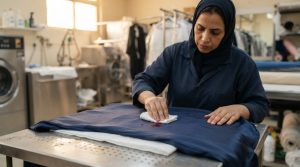



Sunscreen can leave more than an oily patch: some ingredients, including avobenzone reacting with minerals, may cause brown or rust-coloured residue. For sunscreen stain removal on linen shirts in Dubai, treatment depends on the mark and the care label, because linen needs careful handling. Acting before the stain dries can make treatment easier.
It’s frustrating to find yellowing or residue on a shirt after a day outdoors, especially when the fabric needs careful handling. This article explains why sunscreen stains clothes, which fabrics need extra attention, and how professional treatment accounts for both the mark and the garment’s care instructions. You’ll also learn what to expect when a stain has dried or reappeared after washing, and when professional laundry and dry cleaning care may help.
Key Takeaways
- Learn how different sunscreen ingredients can leave oily, yellowish, or pale residue on clothing.
- See why linen, cotton, and viscose may need different stain-handling approaches.
- Understand how professional pre-treatment and care-label-led washing help address sunscreen marks.
- Recognize when delicate, valuable, or persistent stains are better suited to professional laundry and dry cleaning.
Why Does Sunscreen Stain Clothes?
Yellow or orange sunscreen marks often come from oily residue. Avobenzone can also react with minerals in water, leaving brown or rusty discoloration on fabric.
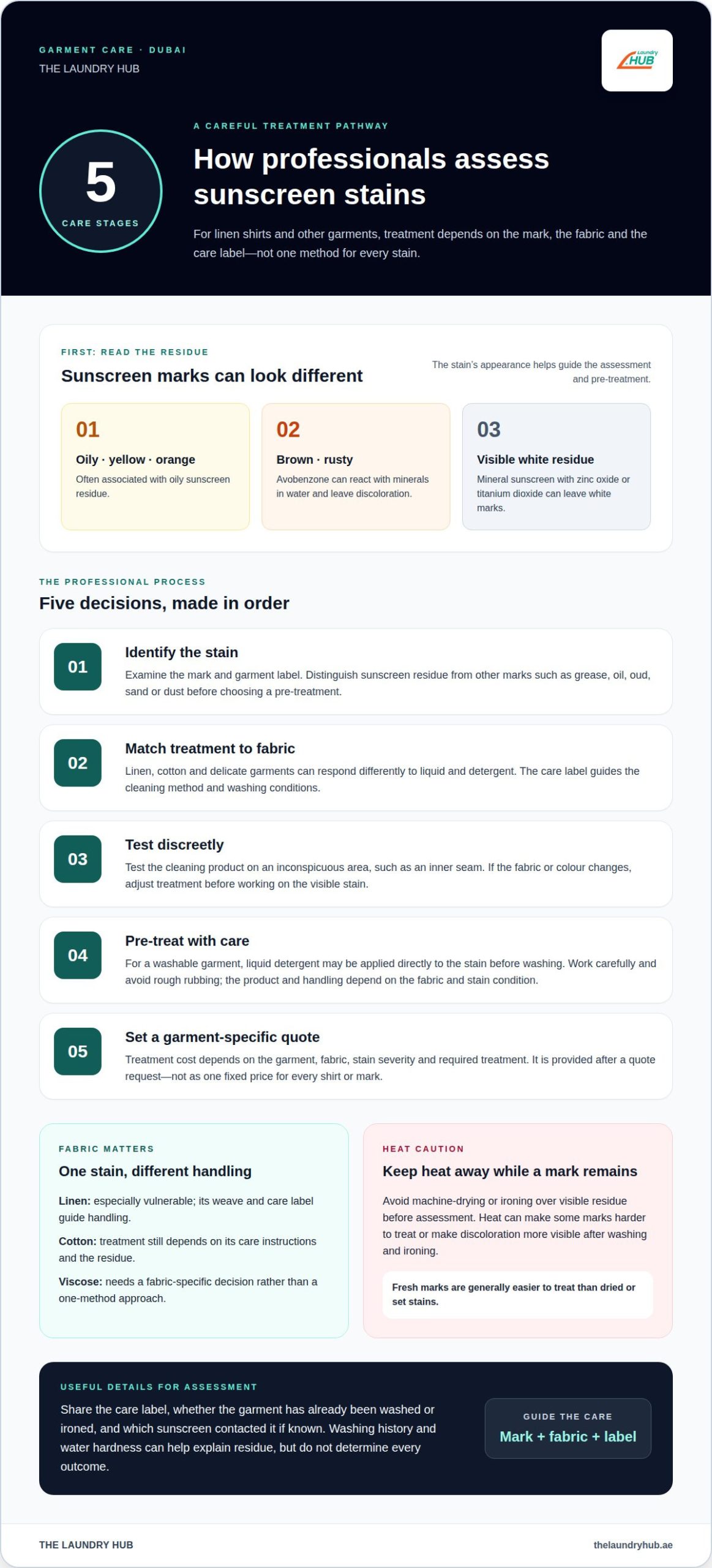
- Identify the stain before treating it. A professional examines the mark and garment label, distinguishing sunscreen residue from other common clothing stains. In Dubai, garments can also arrive with grease, oil, oud, sand, or dust. Identifying what is on the fabric helps determine the appropriate pre-treatment rather than applying one method to every mark.
- Match the treatment to the fabric. Linen, cotton, and delicate garments can respond differently to liquid and detergent. The garment’s care label helps guide the professional’s choice of cleaning method and washing conditions. A dry-clean-only label, for example, calls for a different approach from a washable cotton shirt.
- Test the treatment discreetly. Before applying a cleaning product across the stain, a professional tests it on an inconspicuous area, such as an inner seam. This checks how the fabric and colour respond. If the test area changes, the treatment can be adjusted before the visible part of the garment is handled.
- Pre-treat the sunscreen mark. For a washable garment, liquid detergent is applied directly to the stain before washing. The professional works it carefully into the affected area, avoiding rough rubbing that could disturb the fabric. The selected detergent and handling depend on the material and the stain’s condition.
- Set expectations around treatment costs. The price for stain pre-treatment or dry cleaning depends on the garment, fabric, stain severity, and required treatment. It’s given after a quote request, rather than using one price for every linen shirt or mark.
Linen and other fabrics vulnerable to sunscreen stains
- Assess the fabric before selecting treatment. Linen is especially vulnerable to sunscreen stains, so its weave and care label guide professional handling. A linen shirt may show a noticeable mark where sunscreen touched the fabric. Cotton and viscose also need fabric-specific decisions, rather than the same treatment being applied to every garment. The label helps establish suitable care before stain work begins.
- Identify the sunscreen residue. Mineral sunscreens containing zinc oxide or titanium dioxide can leave visible white residue on clothing when not treated promptly. Other sunscreen marks may appear oily or yellowish. Some ingredients can also leave discoloration that becomes visible after a garment has been washed and ironed. Identifying the mark helps determine the next treatment step.
- Avoid escalating damage with home treatments. On a delicate garment, vigorous rubbing or an unsuitable cleaning product can affect the fabric or its colour. A treatment that ignores fabric care instructions may leave a second problem alongside the original stain. Heat can also make certain stains harder to treat. For valuable or delicate clothing, professional assessment helps avoid repeated attempts that may make a mark more difficult to remove.
- Choose treatment based on the garment and stain. A professional considers the fabric, care label, sunscreen residue, and whether the mark is fresh or has already dried. The treatment for white mineral residue on a washable cotton shirt may differ from the approach for a set mark on linen or viscose. If a stain remains after washing, pressing can make it more visible. For careful handling, explore professional garment care before trying another treatment at home.
Removing sunscreen stains from clothing in Dubai
Professional treatment takes account of sunscreen residue, fabric, and care-label instructions before selecting a cleaning method. For sunscreen stain removal on linen shirts in Dubai, an assessment helps determine how to care for the shirt in its current condition.
Consider How Sunscreen Ingredients Stain Clothes
Tell the cleaner which sunscreen contacted the garment, if you know. Mineral formulas containing zinc oxide or titanium dioxide can leave visible white residue. Oily or yellowish marks may also appear, while avobenzone can react with minerals in water and leave brown or rusty discoloration. Hard water can affect washing and detergent performance, potentially contributing to residue. The stain and fabric help guide pre-treatment.
Remove sunscreen stains professionally without using a dryer
Have the garment assessed before applying dryer heat. A professional examines the stain and care label, then selects suitable pre-treatment and washing conditions. For sunscreen stain removal on linen shirts in Dubai, avoid machine-drying while residue remains: heat can make some marks harder to remove or reveal discoloration after washing and ironing. Fresh marks are generally easier to treat than dried or set stains.
- Share the garment’s care details. Include the care label and mention whether the clothes have already been washed or ironed. This helps the cleaner distinguish a fresh mark from residue that became visible after laundering and choose treatment suited to linen or another fabric.
- Keep heat away until the stain is assessed. Dubai’s warm weather doesn’t change the need to follow fabric care instructions. After treatment, linen shirts should be dried according to their care label; avoid ironing over a visible mark.
- Describe the water and washing history. Water hardness can influence detergent performance and may contribute to residue, but it doesn’t determine every outcome. Explain whether the stain appeared after washing so the garment’s history can guide assessment.
How sunscreen stains cotton, linen and viscose
For cotton, linen, or viscose, the key is to follow the care label and consider the stain rather than use one method for every garment. A professional matches treatment to the fibre, construction, and sunscreen residue.
- Identify the fibre and care instructions. Cotton, linen, and viscose can carry different washing and treatment directions, so the label guides professional handling. A washable cotton shirt and a delicate viscose garment shouldn’t automatically receive identical treatment. The cleaner also considers colour and whether the mark is oily, yellowish, or visibly white.
- Assess cotton without assuming every mark behaves alike. Sunscreen residue can appear on cotton clothes as an oily or yellowish mark, while mineral formulas containing zinc oxide or titanium dioxide can leave white residue. The professional considers the stain’s appearance and the garment label before selecting pre-treatment and washing conditions. A stain that has already been washed may need a different assessment from a fresh one.
- Give linen careful, label-led treatment. Linen is especially vulnerable to sunscreen stains, and its care label should guide the suitable treatment and water temperature. The weave, colour, and stain condition also matter. Rather than treating every linen shirt as an ordinary laundry load, a professional considers these details together before cleaning.
- Handle viscose according to its care requirements. Viscose garments should not be treated as interchangeable with cotton or linen. The label helps determine the appropriate process, while the sunscreen residue indicates what needs attention. If the garment is delicate or valuable, professional assessment can reduce the risk of damage from unsuitable home treatments.
- Choose care before the next summer wash. Tell the cleaner which fibre is stained and whether the garment has already been washed, dried, or ironed. Those details help guide treatment. For a sunscreen-marked shirt that needs careful handling, arrange professional garment cleaning rather than applying another treatment without considering its fabric care instructions.
The Laundry Hub
The Laundry Hub provides professional laundry and dry cleaning for garments marked by sunscreen. It’s a practical next step for a linen shirt that’s delicate, valuable, already washed, or still stained after home treatment. Care-label instructions, fabric type, and the mark’s condition guide its handling.
Share whether the garment has been washed, dried, or ironed, and describe where the sunscreen mark appears. These details help inform its assessment and treatment. For linen that needs careful handling, professional cleaning can help you avoid guesswork when choosing an approach.
Contact The Laundry Hub to discuss your sunscreen-stained garment.
Choose a Considered Next Step for Your Linen
Think of the next step as caring for the garment, not simply removing a visible mark. For sunscreen stain removal on linen shirts in Dubai, consider the shirt’s condition and whether another home treatment could complicate its care. If the mark persists or the fabric is delicate, professional help is a sensible option.
The Laundry Hub offers Laundry and Dry Cleaning for garments, alongside Shoe & Bag Care and Curtain and carpet cleaning. These services care for clothing, accessories, and household textiles. Choose a service suited to the item rather than applying another stain treatment without considering the material. The garment’s specific care needs should guide the next step.
To discuss care for a sunscreen-marked shirt or another textile, contact The Laundry Hub. Move forward with a thoughtful approach to caring for the items you value.
Frequently Asked Questions
Can Old Stains Be Removed?
Old sunscreen stains can sometimes be reduced, but set marks may need more than one treatment. If sunscreen has reacted with minerals or iron, home methods may not remove the mark completely. Tell the cleaner if the shirt has been washed, dried, or ironed since the stain appeared. That history helps distinguish fresh residue from established discoloration.
Does a professional use cold or warm water to remove sunscreen stains?
The care label and stain help determine a suitable water temperature. A cool rinse from the back of the fabric may help flush out residue; wash at a temperature the label allows. There is no single setting suited to every linen shirt. Professional treatment considers the fabric and previous cleaning rather than assuming warmer water will work better.
What information should you provide first when arranging sunscreen stain removal?
Describe the garment’s material, the stain’s location, and whether it looks oily, yellowish, or white. Mention the sunscreen type if you know it, along with any washing, drying, or ironing already done. A pale mark on a sleeve after laundering, for example, gives different context from fresh oily residue on the shirt front. Include the care-label instructions too.
What do washing habits or fabrics HAVE TO DO WITH STAINS?
Fabric affects which treatments and washing conditions are suitable, while washing history can change how a mark appears. Sunscreen residue may become visible after laundering and ironing, and water hardness can affect detergent performance. A washed linen shirt with a newly visible orange mark needs a different assessment from an untreated shirt with fresh white residue.
When Should You Use a Professional Cleaner?
Choose professional cleaning for a dry-clean-only garment, delicate or valuable clothing, a set stain, or a mark that remains after home treatment. This is especially relevant when a linen shirt’s label limits washing or repeated attempts could affect its colour or texture. Professional laundry and dry cleaning can assess the garment and select care suited to its condition.
How do professionals remove sunscreen stains from linen shirts?
Professionals first consider the linen care label, stain appearance, and any previous washing or pressing. They select a suitable treatment, test cleaning products discreetly, and pre-treat washable sunscreen marks with liquid detergent before washing according to the garment’s instructions. If the label calls for dry cleaning, the method changes. The shirt is assessed before treatment, rather than handled as ordinary laundry by default.
