

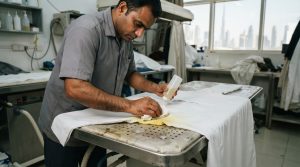
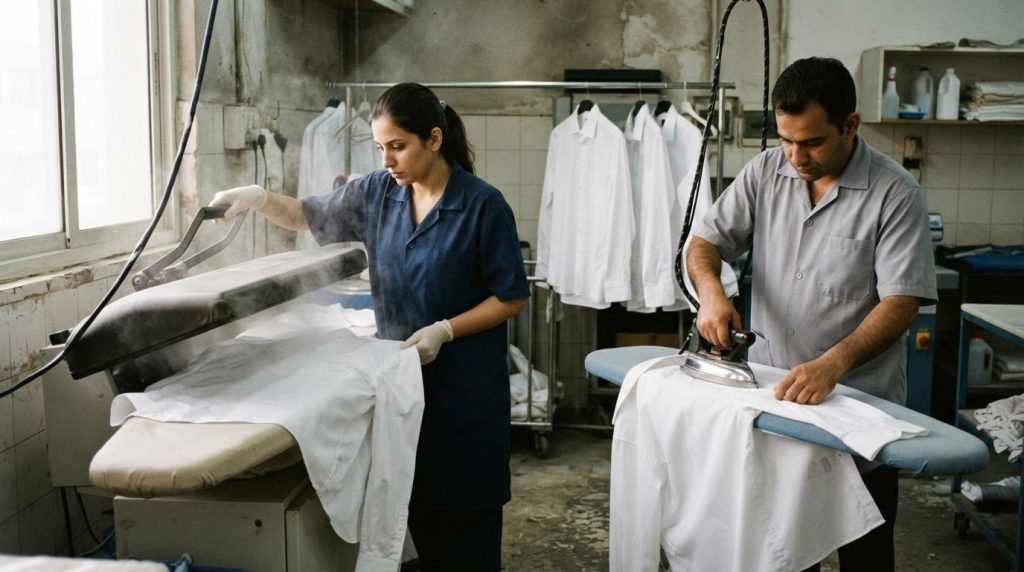
The faster method isn’t automatically the right one for every garment. The comparison of steam pressing vs traditional flat iron comes down to the finish you need: steam pressing is generally quicker and uses steam with firm, even pressure for a crisp result, while a traditional flat iron gives more direct control over temperature and pressure. Fabric type and care instructions matter just as much as the tool.
It’s understandable to want stubborn creases removed without risking shine, scorch marks or unwanted moisture. This guide explains how the methods differ in effort and moisture, which is better suited to sharp creases, and why delicate or water-sensitive fabrics need careful handling. You’ll also get a practical decision guide for professional garment care, so you can choose the method that best matches the fabric and finish you want.
Key Takeaways
- Match the pressing method to the garment’s fabric and structure, especially for delicate, loosely woven or tailored pieces.
- Understand how dry irons, steam irons, garment steamers and steam presses differ before choosing a professional finish.
- Consider how repeated movements and the area being pressed affect the effort involved.
- Learn when steam and moisture can help release stubborn creases, and when fabric care needs a gentler approach.
Is Using a Steam Press Better Than Ironing?
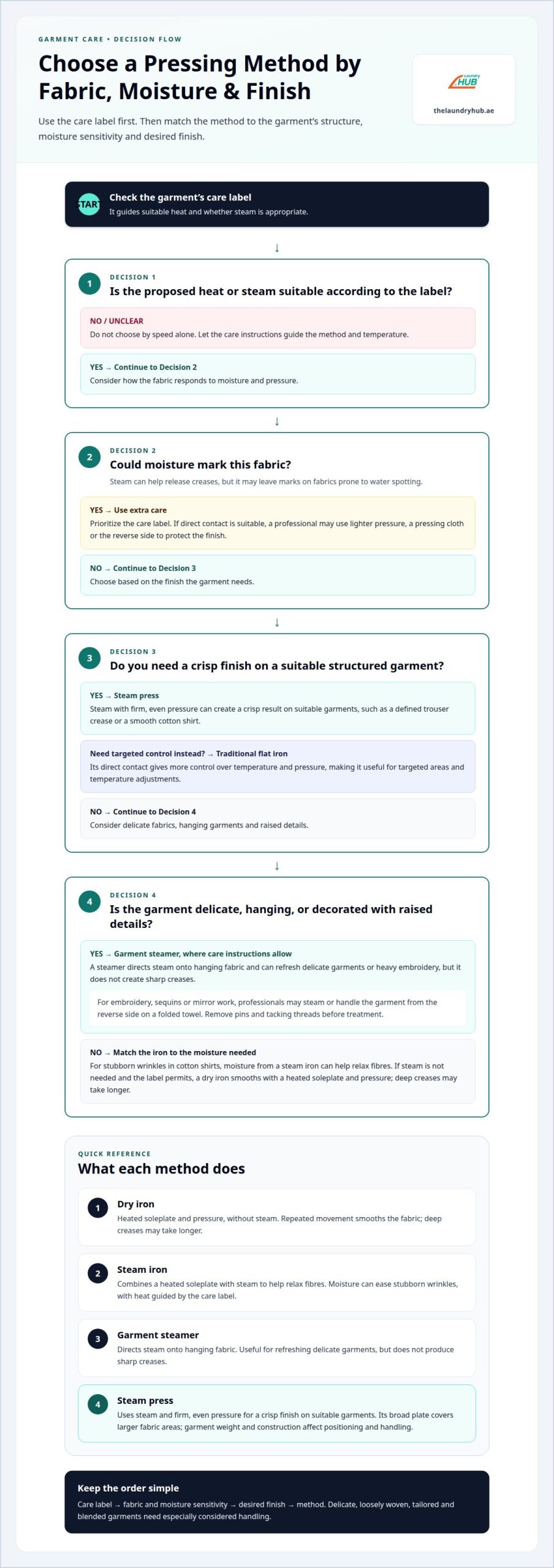
A steam press is generally faster and can produce a crisp finish, but it isn’t right for every garment. In a steam pressing versus traditional flat iron comparison, the care label, fabric structure and desired finish guide the professional’s choice.
Fabric Care and Temperature Settings
Professionals use each garment’s care label to guide the temperature and determine whether steam is suitable. Silk and chiffon need gentle handling. Wool can be steamed just above the fabric or pressed through a cloth, while velvet should be steamed rather than pressed flat. Unlike these methods, direct ironing brings the heated soleplate into contact with the garment.
Loosely woven fabric can shift or stretch under pressure, so it needs controlled handling. For suits and pleats, pressing helps maintain shape without dragging the fabric. Blended fabrics may contain fibres with different heat requirements, making the garment’s care instructions especially useful.
Shine and Scorch Risks
Direct heat and pressure can flatten fibres, leaving shine on dark trousers or delicate fabrics. Excessive heat can scorch fabric, and high temperatures can damage synthetics. Professionals may use a pressing cloth, lighter pressure or the reverse side to protect a vulnerable finish.
Steam pressing reduces sliding contact, but moisture can mark fabrics prone to water spotting. The method should suit both the material’s heat sensitivity and its response to moisture.
Choosing by Garment and Finish
The choice between steam pressing and a traditional flat iron depends on the garment and the result you want. A traditional flat iron gives direct control over temperature and pressure. A steam press uses steam and firm, even pressure, making it useful for crisp finishes on suitable structured garments.
| Option | Fabric handling | Best suited to |
|---|---|---|
| Steam press | Steam with firm, even pressure | Crisp finishes on suitable garments |
| Traditional flat iron | Direct control of heat and pressure | Targeted areas and temperature adjustments |
Choose a method by checking the care label, the fabric’s sensitivity and whether the garment needs a sharp crease or gentle shaping.
Dry irons, steam irons, garment steamers and steam presses
These methods apply heat, moisture and pressure differently. The garment’s care label, fabric and desired finish guide which method a professional selects.
Dry Irons and Steam Irons
A dry iron smooths fabric with a heated soleplate and pressure, without producing steam. It can suit garments that need gentle, controlled heat, but deep creases may take longer to remove. A steam iron combines a heated soleplate with steam to help relax fibres. For cotton shirts, moisture can ease stubborn wrinkles; the care label guides the appropriate heat.
The key difference between these irons is moisture: one presses dry, while the other delivers steam through its plate. Professionals choose according to the garment’s fabric and finish requirements, rather than applying one method to every item.
Garment Steamers and Steam Presses
A garment steamer directs steam onto hanging fabric, making it useful for delicate garments and heavy embroidery. It refreshes fabric but doesn’t create sharp creases. A steam press uses steam with firm, even pressure to produce a crisper finish. For sarees, kurtas or embroidered garments, the decoration and care label guide whether steaming or pressing is appropriate.
Before treatment, professionals remove pins and tacking threads that could leave marks. Embroidery, sequins and mirror work can be steamed or handled from the reverse side on a folded towel, helping protect raised details from flattening.
Crisp Finishes for Structured Garments
A steam press suits structured garments when a defined finish matters, such as a crisp trouser crease or a smooth cotton shirt. Its broad pressing plate applies even pressure, unlike an iron’s smaller soleplate, which allows more targeted control. Garment weight and construction affect how the fabric is positioned and handled.
Professionals follow the care label before choosing the method and temperature. They also consider whether the garment needs a sharp crease, gentle wrinkle release or protection for decorative details. For a clean, defined result on suitable garments, professional garment pressing offers a practical alternative to repeated ironing.
Manual effort and repetitive ironing movements
The effort depends on how many clothes need attention and how stubborn their creases are. A dry iron requires repeated movement across each garment, while pressing changes the action and can be faster.
Traditional Dry Ironing
A traditional dry iron smooths fabric with a heated soleplate and pressure, without steam. The operator slides it back and forth, repositioning each garment section to reach seams, collars and cuffs. This repetitive movement can make a large laundry load more demanding, particularly when cotton shirts have deep creases. The iron’s weight and the garment’s shape also affect handling.
For households that iron frequently, the total time matters. If ironing takes over an hour multiple times a week, a steam station may be worth considering. A professional can also handle garments that need a polished finish, reducing the repeated work at home.
Pressing Garments
Pressing uses a different movement: the garment is positioned, the iron is lowered briefly, then lifted before moving to the next area. This avoids ironing’s continuous sliding action. A steam press applies steam and even pressure and is generally faster than traditional ironing, especially across larger fabric areas.
Safety matters with either method. A heated iron should never be left unattended. Professional garment care also means positioning each item correctly and choosing a method suited to its care label, rather than rushing through repeated passes.
Frequency shapes the practical choice. A few garments with isolated creases require less continuous work than a full load of shirts, trousers and other clothes. A dry iron offers direct control, while a press can reduce repetitive movements on suitable garments. Either way, each item must be handled according to its fabric and finish.
Water adds another consideration for steam equipment. Professionals manage the water tank according to the machine’s instructions, including emptying it after use when the manual recommends this. That routine supports equipment care without changing how the garment is handled. For garments that need a crisp finish, pressing can be an efficient alternative to sliding a traditional iron over each section.
Steam and moisture for removing stubborn creases
Steam helps relax fabric fibres, making wrinkles easier to remove. A steam iron sends heated steam through its plate, combining moisture with contact and pressure. A dry iron instead smooths fabric using its heated soleplate and pressure, without producing steam. For cotton, moisture often helps release creases; linen generally needs moisture alongside heat, too.
Stubborn wrinkles respond differently depending on the fabric and crease. A steam iron can help with stiff folds because steam loosens fibres as the soleplate moves across the garment. A dry iron may take longer on deep creases, especially when the fabric needs dampness. The care label helps professionals determine whether steam and the required heat are suitable.
A steam press uses steam and even pressure to smooth wrinkles and create a crisp finish. This can work well on garments with defined creases, such as trousers, while a traditional iron allows targeted work on specific areas. Moisture isn’t suitable for every fabric: water-sensitive materials may develop marks, so professionals consider the fabric’s response before choosing a method.
Light creases may not need direct ironing. Professional garment steaming can refresh suitable pieces, including delicate garments and embroidered items, without creating a sharp crease. For garments that need both wrinkle release and defined trouser creases, a steam-closet machine can help maintain a crisp appearance. According to ETSI, steam-closet machines steam away wrinkles and create pant creases.
For stubborn folds in cotton or linen, steam can be more effective than dry heat alone. The deciding factors are the garment’s care label, fibre sensitivity and desired finish. A professional selects a method that releases creases while respecting those requirements.
For crisp, professionally handled garments, arrange steam pressing as part of your garment care.
The Laundry Hub: Steam Pressing
The Laundry Hub provides Steam Pressing for garments that need a crisp, professionally finished appearance. It’s a practical choice when several clothes need careful, consistent pressing or a structured garment needs more than a quick wrinkle refresh. The appropriate method depends on the fabric, garment construction and care instructions, especially for delicate or decorated pieces.
Professional pressing can ease the work of handling multiple garments and help achieve a neat finish without repeated ironing at home. For items requiring other garment care, Laundry & Dry Cleaning is also available.
Contact The Laundry Hub to discuss steam pressing for your garments.
Choose Care That Fits the Garment
Choose between steam pressing and a traditional flat iron according to the garment’s needs, not habit. For a treasured, structured or delicate item, professional handling can help avoid repeated home pressing and simplify garment care. Consider which pieces need a crisp finish and which would benefit from broader garment care.
The Laundry Hub offers Steam Pressing and Laundry & Dry Cleaning, as well as Shoe & Bag Care and Home Care, including curtain and carpet cleaning. These services support your clothing and household care routine without treating every fabric or material the same way.
Share what you need cared for and take the next step at your convenience. Contact The Laundry Hub to discuss professional care for your garments and other items.
Frequently Asked Questions
What is steam pressing, and how does it differ from traditional flat ironing?
Steam pressing smooths garments with steam and pressure, while a traditional flat iron applies heat through a handheld soleplate. The difference is useful around garment details: an iron can be directed around a cuff, placket or pocket edge, while a press works across positioned fabric sections. Professionals can choose an approach for each garment, following its care label and construction.
How do steam pressing and flat ironing compare in results, finish, and fabric care?
A steam press is suited to an even, crisp finish; flat ironing offers close control over specific areas. The garment’s construction and desired result shape the choice. A trouser crease, for example, calls for definition, while a decorated area may need protection from direct pressure. Care also depends on how the material responds to heat and moisture, not simply on the tool used.
Which fabrics are suitable for steam pressing versus traditional flat ironing?
Suitability depends on the care label and the fabric’s response. Velvet should be steamed rather than pressed flat, while wool can be steamed just above the fabric or pressed through a cloth. Synthetics generally need cool heat and little or no moisture; rayon benefits from light pressure. Silk needs careful handling, since excess heat or direct water can leave marks.
What equipment do professionals use for steam pressing compared with traditional flat ironing?
Traditional flat ironing uses a heated iron with a soleplate; a steam iron also sends steam through that plate. A steam press has a larger pressing plate, which can be more than 10 times the size of an iron’s. Most presses have built-in water tanks to generate steam. Equipment choice depends on the garment, the finish required and the care instructions.
How do professionals use a traditional flat iron safely on clothes?
Professionals follow the garment’s care label, select a suitable temperature and avoid leaving a heated iron unattended. Before pressing, they remove pins and tacking threads that could mark the fabric. They also clean stained clothing before applying heat, since heat can set a stain permanently. For shine-prone pieces, working from the reverse side helps protect the visible surface.
Does steam pressing or flat ironing remove wrinkles faster and last longer?
Steam pressing is generally faster, particularly when a garment needs an even finish across a broad area. A flat iron can take longer on deep creases but provides direct control over small sections. Neither method makes a finish permanent: how long it stays crisp depends on the fabric and how the garment is worn and stored. Removing freshly washed clothes promptly and shaking them out can help limit creases.
