



Imagine the frustration of reaching for your favorite designer tote only to find white mould spots or oxidized hardware. In the UAE, where coastal humidity can surge to 90% during “Sweat-tember,” this isn’t just a worry; it’s a constant threat to your wardrobe. We understand that your collection represents both personal style and a significant financial investment that deserves meticulous care. Most collectors struggle with the dual challenge of external moisture and the dehydrating effects of constant air conditioning.
Mastering how to store luxury bags UAE humidity requires more than just a dust bag. It demands a structured approach to environmental control and material preservation. Our 2026 expert guide provides a professional framework to safeguard your leather and suede against the Gulf’s extreme climate. You’ll learn how to maintain a mould-free collection and protect the resale value of every piece. We will walk you through the essential steps of climate-controlled storage and the role of specialized maintenance in keeping your accessories in pristine condition.
Key Takeaways
- Maintain a precise relative humidity range between 45% and 55% to prevent microscopic fungal spores from feeding on leather tannins.
- Implement the “Golden Rule” of pre-storage by removing all skin oils, perfumes, and chemical residues before placing items in your wardrobe.
- Utilize original cotton dust bags and acid-free tissue stuffing to preserve the bag’s silhouette and allow for essential air circulation.
- Master the professional framework for how to store luxury bags UAE humidity to protect delicate materials like suede and exotic skins from extreme environmental swings.
- Schedule an annual professional deep cleaning to sanitize interiors and polish hardware, ensuring your designer investments retain their maximum resale value.
The UAE Climate Challenge: Why Humidity is Your Handbag’s Greatest Enemy
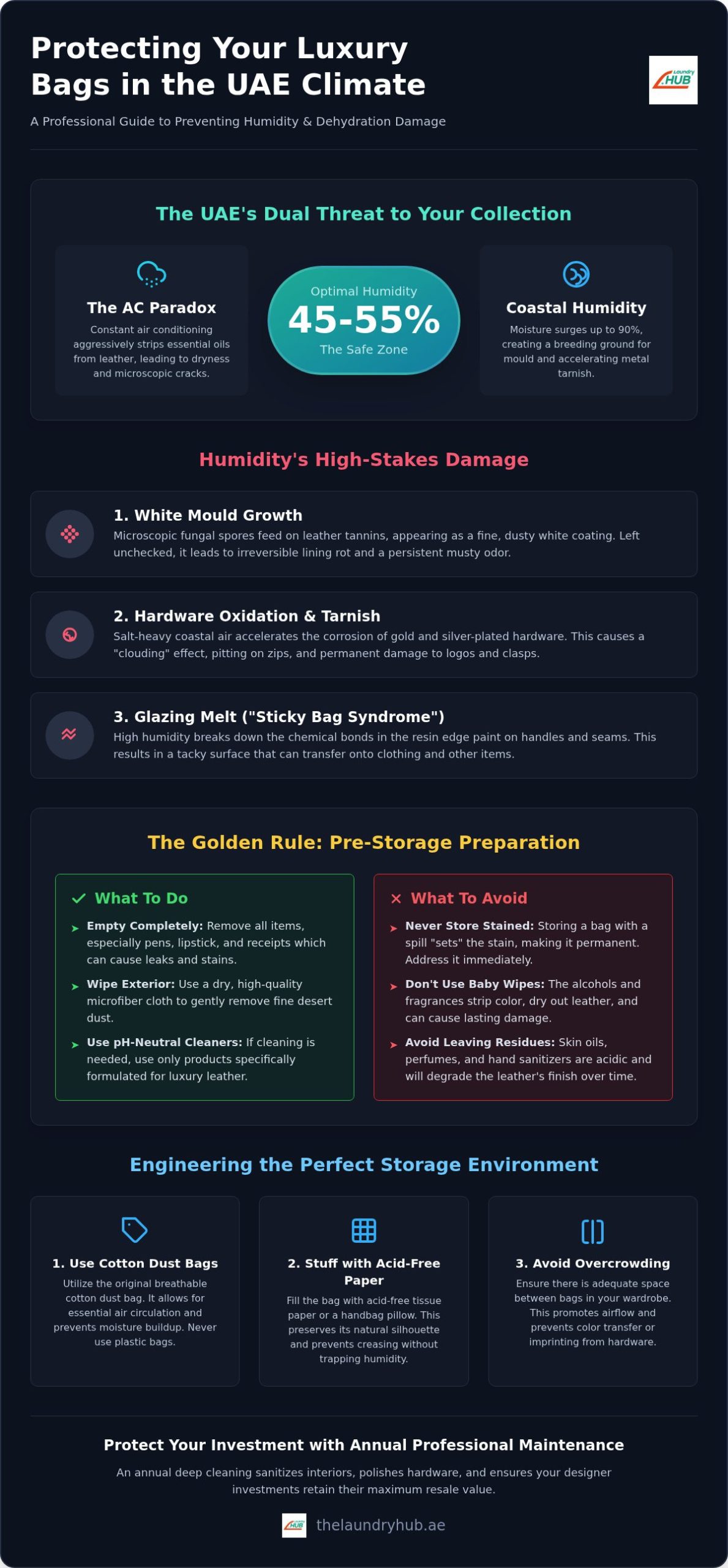
Preserving a designer collection in the Gulf requires more than just an appreciation for fashion; it requires an understanding of atmospheric science. The UAE climate presents a unique “dual micro-climate” threat that most generic storage guides fail to address. For luxury leather, the absolute “Safe Zone” is a relative humidity between 45% and 55%. When you consider that coastal humidity in Dubai often peaks at 90%, it becomes clear that your wardrobe is a high-stakes environment. Learning how to store luxury bags UAE humidity is the only way to prevent your investments from deteriorating before your eyes.
There’s a hidden danger known as the “AC Paradox.” While we rely on air conditioning to escape the heat, constant cooling strips essential oils from the leather hide. This creates a destructive cycle. The bag absorbs moisture in the humid air, then the AC aggressively dehydrates it. This constant expansion and contraction leads to microscopic structural damage and leather cracking. When researching how to store luxury bags UAE humidity, collectors must account for this dehydration just as much as the moisture itself to maintain the supple texture of premium lambskin or calfskin.
The Science of Mould in the Gulf
Stagnant air in walk-in wardrobes is a breeding ground for microscopic fungal spores. These organisms specifically target leather because they feed on the organic tannins used during the tanning process. In Dubai closets, this usually appears as “white mould,” which looks like a fine, dusty coating on the surface. If you don’t catch it early, the fungus moves beyond the exterior. It can cause irreversible internal lining rot, which weakens the bag’s structure and creates a persistent, musty odor. Adhering to the principles of textile conservation is essential to stop this biological decay before it starts.
Hardware Oxidation and Tarnish
High humidity doesn’t just affect the skin of the bag; it’s equally brutal on the metalwork. The salt-heavy air near the coast accelerates the oxidation of gold and silver-plated hardware. You might first notice a “clouding” effect on the logo or pitting on the zips and clasps. Perhaps most frustrating is “glazing melt,” a condition where the resin-based edge paint on handles becomes tacky. This happens when high humidity breaks down the chemical bonds of the sealant. It leads to “sticky bag syndrome” that can transfer onto your clothing or other bags in your collection, causing damage that requires professional intervention.
Pre-Storage Preparation: The Crucial Cleaning Protocol
Before you even consider shelving your investment, you must ensure the bag is surgically clean. Storing a bag that hasn’t been properly prepared is an invitation for disaster. In the Gulf’s heat, chemical residues react quickly with organic materials. If you’re wondering how to store luxury bags UAE humidity effectively, the process starts with a blank canvas. Any trace of environmental pollutants left on the surface will be amplified by the moisture in the air, leading to accelerated degradation of the leather’s finish.
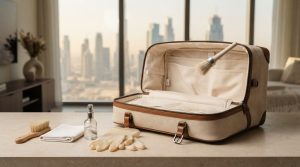
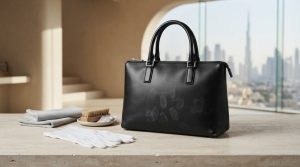
The “Golden Rule” of bag care is simple: never store a bag with skin oils, perfume, or hand sanitizer residue. These substances are acidic and can eat through the protective glazing of your bag over time. You should also meticulously empty the interior. Items like ink pens, lipsticks, and old receipts are high-risk; ink can leak in the heat, and thermal receipt paper can bleed onto the lining. Use a dry, high-quality microfiber cloth to gently whisk away fine desert dust from the exterior. For long-term preservation, it’s vital to use only pH-neutral cleaners specifically formulated for luxury calfskin to maintain the leather’s natural balance.
Treating Stains Before Storage
Never tuck a stained bag away hoping the issue will disappear. Placing a bag with a fresh spill into a dark, humid closet essentially “sets” the stain, making it a permanent part of the hide. Many owners reach for baby wipes as a quick fix, but this is a critical mistake. The alcohols and fragrances in wipes can strip the color and dry out the leather. If you notice a blemish, consult a specialist for handbag stain removal Dubai to ensure the material is professionally stabilized before storage.
Aeration: The 24-Hour Rule
One of the most overlooked steps in how to store luxury bags UAE humidity is the aeration phase. After a day of use in Dubai’s humidity, your bag has likely absorbed moisture from the atmosphere. If you place it immediately into a dust bag, you’re trapping that moisture against the leather. Follow the 24-hour rule: leave the bag in a cool, air-conditioned room with the zippers open. This allows the interior lining and exterior pores to “breathe” and reach an ideal climate for textiles and leather. This simple act of natural ventilation prevents the stagnant conditions that allow mould to thrive. For a deeper level of care, consider a professional bag cleaning service to refresh the fibers before long-term rotation.
Engineering the Perfect Micro-Climate: Storage Best Practices
Creating a stable environment for your collection is a deliberate process. While many owners believe that keeping a bag in its original packaging is the safest option, the reality of the Gulf climate dictates otherwise. To master how to store luxury bags UAE humidity, you must transition from passive storage to active environmental management. This involves selecting materials that facilitate airflow while preventing the accumulation of moisture near delicate leather surfaces. Your storage setup should be a fortress against the external elements while maintaining internal equilibrium.
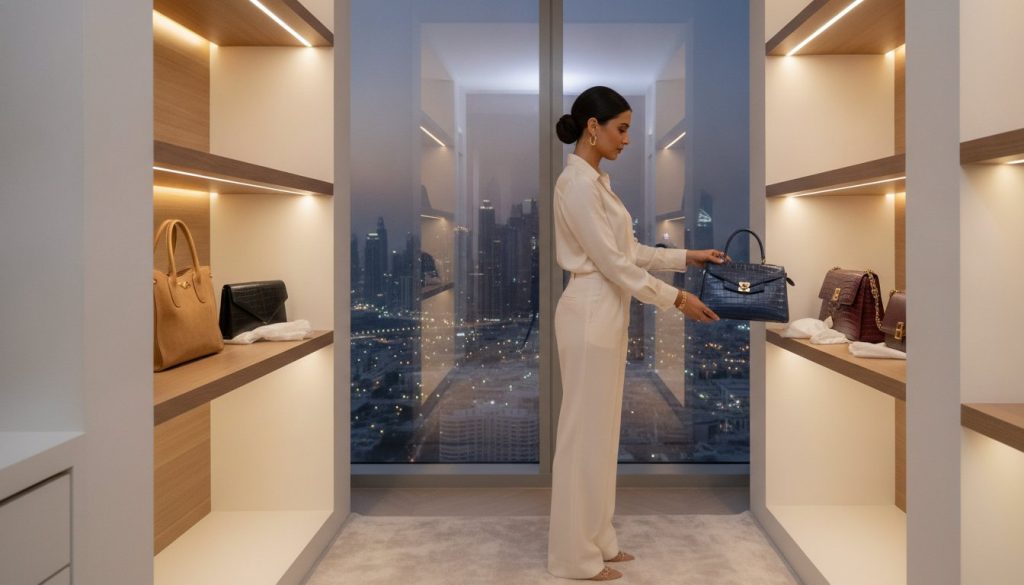
The first rule of physical storage is the absolute rejection of plastic. Never use polybags or plastic bins; these trap moisture and create a greenhouse effect that accelerates mould growth. Original cotton dust bags are non-negotiable because they protect against dust while allowing the leather to breathe. However, you should reconsider the “No-Box” policy. In the UAE, original cardboard boxes act like sponges, absorbing ambient humidity and holding it against the bag. Store your bags on open shelving, keeping them off the floor and away from external-facing walls where temperature fluctuations are most extreme. Heat transfer through walls can create localized humidity spikes that your main AC might not catch.
Humidity Control Tools
Data-driven storage is the only way to guarantee safety. A small investment in a digital hygrometer allows you to monitor the relative humidity in real-time, helping you maintain the 45% to 55% “Safe Zone” mentioned earlier. While silica gel packets are useful, they have a limited capacity. You must replace or “recharge” them every few months to ensure they remain effective. For those with significant collections, an electronic dehumidifier in the walk-in wardrobe is the gold standard. It provides consistent moisture extraction that passive methods simply cannot match, especially during the humid summer months when outdoor levels soar.
Maintaining Shape and Structure
A bag’s value is tied to its silhouette. To prevent sagging or “handle slump,” stuff your bags with acid-free tissue paper. Avoid using old newspapers or colored crepe paper, as the dyes can migrate into the lining under humid conditions. Stuff the bag just enough to maintain its natural shape without overstretching the seams. For heavy totes, always store them upright; for delicate clutches, lying them flat on a soft surface is often better to avoid pressure marks. Remember that structural integrity also depends on the material’s health. Regular expert leather bag conditioning Dubai ensures that internal fibers remain supple, preventing the leather from becoming brittle in dry AC air or losing its shape in high humidity.
Material-Specific Rules: From Exotic Skins to Delicate Suede
Luxury materials are not a monolith; each requires a tailored preservation strategy to survive the Gulf climate. While calfskin is resilient, exotic skins and delicate fabrics have specific environmental thresholds. Understanding how to store luxury bags UAE humidity means recognizing that a one-size-fits-all approach often leads to heartbreak. For instance, patent leather is notoriously sensitive to the “glazing melt” phenomenon common in Dubai’s heat. This occurs when the high-gloss finish becomes tacky, causing it to bond with adjacent materials. You should always store patent items in their own dedicated dust bags to prevent permanent “color transfer” from darker leathers or nearby fabrics.
Exotic skins like python and crocodile present a different challenge. These materials are highly susceptible to scale lift, a condition where the individual scales begin to curl upward. This isn’t caused by moisture alone but by the aggressive dehydration of indoor air conditioning. Conversely, canvas and fabric bags demand a different kind of vigilance. Their porous nature makes them magnets for “closet smell” and localized yellowing if any humidity is trapped within the fibers. Maintaining these pieces requires a delicate balance of moisture protection and fiber hydration.
The Suede Survival Guide
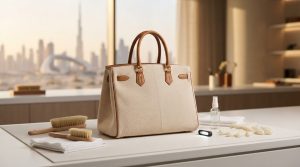
Suede and nubuck are the most vulnerable materials in your collection. Because of their open-pore structure, they act like sponges for atmospheric moisture, making them the primary target for mould absorption. Before long-term storage, you must use a dedicated suede brush to lift the nap and remove any trapped desert dust. This ensures the material can “breathe” as much as possible. If you’re also managing a high-end footwear collection, you’ll find that many of these principles mirror those used in leather shoe cleaning Dubai, where material-specific stabilization is the absolute priority.
Exotic Skin Hydration
Python and alligator skins require more frequent “health checks” than standard leathers. In the UAE, you should inspect these pieces every three months for signs of dehydration. If the scales feel brittle or look dull, the hide is losing its structural integrity. Avoid the temptation of home oils or generic conditioners; these can darken the skin or cause the scales to peel permanently. Professional conditioning is essential to deliver deep hydration without compromising the delicate surface. To ensure your exotics remain as supple as the day you bought them, book a professional bag care assessment to evaluate the hydration levels of your most precious pieces.
Professional Maintenance: Protecting Your Investment with The Laundry Hub
Even with the most disciplined home storage routine, your collection requires a deeper level of intervention to survive the test of time. An “Annual Health Check” is the essential final step in mastering how to store luxury bags UAE humidity. While daily care prevents immediate damage, professional maintenance addresses the microscopic issues that accumulate over months of exposure to the Gulf’s environmental swings. We treat every accessory as a significant financial investment, ensuring that the structural integrity and aesthetic appeal remain intact for years to come.
Our meticulous process goes far beyond a surface wipe. We perform deep internal sanitization to eliminate dormant fungal spores that thrive in humid closets. Our specialists also focus on hardware stabilization; we polish and protect metal components to reverse the “clouding” and pitting caused by coastal salt air. For bags that have already suffered from the climate, we provide expert restoration services for scuffs, color fading, and structural loss. To make this level of care accessible, we offer reliable door-to-door pickup and delivery across the UAE, allowing you to maintain your collection without disrupting your schedule.
Why Professional Care Beats DIY
Many collectors attempt to resolve mould or stains using “home remedies” like vinegar or rubbing alcohol. These substances are far too aggressive for luxury finishes and can permanently strip the natural oils from high-end calfskin or lambskin. We use only specialized, material-safe solvents and conditioners that are engineered to stabilize organic fibers without altering their texture. Our expertise in handling delicate components is extensive; you can refer to our sneaker cleaning service Dubai to see how we manage mixed-material luxury items with the same level of precision and technical proficiency.
The Laundry Hub Advantage
We pride ourselves on our meticulous attention to detail when handling world-class brands like Chanel, Hermès, and Louis Vuitton. Our team understands the specific requirements of different leathers and the unique chemical compositions of designer glazing. We provide a transparent experience with expert consultations to ensure you understand the exact needs of your specific piece. Don’t wait for the humidity to take its toll on your favorite accessories. Schedule your luxury bag consultation with The Laundry Hub today and give your collection the professional protection it deserves.
Safeguarding Your Collection for the Future
Protecting your designer investments in the Gulf requires a proactive balance of climate control and meticulous cleaning. By maintaining the 45% to 55% humidity “Safe Zone” and utilizing breathable cotton storage, you prevent the atmospheric decay that threatens leather and hardware. Mastering how to store luxury bags UAE humidity is a commitment to preserving both the aesthetic beauty and the long-term financial value of your curated pieces.
While home protocols are essential, annual professional maintenance provides the deep sanitization and hardware stabilization that domestic environments cannot achieve. As a provider trusted by Dubai’s luxury collectors, we offer expert restoration for designer leather to address scuffs or fading. Our premium pickup and delivery service ensures that expert care is seamlessly integrated into your lifestyle. Restore and protect your luxury bags with The Laundry Hub’s expert care. Your collection represents your unique style; let us help you keep every piece in pristine condition for years to come.
Frequently Asked Questions
Can I use silica gel packets to prevent mould on my bags?
Yes, silica gel packets are effective moisture absorbers, but they aren’t a permanent solution. In the UAE’s extreme climate, these packets can reach their maximum absorption capacity quickly. You must replace them every few months or use indicating packets that change colour when saturated. They work best in small, enclosed spaces like dust bags, but they won’t protect a bag if the entire wardrobe environment is consistently damp.
Is it better to store luxury bags in their original boxes in Dubai?
No, you should avoid using original cardboard boxes for long-term storage in the Gulf. Cardboard is a porous material that absorbs and retains ambient moisture, essentially trapping humidity against the leather. This creates a stagnant micro-climate where fungal spores thrive. It is much safer to use breathable cotton dust bags on open, well-ventilated shelving to ensure consistent airflow around the leather and hardware at all times.
How often should I air out my designer handbags?
You should aim to air out your bags at least once every month, especially during the peak humidity of the summer. Take them out of their dust bags and let them sit in a cool, air-conditioned room for 24 hours. This practice is a key part of how to store luxury bags UAE humidity effectively, as it prevents moisture from becoming trapped in the leather pores or the interior lining.
What should I do if I find white mould on my leather bag?
Don’t panic or reach for household chemicals like vinegar or alcohol. First, use a dry, soft cloth to gently wipe away the surface spores outdoors to prevent them from spreading in your closet. Once the surface is clear, you must seek professional cleaning. Mould often has roots deep within the leather’s pores that require specialized sanitization to prevent the fungus from returning and causing permanent structural rot.
Does the AC in my Dubai apartment protect my bags from humidity?
Air conditioning reduces humidity, but it can also be too dehydrating for natural hides. While it helps keep the environment below the 60% threshold where mould grows, the constant dry air can strip essential oils from the leather. This causes the material to become brittle and crack over time. A stable environment between 45% and 55% relative humidity is the goal, which often requires a digital hygrometer to monitor.
Can I use regular leather conditioner on exotic skins like python?
No, standard conditioners are often too heavy for the delicate structure of exotic skins. Materials like python or crocodile have unique scale patterns that can be easily damaged or discoloured by generic products. Using the wrong cream can cause scales to lift or become permanently stained. These high-value items require specialized hydration treatments that penetrate the skin without leaving a greasy residue that attracts dust and moisture.
How do I prevent the metal chain on my bag from tarnishing?
The best way to prevent tarnishing is to minimize exposure to moisture and salt air. When storing the bag, tuck the metal chains inside the interior, ideally wrapped in acid-free tissue paper. This prevents the metal from coming into direct contact with the leather, which can sometimes cause chemical reactions in high humidity. For lasting protection, professional polishing can create a protective barrier against the corrosive effects of coastal air.
Why do the edges of my bag feel sticky in the summer?
This stickiness is known as “glazing melt” or “edge paint softening.” It happens when the resin-based sealant used on bag edges reacts to the combination of high heat and humidity found in the UAE. The chemical bonds in the paint begin to break down, making the surface tacky. This is a common issue for collectors learning how to store luxury bags UAE humidity, and it usually requires professional restoration to re-seal.
