







What if the right way to clean a curtain, rug or set of everyday linens depends less on a fixed schedule and more on its material and use? Dust and daily wear can make household textile cleaning UAE homes need feel like a constant task, especially when you’re unsure which methods might damage delicate fabrics. A material-first routine makes the work more manageable and helps protect the textiles you value.
This guide explains how to choose suitable care for common household textiles, build a practical cleaning routine and recognise when professional care may help. You’ll learn why fabric type and everyday use matter, how to keep routine maintenance simple, and where professional curtain and carpet cleaning fits into home care. The Laundry Hub provides curtain and carpet cleaning with pickup and delivery across the UAE, including Dubai, making it easier to include these larger household items in your maintenance routine. With a few considered habits and the right support for curtains and carpets, caring for textiles at home can feel clearer and less burdensome.
Key Takeaways
- Choose textile care based on material, construction and everyday use, rather than applying one method to every item.
- Use care labels and manufacturer guidance to decide which home-cleaning methods are suitable.
- Match the level of care to the item’s size, sensitivity, soil and accessibility when choosing between routine maintenance and specialist care.
- A practical household textile cleaning UAE routine can adapt to room use, visible soiling and household habits.
- Professional curtain and carpet cleaning can complement regular home care, with pickup and delivery available across the UAE.
Household textile cleaning in the UAE: what needs care at home?
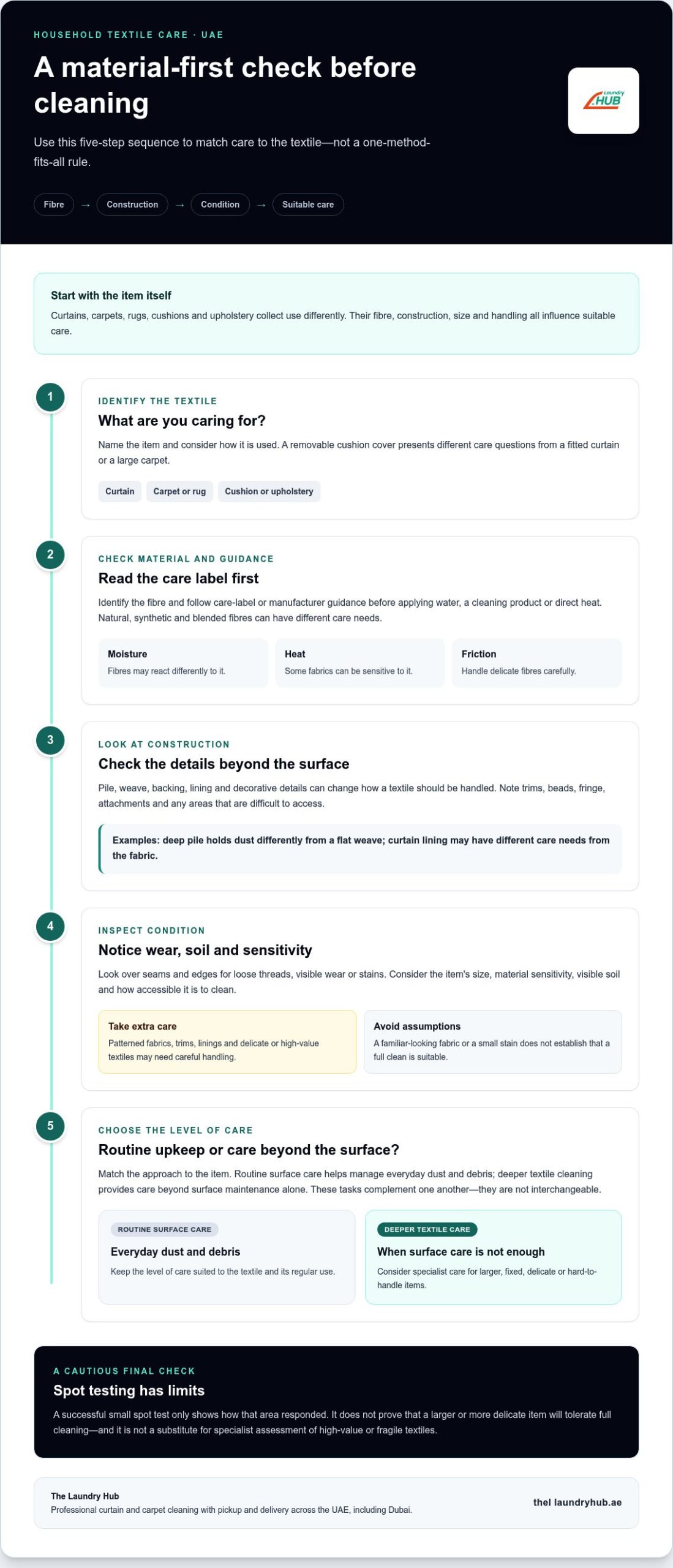
Household textiles include fabric items that furnish a home or support daily routines. Curtains, carpets, rugs, cushions and upholstered furniture each collect use differently, so they shouldn’t automatically be treated as one cleaning category. The suitable approach depends on the fibre, how the item is made and how often people handle or walk on it. A removable cushion cover, for example, presents different care questions from a fitted curtain or a large carpet.
Construction matters as much as material. A deep pile can hold dust differently from a flat weave; a lining may respond differently from curtain fabric; and beads, fringe or other embellishments can make a textile more delicate to handle. With custom window coverings—such as those crafted by Luxe Drapery and Shades—linings and headings often require specific upkeep to preserve their structure. Size and access also affect what’s practical at home. Smaller, frequently handled textiles may be easier to inspect and maintain regularly, while heavy or fixed items can be harder to clean thoroughly without disturbing their placement.
Routine surface care helps manage everyday dust and debris, while deeper textile cleaning provides care beyond what surface maintenance alone can offer. These are complementary parts of textile care, not interchangeable tasks. For background on how cleaning approaches have developed, see this overview of laundry processes and history. For household textile cleaning UAE homes need, start by identifying each item and understanding its material and construction before choosing how to care for it.
Which household textiles need different care?
Curtains and carpets are useful examples of larger household textiles that may be difficult to handle during routine home cleaning. The Laundry Hub provides professional curtain and carpet cleaning, with pickup and delivery across the UAE. Rugs, cushions and upholstery need to be considered separately: pile, weave, backing, lining and decorative details can all affect suitable care. Smaller items may be handled more often, but frequent handling doesn’t mean every fabric can be cleaned the same way.
How do UAE home conditions affect textile upkeep?
Dust and frequent use are practical reasons to keep an eye on textiles, particularly in busy rooms or areas near entrances. Heat and humidity can also affect how a home feels and is ventilated, but they don’t create one universal cleaning schedule or mean a particular textile will necessarily be damaged. Consider each room’s use, ventilation, household habits and visible soiling. In Dubai, as in other UAE homes, these details are more useful for planning upkeep than a fixed interval applied to every item.
How fabric, construction, and use shape household textile care
Start with the item itself, not a one-method-fits-all rule. No single cleaning method suits every household textile. Fibres can react differently to moisture, heat, agitation and cleaning agents, while construction determines how those factors reach the fabric. For household textile cleaning UAE homes need, care labels and manufacturer guidance are practical starting points because they indicate which approaches are appropriate for that particular item.
Natural and synthetic fibres can have different care needs, but neither category gives a complete answer on its own. A natural-fibre textile may need careful handling around moisture or friction, while some synthetic fabrics can be sensitive to heat. Blends combine fibre characteristics, so don’t assume a familiar-looking fabric can be treated like another. Check the label before applying water, a cleaning product or direct heat.
What should you check before cleaning a textile?
Identify the fibre, construction and care instructions, then look for special finishes, lining, trims or embellishments. Inspect seams and edges for loose threads, and note visible wear or stains before deciding what to do. A successful small spot test only shows how that area responded. It doesn’t establish that a larger or more delicate item will tolerate full cleaning. For high-value or fragile textiles, a spot test isn’t a substitute for specialist assessment.
Dyes can transfer or change appearance under unsuitable conditions, and pile or backing can respond differently from the visible surface. Avoid vigorous rubbing or applying an untested cleaner across a broad area. These precautions are especially useful for patterned fabrics, textiles with decorative trims, and items where the reverse side or lining isn’t readily visible.
Why do rugs, carpets, and curtains need different approaches?
A portable rug can be inspected on both sides and moved for access, though its size, weight, pile and backing still affect how it should be handled. A fitted carpet is fixed in place, so floor access and the room’s layout influence what care is practical. For rugs with intricate construction or delicate details, the Persian rug cleaning guide offers more focused considerations.
Curtains also have several components to consider. Fabric, lining, heading style and attachments may not share the same care needs, and removing or rehanging a curtain can require careful handling. Note how it is fitted and whether the lining or trims show wear before planning a clean. The Laundry Hub provides curtain and carpet cleaning, with pickup and delivery across the UAE, including Dubai. For larger items that need care beyond routine upkeep, explore curtain and carpet cleaning as part of a considered home-care routine.
Home care or professional cleaning: how to choose for household textiles
The right level of care depends on more than whether an item looks dusty. Consider its size, material sensitivity, construction, visible soil and how easily you can reach or handle it. Routine upkeep can help manage everyday surface debris, but a delicate finish, stubborn stain or item that’s difficult to move may call for a more considered approach. One cleaning method isn’t suitable for every textile.
Use this comparison as a starting point, then let the care label and manufacturer’s instructions guide your decision.
| Care approach | Best suited to | Consider before proceeding |
|---|---|---|
| Routine care | Accessible textiles with light surface dust or debris | Use vacuuming or light upkeep only if compatible with care guidance; consider pile and construction. |
| Label-approved home cleaning | Items whose care instructions permit the proposed cleaning method | Check material sensitivity, dyes, trims, backing and the type of soil; follow instructions carefully. |
| Specialist assessment | Large, delicate, heavily soiled or difficult-to-handle textiles | Construction, access and the care needed can affect method suitability. |
When is routine household maintenance appropriate?
For accessible items, regular vacuuming or light surface upkeep may help manage ordinary dust when the care guidance allows it. Adjust the attachment and handling to suit the textile rather than pressing hard or using vigorous strokes. For a spill, respond promptly and gently, without rubbing it deeper into the fibres or applying an unverified chemical. Routine maintenance has limits: it doesn’t replace appropriate care for every stain, material or construction.
If the label permits home cleaning, follow its instructions instead of relying on a method that worked on a different item. Stop if the textile’s colour, texture or shape appears to change. This cautious approach is useful in Dubai and across the UAE, where everyday dust and room use can make routine upkeep necessary but don’t determine one universal treatment.
When can professional curtain or carpet cleaning help?
Professional care can be a practical option for large curtains and carpets that are awkward to handle, or when ordinary surface upkeep doesn’t address the item’s care needs. The suitable approach depends on the textile’s material and construction, so don’t assume every carpet or curtain can be cleaned in the same way. The Laundry Hub provides professional curtain and carpet cleaning, with pickup and delivery across the UAE.
This support can sit alongside regular upkeep rather than replace it. For more context on textile care services, the UAE laundry and textile care guide offers a wider perspective. For large curtains or carpets that need care beyond routine maintenance, explore professional curtain and carpet cleaning as part of your household routine.
A practical household textile cleaning routine for UAE homes
A manageable routine doesn’t need to put every textile on the same timetable. For household textile cleaning UAE homes need, room use, visible soiling, household habits and care instructions are more useful guides than a universal schedule. Separate quick responses to spills from planned maintenance, then adjust your approach as daily use or conditions around the home change.
- Inspect. Check each item’s care label and note its material, visible stains, delicate trims, loose seams or existing wear. This gives you a clear starting point and helps prevent a routine clean from overlooking a care concern.
- Maintain. Use appropriate light upkeep, such as vacuuming, only when it suits the item’s care guidance. Pay attention to high-use rooms and areas where dust or everyday activity is more noticeable.
- Address spills promptly. Follow the textile’s care instructions and avoid rubbing a spill or applying unverified chemicals. If the right response isn’t clear, don’t experiment on a delicate or valuable item.
- Plan deeper care. Review larger or harder-to-handle textiles regularly, using their condition, construction and instructions to decide whether routine upkeep is enough or additional care is appropriate.
How can you prepare textiles for cleaning?
Before planned care, check labels, note stains and identify fragile trims or existing damage. Clear small objects from the textile and make the item accessible without pulling at fittings or seams. If several rooms need attention, keep a short record of each item’s location, material, care notes and concerns. This simple preparation makes it easier to keep track and communicate what needs attention.
How should you plan recurring care?
Group items by material and household use, not by a single fixed schedule. A textile in a busy living area may need attention sooner than a similar item in a rarely used room. Reassess after seasonal changes or periods of heavier household activity, and let visible soiling and care instructions guide any adjustment. A brief monthly review can help you notice changes without committing every item to the same cleaning frequency.
Adaptable checklist:
- Keep care labels or manufacturer instructions accessible.
- Notice which rooms and textiles receive the most use.
- Record visible stains, wear and delicate details before cleaning.
- Respond to spills promptly, without rubbing or using unverified products.
- Review larger items and plan deeper care according to their condition.
Use this checklist as a flexible reference, not a strict timetable. For larger household textiles that need care beyond regular upkeep, see professional household textile care options. The Laundry Hub provides curtain and carpet cleaning with pickup and delivery across the UAE, including Dubai, making it easier to fit this step into a considered home-care routine.
Professional household textile cleaning with The Laundry Hub
Some household textiles are difficult to manage as part of routine home care. Curtains can be cumbersome to handle, while carpets cover a large area and may be hard to move or reach thoroughly. The Laundry Hub provides professional curtain and carpet cleaning, with pickup and delivery across the UAE, including Dubai. This offers a convenient way to include larger household items in a considered maintenance routine.
Care planning depends on the specific textile and its requirements. Material, construction, visible stains, linings, trims and existing wear can all affect what an item needs. Don’t assume one approach suits every curtain or carpet. Clear details about the item help keep its individual care considerations in view.
What happens when arranging household textile care?
Start by identifying the item and its main care concern. Note whether it’s a curtain or carpet, what you know about its material, and whether there are visible stains, delicate details or signs of wear. Care-label information can also help describe the textile’s requirements. These details provide a more useful starting point than simply saying an item needs cleaning.
Consider the textile itself when planning care: its characteristics and requirements inform the approach. Pickup and delivery across the UAE make professional household textile care more convenient, particularly for larger items that are awkward to transport. The appropriate care depends on the specific item, so don’t assume the same method or outcome for every textile.
How can you make your next care step easier?
Choose a starting point based on what’s most difficult to maintain at home. That might be curtains that are cumbersome to handle or a carpet that needs attention beyond your usual surface upkeep. Before arranging care, gather relevant details in one place: the item’s care label, any visible stains, and delicate trims, linings or other features that may need consideration.
This preparation also helps you coordinate textile care with the rest of your home routine. You can continue appropriate light maintenance between professional care, while keeping larger items on your list for attention when their condition or care requirements call for it. Thoughtful preparation doesn’t need to be complicated. A few accurate notes can help make the next step clearer.
For household textile cleaning UAE residents can arrange with pickup and delivery, The Laundry Hub’s curtain and carpet cleaning can complement regular home maintenance. Arrange household textile care with The Laundry Hub.
Make textile care part of your home rhythm
Connect textile care to habits you already have. As you refresh a room or notice a change in an item’s condition, review its care notes and decide whether routine upkeep is still suitable. This small check can help prevent textile care from becoming a large, last-minute task.
Choose one item to focus on first. Note what you’ve observed, keep its care instructions accessible and make a clear plan for its next step. Over time, these simple decisions can make household textile cleaning UAE homes need feel more organised and easier to sustain, without forcing every item into the same routine.
If curtains or carpets are next on your list, The Laundry Hub offers professional care with pickup and delivery across the UAE, including Dubai. Arrange household textile care with The Laundry Hub and take the next step toward a more manageable home-care routine.
Frequently Asked Questions
How often should household textiles be professionally cleaned in the UAE?
There’s no single interval that suits every home or textile. Plan household textile cleaning around the item’s care instructions, how often the room is used, visible soiling and household routines. For example, a carpet in a frequently used family area may need attention sooner than one in a rarely occupied room. Reassess after guests, home projects or other periods of heavier use rather than relying only on the calendar.
Can curtains be cleaned without removing them?
It depends on the curtain’s care instructions, construction and the cleaning method being considered. A curtain’s lining, heading and fittings may affect whether in-place care is suitable, so don’t assume a method safe for the fabric is also appropriate for its attachments. Check the label before applying moisture or a cleaning product. The Laundry Hub provides curtain cleaning; follow the curtain’s care requirements when planning its next step.
How do I protect a carpet from dust and everyday wear?
Use carpet care that matches its construction and label, and pay attention to busy areas where foot traffic tends to concentrate. Keep small debris from accumulating with suitable routine upkeep, and be mindful of footwear or items that bring dust indoors. If furniture placement allows, changing the position of a light movable rug can vary where it receives use. Avoid aggressive vacuuming or treatment that conflicts with the carpet’s care guidance.
Can I clean every household textile with the same method?
No. A method suitable for a washable cushion cover may be unsuitable for a lined curtain or a carpet with sensitive backing. Before cleaning, compare the care label with the item’s fibre, construction and decorative details. If the label is missing or the textile has multiple components, don’t assume a small test proves the full item is safe to clean that way. Choose care according to the specific textile.
What should I do if a household textile has a stain?
Check the care instructions first, then avoid rubbing the stain or applying a cleaner that hasn’t been approved for that textile. Rubbing can spread the mark or affect the surface, while an unsuitable product may alter colour or texture. Note what caused the stain, if known, and how long it has been there. For a delicate or large item, share those details when arranging professional care instead of trying several treatments.
Does UAE humidity affect household textile care?
Humidity can vary by home, room and season, so treat it as one consideration rather than a fixed rule for cleaning. Pay attention to how well a room is ventilated and whether a textile feels damp or develops an unusual smell. Don’t store a textile while it’s damp, and follow its care instructions for drying. If you’re concerned about a change in condition, avoid adding moisture or heat without guidance.
Can The Laundry Hub arrange pickup and delivery for household textile cleaning?
Yes. The Laundry Hub provides pickup and delivery across the UAE, including Dubai, for convenient household textile care. Its household textile services include curtain and carpet cleaning. Before arranging care, identify the item and note its material, care label, visible stains and any delicate details. This gives useful context for planning around the textile’s requirements without assuming the same treatment suits every curtain or carpet.
