






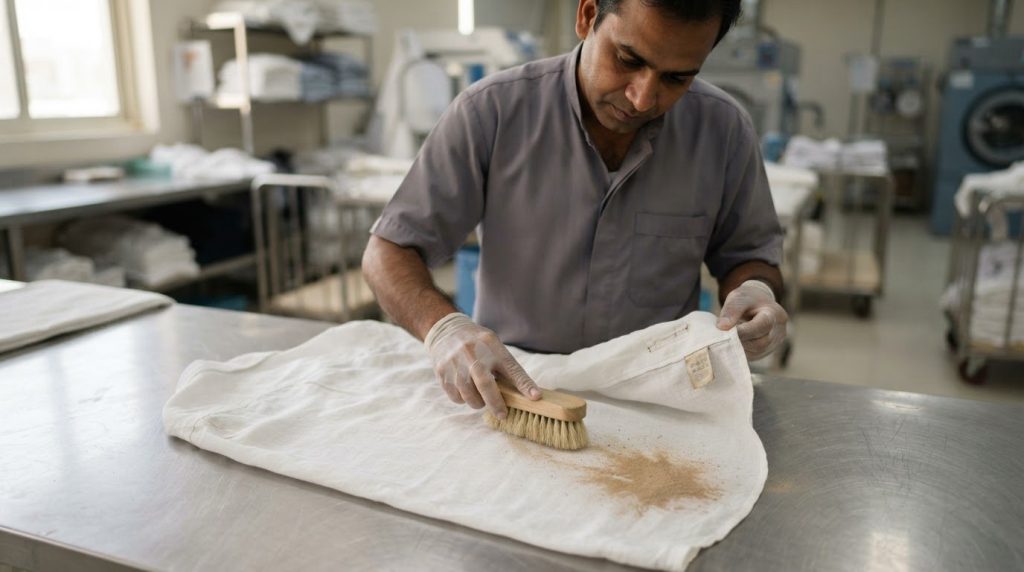
A stronger stain remover is not automatically safer for white linen. Knowing how to remove desert dust from white linen starts with the care label: first assess whether the mark is loose surface dust or residue caught in the weave, then choose a cleaning method the fabric instructions allow. Consider chemical treatment only if gentle removal leaves a visible mark, not simply because the linen is white.
That caution matters: rubbing can push particles further into the fabric, while an unsuitable treatment may affect linen’s fibres or appearance. It’s understandable to want a quick, bright result, but the right method depends on the garment’s construction, finish and care symbols. This guide explains how professionals assess the mark, decide whether a chemical cleaner is appropriate, test a treatment discreetly, and wash and dry the linen according to its label. You’ll also learn when persistent residue needs professional handling, so the aim stays clear: remove the dust while preserving the fabric’s colour and texture.
Key Takeaways
- Start with the linen care label and the condition of the dust to guide the cleaning approach.
- Choose a treatment that suits the fabric, and avoid harsh methods that can weaken or mark white linen.
- Test a cleaning product on an inconspicuous area before treating the visible stain.
- Follow the care label through washing and drying, and seek professional help if residue persists.
Does Linen Stain Easily, and Can You Get Stains Out?
Linen stains can often be treated, but desert dust calls for a dry-first approach. Follow the care label and choose each treatment according to the fabric and the mark.
-
How Professionals Check Care Labels and Test Treatments
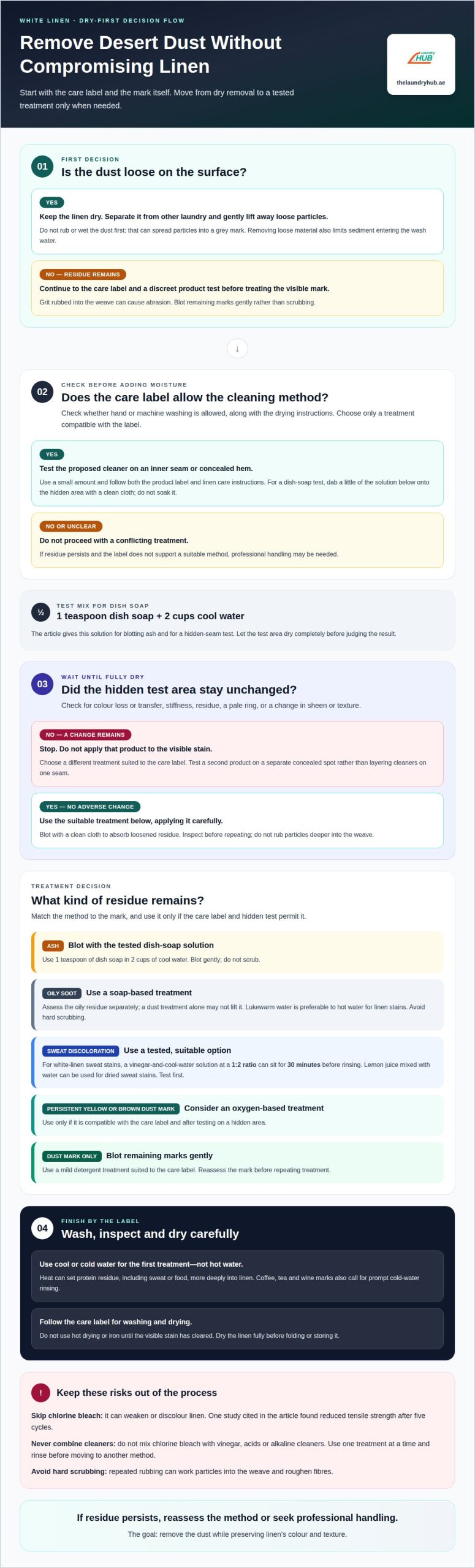
Start by reading the care label to see whether the linen allows hand or machine washing and what drying instructions apply. Test a proposed cleaner on an inner seam, then let the spot dry before checking for changes in colour or texture. This small test helps guide the next treatment and reduces the risk of discolouring the fabric during stain removal.
-
How Professionals Remove Loose Ash Before Wetting Linen
Separate dusty linen from other laundry and lift away loose particles while the fabric is dry. Avoid rubbing or wetting the dust first, since either can spread it into a grey mark. Removing loose material also limits how much sediment enters the wash water. Desert dust does not automatically damage linen fibres, but rubbing grit into the weave can cause abrasion. After treatment, dry the linen fully before folding or storing it.
-
How Professionals Pre-Treat Desert Dust Stains
Professionals blot remaining marks gently, then use a mild detergent treatment suited to the care label. For ash, a solution of 1 teaspoon of dish soap in 2 cups of cool water can be used for blotting. Oily soot needs a soap-based treatment rather than hard scrubbing; lukewarm water is preferable to hot water for linen stains. A hot wash can set protein residue, such as sweat, deeper into the fabric.
-
When Professionals Use Vinegar or Lemon Juice Treatments
Professionals reserve vinegar or lemon juice for suitable marks, such as remaining sweat discoloration, and first test the treatment on a hidden seam. For white-linen sweat stains, a vinegar-and-cool-water solution at a 1:2 ratio can sit for thirty minutes before rinsing. Lemon juice mixed with water can be used for dried sweat stains. Persistent yellow or brown dust marks may need a label-compatible oxygen-based treatment after testing. Acids and alkalis aren’t mixed.
How professionals avoid chlorine bleach, hot water, and hard scrubbing
Oxygen bleach may be suitable for white linen if the care label permits it. Avoid chlorine bleach for desert dust. Use cooler water and controlled treatment to protect the fibres while lifting residue.
- Choose a bleach alternative only after reading the care label. Oxygen bleach may help brighten white linen; diluted hydrogen peroxide or sunlight are alternatives to chlorine bleach. The right option depends on the garment’s washing and drying instructions. A product that conflicts with the label can damage the fabric instead of improving its appearance.
- Keep chlorine bleach away from the dust mark. It can weaken or discolour linen, and one study cited in the research found reduced tensile strength after five cycles. That fibre damage can make fabric less durable over time. Professionals avoid chlorine bleach even on white linen and select a gentler treatment suited to the care instructions.
- Use cool or cold water for the first treatment, not hot water. Heat can set protein residue, including sweat or food, more deeply into linen. Coffee, tea and wine marks also call for prompt cold-water rinsing. For desert dust, controlling the temperature helps avoid heat damage while treating the mark.
- Keep pressure light and avoid hard scrubbing. Repeated rubbing can work particles into the weave and roughen linen fibres. Professionals favour gentle blotting and measured detergent application instead. If a mark includes grease, they assess that residue separately, since a dust treatment alone may not lift oily material.
- Never combine chlorine bleach with white vinegar, acids, or alkaline cleaners. Mixing cleaning agents can weaken fibres and cause irreversible discolouration. Professionals use one treatment at a time, following its label, and rinse before moving to another method. They also avoid hot drying or ironing until the visible stain has cleared.
How professionals test cleaning products on an inconspicuous area
- Choose an inner seam or concealed hem for the first test. Apply a small amount of the proposed cleaning liquid, following its label and the linen’s care instructions. Once the area has dried completely, check for colour transfer, a change in texture or a pale ring. A successful spot test helps guide treatment, but does not replace checking the fabric’s response as you clean.
- For a dish-soap test, professionals prepare 1 teaspoon of dish soap in 2 cups of cool water. They dab a little solution onto a hidden seam with a clean cloth, rather than soaking the fabric. After the test area dries, they inspect it under good light for changes. The same solution can then be considered for the dust mark if the seam remains unchanged.
- Professionals assess the test area only after it’s completely dry. A wet linen patch can conceal a temporary colour shift or leave a ring that appears later. They look for colour loss, stiffness, residue, or a difference in sheen. If any change remains, they stop and choose a different treatment suited to the label instead of applying the product across the visible stain.
- If you need a second product, test it on a separate concealed spot. Do not layer cleaners on one seam: residues can interact and make the result harder to judge. For example, a treatment intended for a red wine mark is not automatically suitable for desert dust. Assess each stain and cleaning agent separately.
- Once testing shows no adverse change, apply the selected treatment carefully. Use a clean cloth to blot and absorb loosened residue instead of rubbing particles deeper into the weave. Inspect the linen before repeating the treatment. If visible dust remains, reassess the method rather than using a stronger product or scrubbing harder.
How professionals wash linen according to its care label
After treatment, professionals match the wash cycle, water temperature, and detergent to the linen’s care label and remaining stain.
-
How Professionals Check the Linen Care Label
Read the garment’s care symbols before choosing hand or machine washing. Follow the stated temperature and drying instructions rather than assuming all linen can take the same cycle. If the label allows hand washing, cool water and laundry detergent can loosen remaining dust. If washing is restricted, adjust the treatment plan, since unsuitable agitation or heat can weaken the fabric.
-
How Professionals Choose a Washing Temperature and Detergent
For dusty white linen, professionals use cool water with a mild laundry detergent when the label allows. Treated linen may be washed at 30-40 degrees, subject to its care instructions. Protein stains, including sweat, call for a cold or warm wash at a maximum of 30°C. Hotter washing can set some stains deeper, so the mark and garment label guide temperature choice.
-
How Professionals Soak and Wash the Linen
When hand washing is permitted, professionals can soak linen in cool water with detergent for 30 minutes to help release ash particles. They then wash according to the label and avoid overworking the garment. After washing, they inspect the fabric under good light. If a mark remains, they don’t use heat to dry it, because heat can make the residue harder to remove.
For careful, label-led washing of dusty linen, arrange professional laundry care.
The Laundry Hub
The Laundry Hub provides Laundry and Dry Cleaning for white linen that needs careful professional handling. Consider the service when desert dust remains after gentle treatment, the fabric is valuable, or its care label makes home washing difficult. The linen can be assessed against its care instructions and visible residue to determine an appropriate cleaning approach.
Share the care label and explain what happened to the fabric, including whether it has already been washed or treated. This information helps guide the assessment and avoid repeating unsuitable treatments. For linen with persistent grey or yellow marks, professional cleaning can be a practical next step before further washing or heat sets the residue.
Contact The Laundry Hub to discuss professional care for dusty white linen.
Choose the next step for your linen
Knowing how to remove desert dust from white linen means making the fabric’s care instructions part of every decision, rather than treating every dusty mark alike. If the linen is valuable, the residue persists or you are unsure how previous treatment may affect it, professional assessment can help you decide what to do next without trying unsuitable products.
The Laundry Hub provides Laundry and Dry Cleaning, as well as Shoe & Bag Care and Curtain and carpet cleaning for other items that need careful attention. Pointing out dust exposure and any visible changes keeps the discussion focused on the fabric’s condition and the result you want. Each item can then be considered according to its material and care needs.
Contact The Laundry Hub for help with your white linen. A careful next step can help you move forward with confidence.
Frequently Asked Questions
Chemical methods – when are they necessary?
Chemical methods may be appropriate when removing loose dust while dry and washing with a label-compatible detergent still leave visible discolouration. Choose a product for the actual residue, test it on a hidden area and follow the care label. For example, white linen with an embedded grey mark may need an oxygen-based treatment; chlorine bleach is not the default choice.
How do professionals remove desert dust from white linen safely?
Match the treatment to the care label, fabric finish and whether the mark is dust alone or mixed with skin oil. Tell the cleaner if the linen was exposed outdoors, stored dusty or already washed, since its treatment history can affect the approach. The Laundry Hub follows strict quality control and fabric-safe cleaning techniques.
Should a professional shake or brush desert dust off linen before washing?
A professional should remove loose particles while the linen is dry, but avoid forceful shaking or stiff-bristle brushing. Vigorous handling can send dust into the air or grind grit against the weave. For a dusty tablecloth, for example, the cleaner can control the fabric’s movement and lift particles carefully before wet cleaning, rather than snapping or scrubbing it.
Is it safe for a professional to vacuum or use a lint roller on dusty linen?
Neither method is automatically suitable for every linen garment. Suction can pull delicate or loose-weave fabric, while a lint roller’s adhesive may catch threads or disturb a surface finish. A professional assesses the linen’s construction and condition before choosing a dry-removal method. For embroidered or loosely woven pieces, gentle particle lifting avoids unnecessary pulling or adhesive contact.
