







Musty AC smell removal from wardrobe clothes starts with fresh air and moisture control, not perfume. Hang the clothes in dry, shaded air for several hours, and place 100-150 g of baking soda in an open dish inside the wardrobe overnight to absorb stray odours. These steps can refresh lightly stale garments while you address what’s making the wardrobe smell damp.
It’s frustrating when clothes seem clean but come out of storage with a stale smell, especially in a home where the air conditioning runs regularly. The odour may come from dampness in the wardrobe, lingering smells on garments, or poor airflow. Masking it can leave the cause untouched.
This guide explains how to freshen clothes without washing, spot signs of wardrobe dampness, and prevent musty odours from returning. You’ll learn when airing may be enough and when clothes need proper cleaning, so you can choose a suitable next step for each garment.
Key Takeaways
- Use wardrobe absorbers thoughtfully: charcoal can help capture odours, lavender adds fragrance, and cedar is mainly useful for deterring pests.
- Air and clean the wardrobe interior, then let every surface dry fully before returning clothes; visible mould calls for material-appropriate care.
- Track moisture as well as smell: the United States Environmental Protection Agency recommends keeping indoor relative humidity below 60% to discourage mold.
- Keep stored garments completely dry, leave space for air to circulate, and avoid sealed plastic storage that can trap moisture.
How do you get the closet smell out of clothes without washing them?
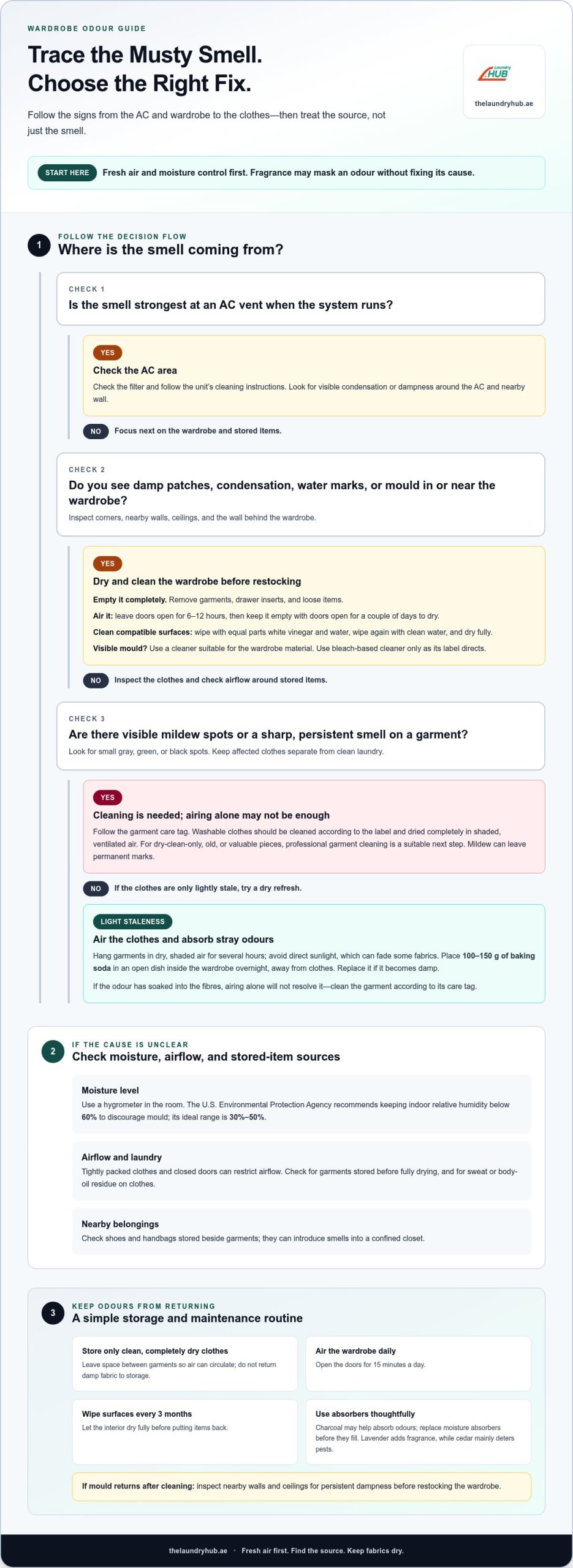
Start with dry, shaded airflow, then address odours inside the wardrobe. This approach to musty AC smell removal from wardrobe clothes refreshes fabric without adding moisture. If the smell has soaked into the fibres or mildew is visible, airing alone won’t resolve it.
-
Choose Wardrobe Odor Absorbers
Place activated charcoal or silica gel near stored clothes to absorb odours or moisture. Activated charcoal in breathable fabric bags may help absorb odours. Replace silica gel or other moisture absorbers before they fill. Hang 2-3 dried lavender sachets for fragrance, replacing them every 3-6 months or when their scent fades. Cedar deters pests but won’t remove existing odours.
-
Use Baking Soda for Wardrobe Smells
Set 100-150 g of baking soda in an open dish inside the wardrobe overnight, away from garments. Replace it if it becomes damp. For musty AC smell removal from wardrobe clothes, air lightly stale garments in dry, shaded conditions for several hours. Avoid direct sunlight, which can fade some fabrics. A dehumidifier can reduce excess room moisture, while fragrance sprays only mask odours temporarily.
Yes, washable clothes can be treated with vinegar or baking soda, but follow the care tag. Add 100 ml of white vinegar to the fabric-softener compartment, or soak suitable garments for 2 hours in warm water at 30-40°C with 2 tablespoons of baking soda per litre. Don’t wash items labelled dry clean only.
-
Decide When to Seek Professional Cleaning
Set aside clothes with visible mildew spots or a sharp, persistent smell. Mildew that has grown into fabric can be harder to remove and may leave permanent marks. Have old or valuable stored fabrics professionally cleaned when they need cleaning. Discard an item if suitable cleaning leaves it permanently marked or damaged.
Airing can refresh light staleness, but an odour soaked into the fibres needs cleaning. Keep affected clothes separate until they’re cleaned, and don’t return them to the wardrobe while damp. For everyday items needing a thorough refresh, dedicated laundromats such as Laundry Breeze provide full-service washing and proper drying so no lingering moisture gets trapped in the fabric.
Damp Smell in Wardrobe?
Empty the wardrobe before treating a damp smell. Cleaning only the clothes leaves the source untouched. Check corners and nearby walls for condensation or water marks.
-
Empty and Air the Wardrobe
Remove every garment, drawer insert, and loose item. Leave doors open for 6-12 hours during the initial airing, then keep the wardrobe empty with doors open for a couple of days to dry. Dust or vacuum shelves, corners, and drawer tracks, and inspect nearby walls, ceilings, and corners for water stains or condensation.
-
Clean the Wardrobe Interior
Mix equal parts white vinegar and water, then wipe compatible wardrobe surfaces with a lightly damp cloth. Wipe again with clean water and dry the interior completely before returning stored items. For visible mould, use a cleaner suitable for the wardrobe material. Use a bleach-based cleaner only as its label directs, without improvising a dilution.
-
Clean Mold or Mildew from Clothes
Separate spotted garments from clean laundry and follow each care tag. Wash washable clothes according to their label, then dry them completely in shaded, ventilated air; don’t return damp fabric to storage. After washing, hang each item with space around it until fully dry. For dry-clean-only, old, or valuable pieces, professional garment cleaning is a suitable next step. Mildew can leave permanent marks on fabric.
-
Maintain a Clean Wardrobe
Return only clean, completely dry clothes, leaving space between garments for airflow. Open the wardrobe doors for 15 minutes a day, and wipe surfaces every 3 months; dry them fully afterward. Replace charcoal or other moisture absorbers before they fill. If mould returns after cleaning, inspect nearby walls and ceilings for persistent dampness before restocking the wardrobe.
What Causes a Musty Smell in Your Closet?
Moisture, limited airflow, and residue on stored laundry can create musty odours. In Dubai homes, an air-conditioned room can still have a damp closet if air stays trapped.
-
Identify Humidity and Stagnant Air
Use a hygrometer in the room and compare its reading with the United States Environmental Protection Agency’s guidance. The EPA recommends keeping indoor relative humidity below 60% to discourage mold. Its ideal range for indoor relative humidity is 30% to 50%. Check whether tightly packed clothes or closed doors restrict airflow around the wardrobe.
-
Consider Microbial Causes
Look for damp patches, condensation, or a sharper mildew odour on wardrobe surfaces and nearby walls. Moisture and time can allow microbial growth, and a musty smell may indicate growth somewhere. Lavender sachets can add fragrance, but they won’t remove dampness or address its source. Check closet corners and the wall behind the wardrobe.
-
Check Stored Clothes for Odor Sources
Separate garments with a musty smell and inspect them for small gray, green, or black spots. Sweat and body oils left on clothes before storage can contribute to odours over time. Check laundry folded before it dried completely, as well as shoes or handbags stored beside garments. These items can introduce smells into a confined closet.
-
Find and Fix the AC Cause
Compare the smell near an AC vent with the odour inside the wardrobe. If it’s strongest at the vent when the system runs, check the filter and follow the unit’s cleaning instructions. Look for visible condensation or dampness around the AC and nearby wall. If only the wardrobe smells, focus on stored items and restricted airflow instead.
Preventing musty smells in stored clothes
In humid UAE weather, prevent wardrobe odours by managing moisture, airflow, and garment storage together. Make sure clothes are completely dry before putting them away, and refresh your storage routine regularly.
- Dry every garment fully before storage. Even clothes that feel dry can retain moisture, so let washed laundry finish drying before folding or hanging it. Follow the care label and detergent instructions, then check thick seams, waistbands, and pockets for lingering dampness. Never pack warm laundry straight into a closet.
- Leave space between garments so air can move along the rail. Overpacked wardrobes restrict airflow and can make clothes smell stale faster. Store seasonal pieces in breathable fabric bags rather than sealed plastic, which can trap moisture. Keep the wardrobe in a cool, dry, ventilated place, away from visible condensation.
- Manage moisture with a wardrobe absorber and monitor its condition. The recommended relative humidity range inside a wardrobe is 40-55%. Replace moisture absorbers before they fill, and keep silica gel packets with stored leather goods. Check those packets monthly during the monsoon season, when dampness can be harder to manage.
- Build a simple monthly reset: open wardrobe doors, rotate seasonal garments, and replace fragrance sachets when their scent softens. Leave the doors open occasionally to allow air movement. If you’re storing clothes from moving boxes, air them for 24-48 hours before putting them into a new wardrobe.
- Inspect stored clothes once or twice during the season, checking for mildew spots, stale odours, or damp fabric. Wash garments that carry sweat or body oils before storage, then dry them completely. If an item develops a persistent smell or visible marks, arrange professional garment cleaning rather than masking the odour with fragrance.
The Laundry Hub: Laundry and Dry Cleaning
The Laundry Hub provides Laundry and Dry Cleaning for garments that still smell musty after airing or show signs of mildew. If a clothing care label says “dry clean only,” don’t wash the item at home; professional dry cleaning is the appropriate next step. For washable clothes with odours that have settled into the fibres, laundry care can help address what fragrance or wardrobe absorbers only mask. Set affected items aside from clean garments until they’re ready for cleaning, and return them to storage only when completely dry. This is especially useful for delicate, valuable, or difficult-to-clean pieces that need more careful handling than a home refresh. To discuss garment care, contact The Laundry Hub.
Make Fresh Storage Your Next Routine
Let recurring odours guide your next step. If a smell returns after you’ve aired the wardrobe, look beyond the garment and consider other items stored nearby. Shoes, bags, and household textiles can also hold odours, so include them in your home-care routine. For persistent damp odours trapped in room fabrics or flooring, specialists such as Commercial Carpet Cleaners Stockport show how professional extraction can thoroughly refresh fibres that regular airing cannot fix. A consistent approach to musty AC smell removal from wardrobe clothes starts with noticing what changes and addressing the likely source, rather than repeatedly masking the scent.
For garments that need care beyond home airing, The Laundry Hub offers Laundry and Dry Cleaning. Shoe & Bag Care and curtain and carpet cleaning can also help you care for other stored or household items. Choose the service suited to the item and its care needs, then follow a simple routine to keep storage fresh.
Contact The Laundry Hub to discuss garment care. A considered next step can make wardrobe care feel more manageable.
Frequently Asked Questions
How do you keep a closet smelling fresh?
Keep your closet fresh by separating worn clothes from clean garments and avoiding scented sprays that only disguise stale odours. Put laundry needing attention in a hamper outside the wardrobe, and keep shoes in a separate, ventilated place. For a light fragrance, hang a sachet on the rail rather than pressing it against delicate fabric. Remove anything that smells damp before it affects other clothes.
What can I put in my closet to absorb odors?
Choose an absorber based on whether the main issue is odour or dampness. Activated charcoal or baking soda can help capture stray smells, while silica gel targets moisture. Cedar can deter pests, but won’t remove an existing clothing odour. Keep powders and open dishes separate from garments, and replace absorbers when damp or full so they don’t become another stale item.
What’s the difference between mold and musty smell?
A musty smell is an odour clue; mould or mildew on fabric may also appear as small gray, green, or black spots. Mildew can smell sharper than ordinary stale clothing, but scent alone won’t show which surface is affected. Inspect seams, folded hems, and the wardrobe’s back panel, where dampness or marks can be missed at a glance.
Can AC mold or mildew spores make clothes smell musty?
Airflow can carry a musty odour from an AC into a room, where nearby garments may pick it up, especially if moisture is present. But smell alone can’t confirm mould spores or prove the AC is the source. Note whether the odour appears only while the unit runs, and whether curtains or clothes closest to the vent carry it most strongly.
