






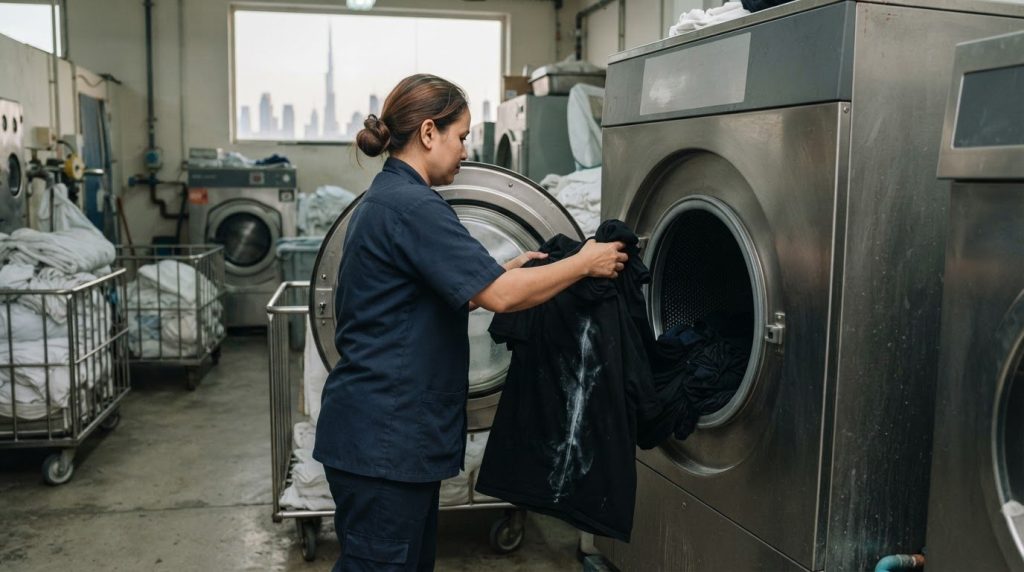
More detergent isn’t always the answer to residue. In Dubai, water hardness typically ranges from 200 to 400 mg/L, while water above 180 mg/L is classified as very hard. Calcium and magnesium can bind with soap molecules, reducing cleaning power and helping explain why detergent buildup on clothes in the UAE’s hard water can persist after washing.
If towels feel rough, dark garments show pale marks, or fabrics look dull, mineral deposits and leftover detergent may be contributing. An overloaded drum can also leave too little room for a thorough rinse, so adding more detergent may make the problem worse.
This guide explains what hard water is, how its minerals affect detergent, and how rinsing and load size can contribute to residue and changes in fabric. You’ll also learn when professional laundry care can help treat affected garments with attention to their fabric.
Key Takeaways
- Spot common signs of hard water, including pale marks on dark garments and limescale around taps.
- Use detergent suited to hard-water conditions and follow its dosage instructions instead of adding more by guesswork.
- Learn how mineral deposits can change the colour, texture and absorbency of everyday fabrics.
- Understand when professional laundry care may help with persistent residue or delicate items that need careful handling.
1. What Is Hard Water?
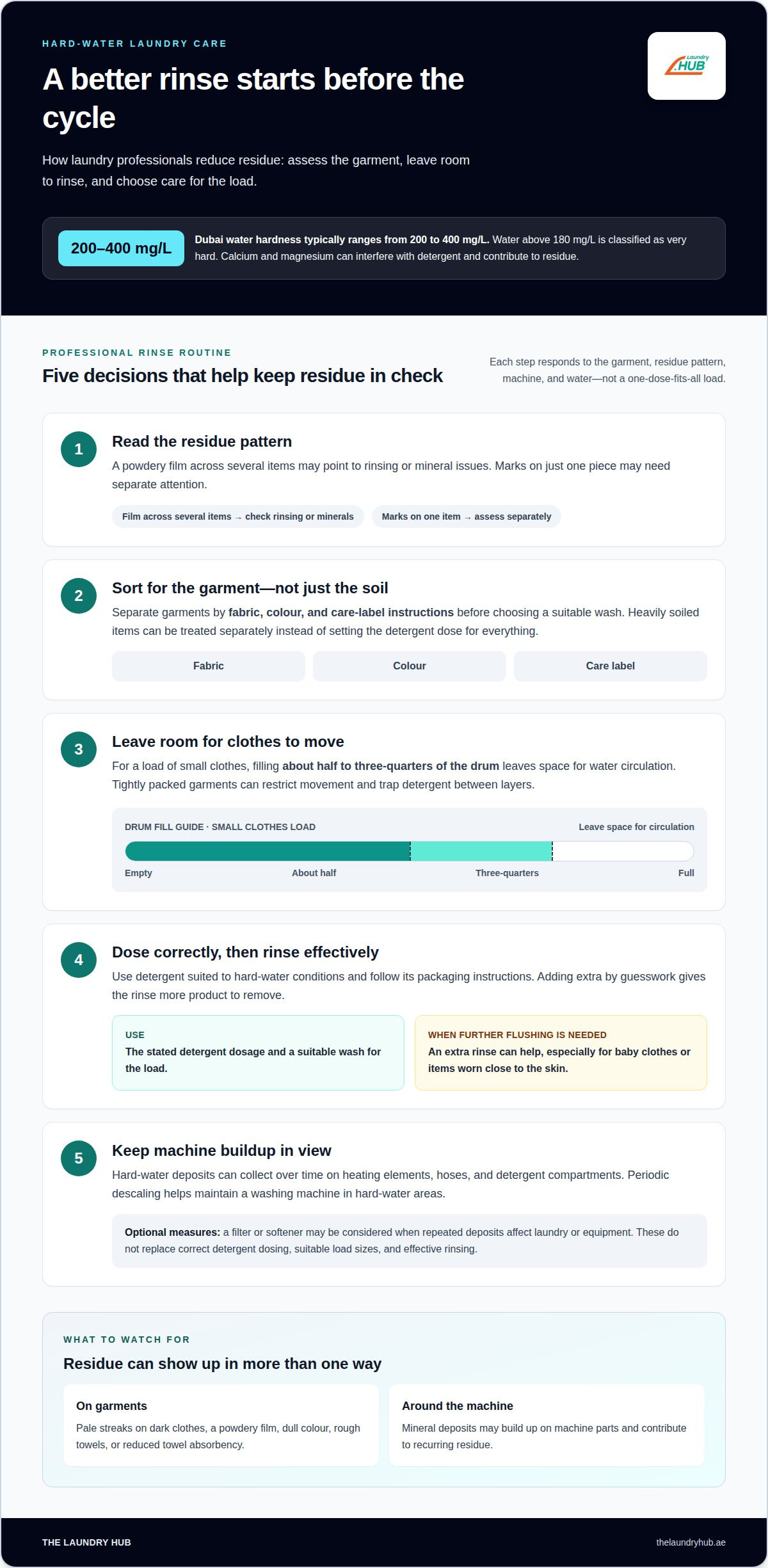
Hard water contains dissolved minerals, especially calcium and magnesium, that enter the water supply through rocks and soil. In the UAE, desalination plants and groundwater contribute to mineral content. Dubai water hardness typically ranges from 200 to 400 mg/L. International standards classify water above 180 mg/L as very hard. These minerals can remain on fabric after washing, leaving visible mineral deposits or a powdery feel.
The effects go beyond visible mineral marks. Calcium and magnesium can bind with soap molecules and interfere with detergent’s cleaning action. Loosened soil and detergent may then remain in the fabric instead of rinsing away. Residue can feel like a film, while soap reacting with minerals may form soap scum. Pale streaks stand out on dark clothing, and white limescale around taps or showerheads can be a sign of hard water at home.
Water hardness is commonly measured in parts per million or grains per gallon. For laundry, choose a detergent suited to hard-water conditions and follow the dosage on its packaging. Guessing and adding extra detergent can leave more product for the rinse to remove. Check the garment’s care label and consider how soiled the load is. Heavily soiled items may need separate treatment rather than a larger dose for every garment.
Fabric softener doesn’t remove mineral deposits. It may change how fabric feels, but it can’t replace detergent suited to mineral-rich water or a thorough rinse. Consider whether a garment feels coated after washing or has marks resembling limescale. Both problems can occur together: minerals reduce detergent performance, while minerals and leftover product remain among the fibers. This combination can explain persistent residue on clothes washed in Dubai’s hard water.
How laundry professionals manage rinsing and avoid overloaded washing machine drums
Professional laundry care starts with the garment and the pattern of residue. A powdery film across several items may point to rinsing or mineral issues, while marks on just one piece may need separate attention. Staff sort garments by fabric, colour, and care-label instructions before choosing a suitable wash. This prevents a heavily soiled item from dictating detergent use for an entire load.
Clothing needs room to move through washing and rinsing. For a load of small clothes, filling about half to three-quarters of the drum leaves space for water circulation. Packing garments tightly can restrict movement and trap detergent between layers. Professionals size loads to the machine and fabric mix, then use an extra rinse when detergent needs further flushing, especially for baby clothes or items worn close to the skin.
Hard water contains minerals that can settle on clothes and machine parts. Deposits may collect over time on heating elements, hoses, and detergent compartments, affecting machine performance and contributing to recurring residue. Periodic descaling helps maintain a washing machine in hard-water areas. Professional laundry care can account for water hardness during washing and include machine maintenance as part of consistent care.
A filter or softener may be considered when repeated hard-water deposits affect laundry or equipment. These are optional measures, not a substitute for correct detergent dosing, suitable load sizes, and effective rinsing. The right approach depends on the water, machine, and pattern of buildup. In the UAE, professional treatment costs depend on garment type, load size, soil level, and treatment required; the price is provided after a quote request. A wash-and-fold service can suit everyday garments, while delicate or visibly affected items benefit from care suited to their fabric.
3. Dull, yellowish, stiff or streaked laundry
Mineral deposits can dull colours and make fabric feel rough. Towels may lose softness and absorbency as deposits collect around their fibers. Pale streaks on dark garments can indicate residue, while yellowing or greying in whites may have several causes. A professional assessment considers the fabric, care label, soil, and residue pattern before selecting a treatment.
Detergent residue can irritate sensitive skin, especially when garments sit close to the body. Repeated mineral buildup can also contribute to roughness, dull colour, and faster wear. A professional can separate heavily soiled garments instead of increasing detergent across every load. This focuses cleaning on the items needing more attention and avoids leaving unnecessary product on other pieces.
Water softeners can help manage mineral-rich laundry water by exchanging calcium and magnesium ions for sodium ions. This can improve detergent performance and limit deposits on clothing. Vinegar isn’t a universal answer: the garment, washing process, and machine all matter when choosing a rinse treatment. Fabric softener may change how laundry feels, but it can coat fibers. Towels are a clear example of why absorbency matters.
For Dubai households using laundry pickup and delivery, the handover is a useful time to point out stiff towels, pale streaks, or recurring residue. These details help professionals assess garments and distinguish mineral buildup from heavy soil or detergent left in the fabric. Professional water treatment can address mineral content during washing, rather than treating every mark as a stain. Fabric type, water hardness, and the kind of residue all affect how a garment should be cleaned.
4. How calcium and magnesium in hard water affect detergent
Calcium and magnesium change how detergent works during washing. These minerals bind with soap molecules, affecting suds and reducing cleaning power. They can also bind with detergent surfactants, the ingredients that help lift dirt and stains from fabric. When their action is hindered, a shirt worn on a dusty day may retain soil even after a normal wash cycle.
That’s why adding more detergent isn’t always the answer. Hard water can leave mineral deposits and detergent residue, and extra product gives the rinse more to remove. Follow the detergent’s stated dosage and separate heavily soiled items from lightly worn clothing. This keeps a muddy work garment from driving detergent levels for an entire mixed load.
Detergent ingredients can respond differently to minerals. Nonionic surfactants, such as Coco-Glucoside, avoid mineral interference, while enzymes can break down some soils independently of water hardness. These ingredients have different roles: surfactants help lift soil, while enzymes act on particular types of grime. Choose a detergent suited to hard-water conditions rather than relying on foam as proof that stains are being removed.
Citric acid can act as a chelating agent, binding calcium and magnesium in laundry water. This offers one way to address mineral content, but the treatment still needs to suit the garment and washing process. Repeated mineral buildup can affect fabric appearance and feel, even when a garment looks clean straight from the drum. If clothing continues to feel coated or stains remain after washing, arrange professional laundry care for fabric-conscious treatment.
The Laundry Hub
The Laundry Hub provides professional laundry and dry cleaning for garments affected by persistent detergent or mineral residue. If clothing still feels coated, towels have become rough, or dark fabrics show pale marks after washing, professional care can address the garments according to their fabric and condition. Share details about the residue and any care-label concerns to help guide treatment.
For everyday clothing, The Laundry Hub’s wash-and-fold service offers a practical option. Steam pressing can complement garment care when items need a crisp finish after cleaning. The Laundry Hub also provides shoe and bag care, as well as curtain and carpet cleaning for household items that need specialist attention.
Contact The Laundry Hub to discuss laundry care for garments affected by hard-water residue.
Choose a considered next step for your garments
Persistent residue can be frustrating, especially when a favourite garment or household textile no longer feels comfortable to use. If detergent buildup on clothes in UAE hard water keeps returning, professional care is a practical next step. Describe which items are affected and what you notice, such as a coated feel, stiffness, or marks that remain after washing. These details help guide care according to the fabric and its condition.
The Laundry Hub provides laundry and dry cleaning, with professional care for garments and textiles. A clear conversation about your laundry concerns can help you decide whether to arrange care for affected items. If residue persists across repeated washes, professional assessment can help address it.
Contact The Laundry Hub today to discuss your laundry needs and take a considered step toward fresher-feeling garments.
Frequently Asked Questions
What Is Hard Water?
Hard water contains dissolved minerals, especially calcium and magnesium. In laundry, these minerals can interfere with cleaning and remain on fabric as deposits. White limescale around taps or showerheads is a practical clue at home. It doesn’t reveal the exact mineral level, but it may help explain why garments feel coated or look marked after washing.
What Causes Water Hardness?
Water becomes hard as it moves through rocks and soil and dissolves minerals along the way. In the UAE, groundwater and desalination plants contribute to mineral content in the water supply. The mineral mixture can vary, so laundry effects may differ between homes. Recurring scale on bathroom fittings alongside residue on freshly washed clothes, for example, can suggest minerals are affecting household water use.
Why do kids’ clothes go stiff and grey in the UAE?
Dust, sweat, and mineral deposits can combine with detergent residue in children’s clothes, leaving fabric dull or stiff. UAE summer temperatures regularly exceed 40°C in much of the country, and outdoor play can add sweat and dust between washes. A child’s shirt that feels rough at the seams or looks grey despite washing may need attention to both soil removal and rinsing.
What causes detergent buildup on clothes in hard water?
Calcium and magnesium can bind with soap and interfere with detergent’s cleaning action. Detergent buildup on clothes in the UAE’s hard water can also occur when product remains in fabric after washing. Using too much detergent, packing the drum tightly, or rinsing inadequately can add to the problem. Mineral residue and detergent buildup may have several contributing causes and occur together.
How can you tell detergent residue from hard-water mineral deposits on clothes?
Detergent residue may feel slippery, soapy, or coated, while mineral deposits can appear as pale marks or make fabric feel rough. Streaks often stand out on dark clothing, while towels may show changes in softness and absorbency. These clues aren’t conclusive, since detergent and minerals can remain together. The garment’s care label and the residue pattern across a load help identify what needs attention.
How can a laundry professional remove detergent buildup from clothes in a washing machine?
A laundry professional assesses a garment’s fabric, care label, and residue before selecting a suitable wash and rinse. For detergent buildup on clothes in UAE hard-water conditions, heavily soiled items can be handled separately, and loads can be sized to leave garments room to move. An extra rinse may help flush out remaining detergent. If residue keeps returning across loads, machine deposits may also need attention.
