







Could a hot wash leave your mattress protector less effective than before? When you’re unsure whether its fabric and waterproof backing can handle the machine, the wrong cycle or drying method can affect how it fits and performs. Mattress protector cleaning Dubai residents can rely on starts with the care label, not a one-size-fits-all routine. Dust, perspiration, and indoor drying can also make regular care less straightforward.
A removable protector needs a different approach from the mattress beneath it. Heat and harsh products may affect its fit or protective layer, so check the fabric and care instructions before washing. This guide explains how to choose a cleaning method, avoid common mistakes, and let the protector dry fully before putting it back on the bed. It also covers when professional household textile care can be a convenient alternative to home washing. The Laundry Hub provides professional laundry and household textile care, with pickup and delivery across the UAE.
Key Takeaways
- Use the care label and protector construction to decide whether washing at home is suitable.
- Care for a removable protector separately from the mattress, since they are different items with different needs.
- Compare machine capacity, preparation, and drying requirements before choosing home washing or professional care.
- For mattress protector cleaning Dubai, inspect seams and note stains before cleaning.
- The Laundry Hub’s household textile care and UAE-wide pickup and delivery can simplify your care routine.
Mattress Protector Cleaning in Dubai: What Makes It Different from Mattress Cleaning?
A mattress protector is a removable layer placed over a mattress to help shield it from everyday wear. Its construction varies: some models have a waterproof backing, while others are quilted, fitted with elastic edges, or made from blended fabrics. These details affect how the item should be washed, dried, and handled. The Mattress protector reference explains the item’s general protective role, but the level of protection depends on each product’s construction.
Mattress protector cleaning means caring for the removable cover; mattress deep cleaning means treating the mattress itself. These are separate tasks, with different materials and care requirements. A protector may be suitable for laundering if its label allows it. Washing the protector does not clean the mattress beneath it. Understanding this distinction is the first step in mattress protector cleaning Dubai households can manage with confidence.
What does a mattress protector protect against?
Depending on its construction, a protector can help limit contact with routine spills, perspiration, dust, and everyday wear. Don’t assume every model blocks liquids or particles to the same degree. Check the product information to understand its intended function. Regular care can help keep the removable layer fresh, but it does not replace cleaning the mattress itself when needed.
Why the care label matters before cleaning
Look for a sewn-in label, often along a side seam or edge. If it’s missing, check the original packaging or product instructions. Note the permitted washing method and temperature, drying directions, and any restrictions. Don’t assume a protector is machine-washable just because it comes off the bed.
Waterproof membranes, quilting, elastic edging, and fabric blends can respond differently to heat and agitation. A setting that works for ordinary bedding may be too harsh for a layered protector or its backing. Follow the manufacturer’s instructions instead of defaulting to a familiar wash cycle. If the care guidance is unclear, avoid experimenting with high heat or strong products. Checking first helps protect the protector’s fit and function and makes it easier to decide whether home washing or professional textile care is more practical.
How to Clean a Mattress Protector Safely: Start with Its Fabric and Care Label
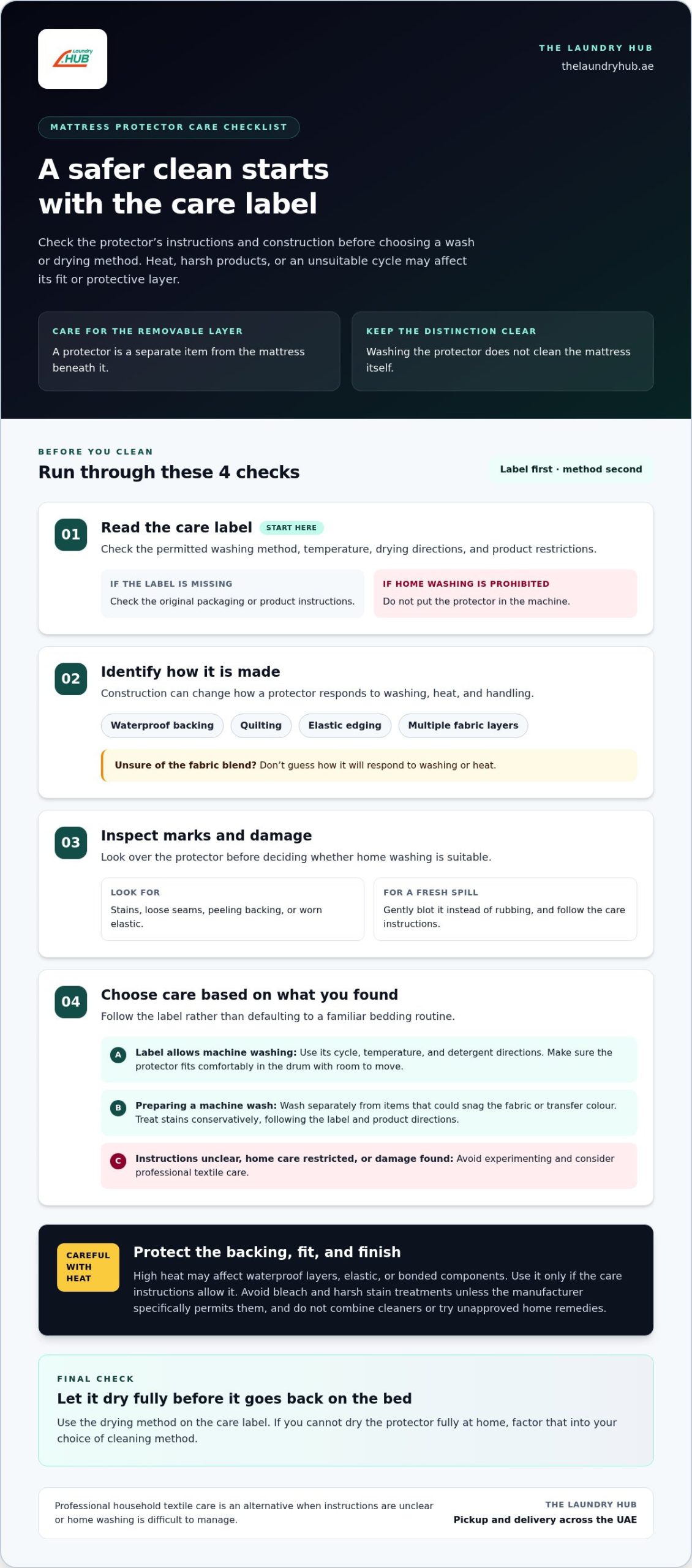
Use this decision sequence before cleaning. It helps you choose a method based on the protector itself rather than applying a routine meant for ordinary bedding.
- Read the care label. Check the washing, temperature, drying, and product instructions. If home washing is prohibited, don’t put the protector in the machine.
- Identify the construction. Note whether it has a waterproof backing, quilting, elastic, or multiple fabric layers. If the fabric blend is unclear, don’t guess how it will respond to washing or heat.
- Inspect marks and damage. Look for stains, loose seams, peeling backing, or worn elastic. Gently blot a fresh spill instead of rubbing, and avoid treatments the care instructions don’t allow.
- Choose care accordingly. Follow the label for a washable protector. If home care is restricted, or the item is damaged or difficult to identify, avoid experimenting and consider professional textile care.
Let the care label guide both the washing temperature and the drying method. For general sorting, stain pre-treatment, and label-reading guidance, see the American Cleaning Institute’s laundry best practices. Protector-specific instructions take priority.
Which cleaning method suits a washable protector?
If the label permits machine washing, follow its cycle, temperature, and detergent instructions rather than adding default settings. Check that the protector fits comfortably in the drum and has room to move. Wash it separately from items that could snag the fabric or transfer colour. Treat visible stains conservatively, following the label and product directions. Don’t combine cleaners or try an unapproved home remedy.
When should you avoid heat, bleach, or aggressive treatment?
High heat may affect some waterproof layers, elastic, or bonded components, so use it only if the care instructions allow it. Avoid bleach and harsh stain treatments unless the manufacturer specifically permits them. Pause before washing if the label prohibits home laundering or you find damage such as a split seam or peeling backing. A cautious approach can help preserve the protector’s fit and function.
For mattress protector cleaning Dubai residents can manage with confidence, let the label guide each step. If home washing feels unsuitable, professional laundry and textile care is a convenient option. The Laundry Hub provides pickup and delivery across the UAE.
Home Washing or Professional Mattress Protector Cleaning in Dubai?
The right choice depends on the care instructions, construction, size, and whether you can dry the protector fully. Home washing can be practical if the label allows it and the item fits comfortably in your machine. Professional textile care is an alternative when the instructions are unclear or the job is difficult to manage at home. Use this comparison to weigh the practical differences.
| Consideration | Home washing | Professional textile care |
|---|---|---|
| Label suitability | Best suited to protectors clearly labelled for home washing. | Useful when care instructions or fabric construction make home care uncertain. |
| Machine capacity | Works when the protector fits comfortably without being tightly packed. | A convenient alternative if your machine cannot accommodate its size. |
| Care effort | You manage preparation, washing, and drying according to the label. | Reduces the household work involved in caring for textiles. |
| Drying requirements | You need a suitable way to dry the protector fully before refitting it. | Can be considered when drying space or time at home is limited. |
When can home washing be a practical choice?
Choose home washing when the label clearly permits it and your machine has enough room for the protector to move freely. Follow the stated cycle, temperature, and detergent guidance. Don’t substitute a familiar bedding routine if it conflicts with the instructions. Washing is only part of the task: dry the protector as directed and make sure it is fully dry before putting it back on the mattress.
Larger or quilted protectors may take longer to dry than thin sheets. For those looking to pair reliable bed protection with luxury bedroom linens, discover King of Cotton to learn where authentic Egyptian cotton is grown and how high-grade fabrics are crafted. If you can’t provide the drying conditions the label calls for, choose another care option rather than putting a damp protector back on the bed.
When can professional care reduce the guesswork?
Professional textile care can be a practical choice if the label is unclear, the protector has delicate layers, a mark persists, or you have limited drying space. It offers an alternative to guessing at a washing method. The appropriate care depends on the individual item.
For mattress protector cleaning Dubai households can fit more easily into their routine, The Laundry Hub provides professional laundry and household textile care, with pickup and delivery across the UAE. Explore the professional laundry and dry-cleaning guide for a broader overview of textile-care services.
Preparing and Drying a Mattress Protector in Dubai Without Damaging It
Preparing the protector carefully can reduce avoidable strain on its fabric, seams, and elastic. Dust can settle on bedding, and indoor drying needs space and planning. Allow enough time for the item to dry according to its care instructions. Use this checklist before cleaning:
- Read the care label and keep it accessible while preparing the item.
- Remove sheets and other bedding from the mattress.
- Inspect seams, corners, and elastic for tears, looseness, or other damage.
- Note the location of stains and avoid vigorous rubbing, especially over delicate or waterproof areas.
Noting a stain’s location helps you keep track of it during cleaning. Don’t use an aggressive treatment just because a mark is visible; the protector’s instructions should guide any pre-treatment.
What should you do before cleaning the protector?
Lay the protector flat so you can inspect it without pulling at the fabric. Check the seams and elastic edges, then note any stains so you can handle those areas gently. Keep the label nearby. If you spot a tear, loose seam, or damaged backing, pause before washing because cleaning could place further strain on the construction.
How should you dry and refit a mattress protector?
Follow the product’s drying directions, and don’t assume tumble drying is suitable. A thick or quilted protector may need more time than a lighter one, but avoid relying on a fixed drying duration or adding heat unless the label permits it. In Dubai, choose a clean place to dry the item and allow for indoor airflow while limiting exposure to household dust.
Drying reminder: follow the protector’s instructions, not a guessed time or heat setting, and refit it only when it’s fully dry. Putting a damp protector back on the mattress means it has not finished drying. Once dry, align it evenly and ease the elastic corners into place without overstretching them or tugging at the seams. A smooth fit avoids unnecessary tension on the fabric.
Careful preparation and complete drying are key parts of mattress protector cleaning Dubai residents can manage without rushing. If you’d prefer support with household textiles, arrange professional textile care with The Laundry Hub, which offers pickup and delivery across the UAE.
Arrange Mattress Protector Cleaning in Dubai with The Laundry Hub
A sensible care decision starts with the protector itself. Its care label sets the washing and drying limits, while its fabric, waterproof backing, quilting, and elastic construction help determine how it should be handled. The protector should be fully dry before it goes back on the bed. If home care feels uncertain or difficult to manage, professional household textile care offers a convenient alternative.
What information helps organise textile care?
Before arranging care, keep the label accessible and note details that may guide handling. This short preparation list helps make the item’s needs clear:
- Read and retain the washing and drying instructions.
- Note the fabric or any waterproof or quilted construction you can identify.
- Point out visible stains and describe any tears, loose seams, or damaged backing.
These details keep the protector’s requirements in view without assuming a particular cleaning method or result. For broader context on textile-care services, explore this UAE laundry and textile-care guide.
Make household textile care easier in Dubai
Managing a bulky household textile at home involves more than washing. You also need to follow the care instructions, provide suitable drying conditions, and refit the item carefully. The Laundry Hub provides professional laundry and household textile care, with pickup and delivery across the UAE. This can reduce the effort of managing textile care at home while keeping the protector’s label and construction central to the decision.
For mattress protector cleaning Dubai residents can approach with greater confidence, use the care label, construction, and drying needs to guide your next step. If professional care is more convenient for your household, explore The Laundry Hub’s services and arrange textile care that fits your routine.
Keep Your Mattress Protector Fresh with a Careful Routine
Good mattress protector care starts with the product, not a default wash cycle. Use the care label to guide washing and drying, consider how waterproof backing, quilting, and elastic affect handling, and wait until the protector is fully dry before putting it back on the bed. Cleaning a removable protector is separate from cleaning the mattress itself.
With mattress protector cleaning Dubai households can choose home washing when the label and machine make it suitable, or professional textile care when the instructions, construction, or drying needs make the process less straightforward. The Laundry Hub provides professional laundry and household textile maintenance, with pickup and delivery across the UAE, offering a convenient way to manage household textiles.
Make your next care decision with confidence. Explore household textile care with The Laundry Hub and choose a practical option for your routine.
Frequently Asked Questions
Can you wash a waterproof mattress protector in a washing machine?
Yes, if the care label allows machine washing. Waterproof backing can respond differently to heat and agitation than ordinary fabric, so follow the stated cycle, temperature, and detergent instructions rather than using your usual bedding setting. Check that the protector fits comfortably in the drum, too. If the label prohibits home washing or is unclear, don’t experiment with a cycle that could affect its construction.
How often should a mattress protector be cleaned?
Follow the manufacturer’s care guidance, since one cleaning schedule won’t suit every protector or household. Clean it sooner after a spill or noticeable soiling, provided the label allows the method you plan to use. Regular inspection can help you decide when it needs attention. Consider how often the bed is used, but don’t wash more aggressively or frequently than the product instructions recommend.
Can a mattress protector go in the tumble dryer?
Only put it in the tumble dryer if the care label says that method is suitable. Some protectors have waterproof layers, elastic, or bonded components that may be affected by heat. Follow the label’s drying directions and don’t assume a low or high setting is safe without guidance. Make sure the protector is fully dry before putting it back on the bed.
How do you remove stains from a mattress protector?
Start by checking the care label, then gently blot a fresh spill rather than rubbing it into the fabric. Use a mild cleaning solution only if the manufacturer’s instructions permit it, and avoid bleach or aggressive stain treatments unless specifically allowed. For a persistent mark, don’t keep escalating the treatment or combine products. A cautious approach helps reduce the risk of affecting the fabric or waterproof backing.
Is professional mattress protector cleaning better than washing it at home?
Neither option is automatically better; the label, protector size, and available drying space should guide your choice. Home washing can work when the instructions allow it and the item fits comfortably in the machine. Professional care may be a practical alternative if the label is unclear, the construction is delicate, or drying at home is difficult. The appropriate care depends on the individual item.
How can I arrange mattress protector cleaning in Dubai?
For mattress protector cleaning Dubai residents can use The Laundry Hub’s professional laundry and household textile care. Keep the care label available and note the fabric or waterproof construction, along with any visible stains or damage. The Laundry Hub offers pickup and delivery across the UAE, providing a convenient way to manage household textile care when home washing feels unsuitable.
