



Most residential curtains in Dubai should be professionally cleaned every 4-6 months. Living-room curtains are recommended for cleaning every 6 months, while bedroom curtains can follow a 6-12-month schedule. For motorized drape steam cleaning in Dubai, the curtain system and fabric should be inspected before the cleaning method is chosen.
Dubai dust can make curtains feel due for attention sooner, but a suitable cleaning schedule depends on the room and how quickly the fabric collects dust. Motorized curtains also need careful handling: the right approach considers both the textile and the operating system.
This guide explains how often to clean different curtains, how fabric type affects the choice between steam and other methods, and what an on-site appointment can involve. You’ll also learn what details to share when arranging motorized drape steam cleaning in Dubai, so the plan accounts for the tracks, fabric, and height or weight of your drapes.
Key Takeaways
- Plan professional curtain cleaning every 4-6 months for most residential curtains in Dubai, then adjust the timing to the room and how quickly dust builds up.
- Use room-specific intervals as a guide: living-room curtains every 6 months, bedroom curtains every 6-12 months, and curtains in children’s rooms every 4-6 months.
- Match the cleaning method to the fabric. Delicate materials such as silk need a different approach from lightweight sheers or heavy curtains.
- On-site cleaning can be carried out without removing curtains. Mention motorized systems, high curtains, delicate fabric and visible stains when arranging the appointment.
- Prepare by making the curtain area accessible and sharing useful details about the fabric and any stains, so the cleaning process can be planned carefully.
How Often Should Curtains Be Cleaned in Dubai?
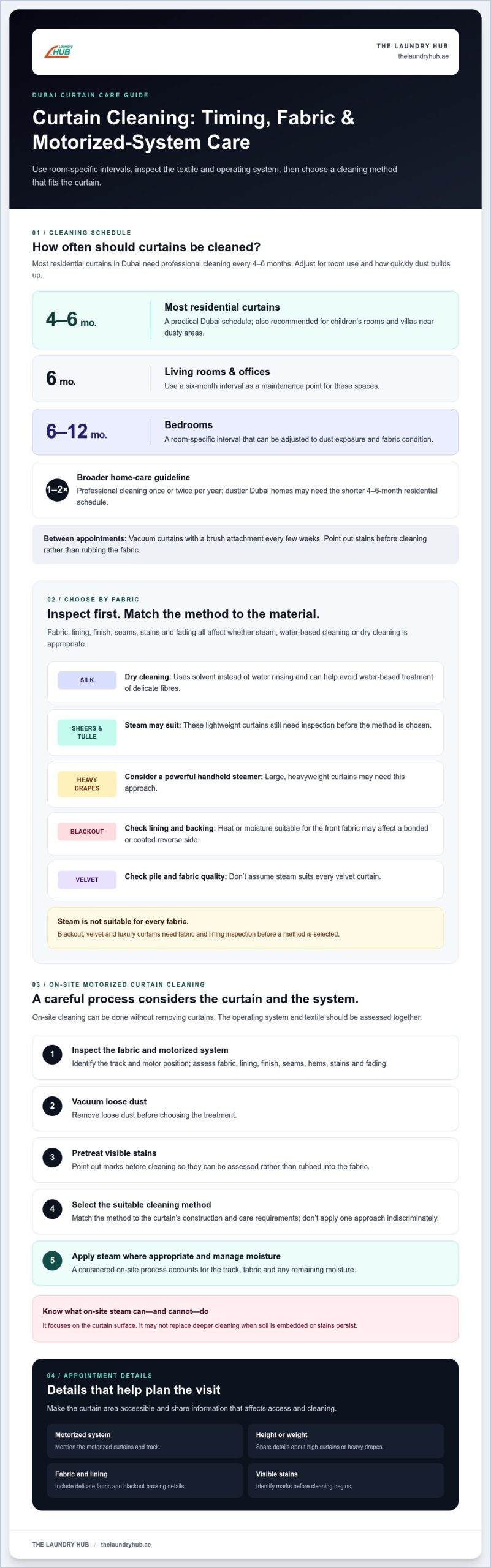
In Dubai, most residential curtains should receive professional cleaning every 4-6 months. Room use and dust exposure refine that schedule: clean living-room curtains every 6 months, bedroom curtains every 6-12 months, and children’s-room curtains every 4-6 months. Villas near dusty areas also benefit from a 4-6-month interval.
For office curtains, the recommended interval is every 6 months. A broader home-care guideline is professional cleaning once or twice per year, while dustier Dubai homes may need the shorter residential schedule. Between appointments, vacuum curtains with a brush attachment every few weeks. If stains appear, point them out before cleaning instead of rubbing the curtain fabric.
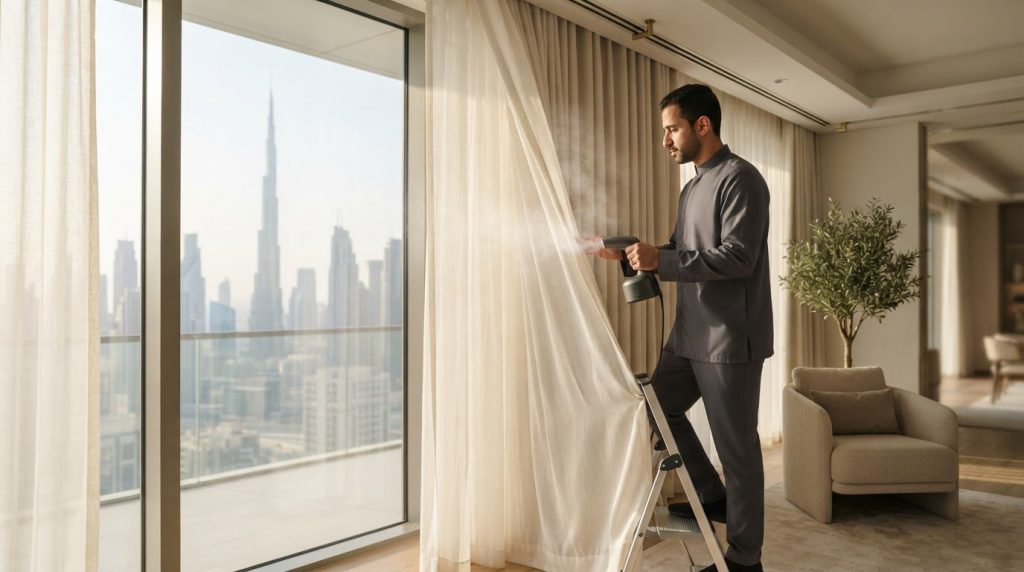
On-site steam cleaning can be performed without removing the curtains, making it useful for drapes that remain installed. It focuses on the surface, so it may not replace deeper cleaning when soil is embedded or stains persist. A practical process starts with inspecting the motorized system and fabric, then vacuuming loose dust and pretreating stains before selecting a suitable cleaning method and applying steam where appropriate.
- Sheer and tulle curtains: Steam cleaning may suit these lightweight fabrics.
- Silk curtains: Dry cleaning uses solvent instead of water rinsing to help prevent fabric damage.
- Heavyweight curtains: A powerful handheld steamer is recommended for large, heavy drapes.
- Blackout, velvet, and luxury curtains: Inspect the fabric and lining before selecting a method; don’t assume steam suits every material.
For motorized drape steam cleaning in Dubai, the curtain and operating system should be considered together. A professional curtain-cleaning service inspects the system, identifies the fabric, and determines whether on-site steam suits its condition. Compare the inspection, stain pretreatment, cleaning method, and moisture handling, rather than relying on the word “steam” in a service description.
Professional motorized curtain cleaning generally begins with an inspection of the system and fabric, followed by vacuuming loose dust and pretreating visible stains. The cleaner then selects a suitable method, applies steam where appropriate, and manages any remaining moisture. This sequence helps distinguish careful on-site work from a quick pass over the hanging curtain.
For apartments, room-specific intervals help prevent unnecessary cleaning while keeping frequently used curtains on schedule. In villas near dusty areas, plan around the recommended 4-6-month cycle. In offices, use the 6-month interval as a practical maintenance point, adjusting attention to visible dust and stains between appointments.
Fabric inspection and cleaning method selection
Cleaning starts by identifying the curtain fabric, lining, finish, and visible condition. Velvet, silk, sheer voile, and blackout curtains can respond differently to heat and moisture. The inspection should include seams, hems, backing, stains, and fading. These details help determine whether steam, water-based cleaning, or dry cleaning is appropriate.
The motorized system needs inspection alongside the fabric. The cleaner should identify the track and motor position, then plan how to reach the curtain without disturbing the mechanism. With blackout curtains, inspect the backing and lining before applying steam. Heat or moisture suitable for the front fabric may affect a bonded or coated reverse side.
Dry and wet cleaning treat textiles differently. For delicate silk, dry cleaning uses a chemical solvent instead of water, helping avoid water-based treatment. Water-based methods may suit other fabrics, but the process should match the curtain’s construction and care requirements. Professional cleaning methods use gentle detergents to limit harsh treatment.
- Silk: Choose dry cleaning rather than water rinsing to help protect delicate fibres.
- Sheers and tulle: Steam may be suitable for lightweight curtains, subject to inspection.
- Blackout curtains: Assess the lining and backing before choosing steam or wet cleaning.
- Velvet: Check the pile and fabric quality first; avoid assuming steam suits every velvet curtain.
Steam is not suitable for every delicate fabric. A cleaner should inspect the fibre, finish, and seams, then choose a controlled method suited to them. Large, heavyweight curtains may call for a powerful handheld steamer. Steam may be offered as an add-on for sheers and tulles, but their delicate construction still matters.
A practical selection process is straightforward: identify the fabric and lining, assess stains and wear, inspect the motorized track, then choose a cleaning method. This helps distinguish surface dust from marks requiring pretreatment and prevents one method from being applied indiscriminately to different curtains in the same room.
For fabric-specific care, professional curtain cleaning can be a useful next step when dust, stains, or delicate materials need attention. Share the fabric type and any blackout backing details when arranging care, so the cleaning plan reflects the curtain rather than relying on steam alone.
Booking and same-day availability
When arranging a visit, share details that affect access and cleaning. State that the curtains are motorized, then describe their height, fabric, and visible stains. For example, “motorized blackout curtains with a coffee mark” gives clearer preparation information than “curtains need cleaning.” Include your Dubai community or building location, as same-day or next-day service depends on location and booking time.
Same-day curtain-cleaning bookings are available from 9am to 11pm when arranged at least 2 hours in advance. The Dubai service operating hours are 8:30am to 5:30pm, Monday to Sunday. Treat the booking window and operating hours as separate details: arrange the appointment within the stated booking window, and provide your preferred time and location.
Before arranging a time, gather the details that will help plan the visit:
- System: Mention whether the drapes are motorized and describe the track if known.
- Access: Note high ceilings, restricted parking, building entry procedures, or other access considerations.
- Fabric: Name the material where possible, such as sheer, velvet, or blackout fabric.
- Condition: Identify visible stains, dust buildup, or areas needing particular attention.
- Scope: Say whether the request covers curtains only or includes carpets as well.
These details help distinguish a straightforward refresh from a visit that needs more preparation. A tall living-room drape, for instance, presents different access needs from a short bedroom curtain. Blackout lining or delicate fabric can also affect the method. Accurate information makes it easier to plan the work without assuming every curtain needs the same treatment.
For a same-day request, share the address and preferred timing together. A booking made at least 2 hours ahead falls within the stated advance-notice requirement, but location and schedule still shape the available appointment. If the requested slot cannot work, offering another time gives the booking team a practical alternative.
Keep the confirmation details together, including the location, requested service, appointment time, and any access instructions. Before the visit, make sure the team knows about motorized tracks, very high curtains, or delicate fabric. That information is especially useful when professional curtain cleaning needs to refresh the drapes while preserving the existing setup.
A clear service request also helps set expectations. Describe the curtains and stains accurately, and say whether you need routine cleaning or attention to a marked area. A small isolated stain and dust across several panels, for example, require different attention. This preparation helps focus the visit on the curtains and any carpets included in your request.
Preparing for an on-site cleaning appointment
Before an on-site curtain-cleaning visit, clear the area around each window. Move furniture, ornaments, and floor lamps away from the drapes so the team can reach the fabric and edges. For a narrow apartment window, clear a path from the room entrance to the curtain. Raise or position blinds to allow access if both treatments are planned.
Share the curtain fabric, lining, motorized operation, ceiling height, and visible stains before the visit. Mention blackout backing or delicate material, as these can affect the cleaning method. A note such as “motorized sheer curtains, one stain near the lower hem” is more useful than a general request for deep cleaning. Point out existing water marks or areas needing particular attention.
Preparation checklist:
- Clear access: Move small furniture and breakable items away from the window.
- Secure loose items: Remove curtain accessories that could obstruct the work, such as tiebacks, if they come off easily.
- Identify concerns: Mark stains or delicate sections verbally, rather than applying a home treatment beforehand.
- Plan nearby space: Keep the floor below the curtain clear for equipment and moisture handling.
- Protect electronics: Move devices away from the work area and mention nearby sockets or controls.
Vacuuming with a brush attachment every few weeks can reduce loose dust between professional visits. Before cleaning, avoid vigorous brushing or rubbing stains, which can push soil deeper into the fabric or affect its finish. If dust has gathered along the hem or in the folds, point it out during the initial inspection.
On-site cleaning can be carried out without removing curtains from their tracks. The process may include vacuuming loose dust, pretreating stains, cleaning with a fabric-appropriate method, and extracting moisture. Clear access to the window helps the technician clean across the fabric instead of just the easiest-to-reach section. Mention if the request also includes blinds, as they need separate attention.
Dust conditions in Dubai homes can vary with the building and how each room is used. Tell the team if windows are often open or dust gathers quickly around a particular window. This context helps explain the cleaning need without assuming every curtain needs the same treatment. A clear description also helps distinguish routine curtain cleaning in Dubai from focused stain treatment.
Keep children and pets away from the immediate work area while equipment is in use. After cleaning, follow the technician’s instructions on ventilation and let the fabric dry before operating the motorized drapes. These steps help keep the window area orderly and support careful work from inspection through finishing.
How should motors, tracks, and electrical components be protected during on-site steam cleaning?
Inspect the motorized curtain system before applying steam. The motor, track, wiring, controls, and fabric position all affect the work area. Identify the motor and visible electrical components, then plan the cleaning around them. Direct steam only at suitable curtain fabric, not toward motors, controls, sockets, or exposed wiring.
Keep the system’s operating instructions handy, if available. The cleaner can review how the drapes move and where the motor is positioned. Don’t pull, twist, or force the curtain to expose a hidden section. For example, if the track ends near a wall-mounted control, keep that control out of the direct steam path.
A careful on-site sequence can reduce avoidable contact with the mechanism:
- Inspect: Locate the motor, track ends, controls, visible wiring, and nearby power points.
- Position: Set the curtain to provide access without straining the fabric or track.
- Protect: Keep steam and moisture away from electrical parts and the motor housing.
- Clean: Apply the selected method to suitable fabric areas, avoiding the mechanism.
- Review: Check the curtain and system visually before normal operation resumes.
The track is not a steam-cleaning target. Its grooves can collect dust, but directing steam into them may carry moisture toward internal components. Use a dry cloth or suitable dry-cleaning tool to remove accessible dust without directing steam inside the track. Don’t insert objects into openings or apply liquid near the motor.
Take care around the electrical system. Don’t disconnect wires or open the motor housing while preparing the curtains. If the system needs to be switched off, follow its operating instructions and use the designated control. Keep extension leads and other electrical devices clear of the work area. Tell the technician about unusual sounds, interrupted movement, or a control that already behaves inconsistently.
After cleaning, let damp fabric dry before operating the drapes. Check that the track is clear and the curtain moves without catching. If its movement changes, stop using the system rather than repeatedly cycling the motor. This check helps distinguish fabric cleaning from a problem with the mechanism.
For motorized curtain care, choose a service that inspects the system before cleaning and keeps the method focused on suitable fabric areas. Arrange professional curtain cleaning when your drapes need attention, and mention the motor position and controls when booking.
The Laundry Hub: Laundry and Dry Cleaning
The Laundry Hub provides curtain and carpet cleaning for household textiles that need professional care. If curtains have accumulated dust, visible stains, or need more than routine upkeep, this service is a practical next step. Fabric type and condition guide suitable care, especially for delicate or lined drapes.
The Laundry Hub also offers Laundry and Dry Cleaning, Shoe & Bag Care, and Steam Pressing. For curtain and carpet cleaning, contact The Laundry Hub or visit thelaundryhub.ae.
Make curtain care your next practical step
Well-maintained curtains help create a comfortable, considered home. Include them in your household textile-care routine, alongside other fabrics that benefit from specialist attention. If you’re planning motorized drape steam cleaning in Dubai, note the curtain’s fabric, condition, and operating system before arranging service. These details help the team plan suitable care.
The Laundry Hub offers curtain and carpet cleaning, as well as Laundry and Dry Cleaning and Shoe & Bag Care. Choose the service that fits the items needing attention, then share the relevant details when booking. Contact The Laundry Hub to book and take the next step toward well-cared-for curtains and household textiles.
Frequently Asked Questions
How is the custom size price worked out?
Curtain cleaning prices generally depend on measured dimensions and the method required. Width and drop determine the fabric area, while lining, material, stains, and access can affect the work. A lined blackout drape, for example, may need different handling from an unlined sheer panel. Share accurate measurements and curtain details when requesting a quote, and compare estimates based on the same measured size.
Is there any risk of colour fading during the cleaning process?
Colour change can be a concern with unstable dyes, sun fading, or delicate finishes. The cleaner should inspect the fabric and its condition before choosing steam, water-based cleaning, or dry cleaning. Mention existing fading, especially near a sunlit window, so it isn’t mistaken for a cleaning result. No method can guarantee that every fabric will retain its original colour, so the cleaning plan should account for the textile’s condition.
What kind of stains can you remove from curtains?
Cleaning may address food or drink spills, fingerprints, and general soil, but results depend on the stain and curtain fabric. A fresh spill differs from an old mark set into the fibres. Tell the cleaner what caused the stain, if known, and when it appeared. Avoid home remedies before treatment, as rubbing or applying products can spread the mark or affect the fabric’s colour.
Do Dubai curtain cleaning companies offer steam cleaning for motorized drapes?
Yes, The Laundry Hub provides on-site curtain cleaning for motorized drapes in Dubai. The system, including the motor and track position, is inspected before work begins. Steam is used only when suitable for the fabric, not indiscriminately across the whole setup. When arranging service, describe the curtain material, motor location, and visible marks. These details help plan access around the installed system and select an appropriate method.
What is the average price for motorized drape steam cleaning in Dubai?
There is no single average cost for every motorized drape cleaning job. The quote depends on the curtain’s measured size, fabric and lining, condition, stain treatment, access, and cleaning method. Motorization can also affect how the work is planned around the track and motor. For a useful estimate, provide the curtain dimensions and material, along with details about the system and areas needing attention.
How do Dubai providers price curtain steam cleaning per panel, window, or square metre?
Prices may be calculated by panel, window, or measured fabric area. These units are not automatically equivalent: one window may have multiple panels, and panel sizes can vary. Compare quotes using the same curtain dimensions and work scope. Clarify whether the quoted unit includes all panels at the window and whether fabric type, lining, stains, or access affect the calculation.
Can motorized curtains be steam cleaned without removing them?
Yes, on-site steam cleaning can be carried out while curtains remain installed. This avoids removal, but the cleaner still needs access to the fabric and must work around the motorized track. Furniture directly beneath a full-length drape, for example, may block access to its lower edge. Clear the work area and point out the motor and controls before cleaning, so steam is not directed toward the mechanism.
Is steam cleaning safe for motorized curtain fabrics and linings?
Steam is not suitable for every fabric or lining. Silk, blackout backing, delicate finishes, and older material may need another method; dry cleaning is an option for delicate silk. The cleaner should assess the curtain’s construction and condition before choosing a process. Keep the motor, controls, and electrical parts away from direct steam and moisture. If the lining differs from the face fabric, identify both during the inspection.
