



The strongest treatment isn’t always the safest choice for a yellow underarm mark. For yellow sweat stain removal on a kandura in Dubai, prompt, fabric-appropriate care matters: sweat, body oils and antiperspirant residue can build up and react with fabric over time, while bleach may cause discolouration or damage.
Cotton and cotton-blend kanduras need careful attention, especially when marks have set into the fabric. This guide explains why stains turn yellow, how professionals approach fresh marks, and when bleach or home remedies could put the garment at risk.
You’ll learn how care differs for cotton and cotton blends, what to consider with delicate or stubborn stains, and how to reduce buildup in Dubai’s heat. The goal is to protect your kandura’s fabric and appearance while choosing a sensible next step.
Key Takeaways
- Prompt, fabric-appropriate treatment can help address fresh sweat marks before they settle into a kandura.
- Bleach can discolour or damage fabric, so stain treatment should be chosen with the garment’s care label in mind.
- For cotton and cotton-blend kanduras, the fabric, stain age and care instructions shape the right cleaning approach.
- Have marks assessed before heat is applied, since drying or ironing can make some stains harder to treat.
How professionals treat fresh sweat stains with cold water and enzyme detergent
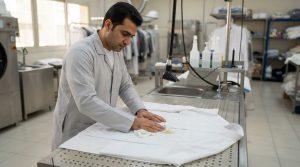
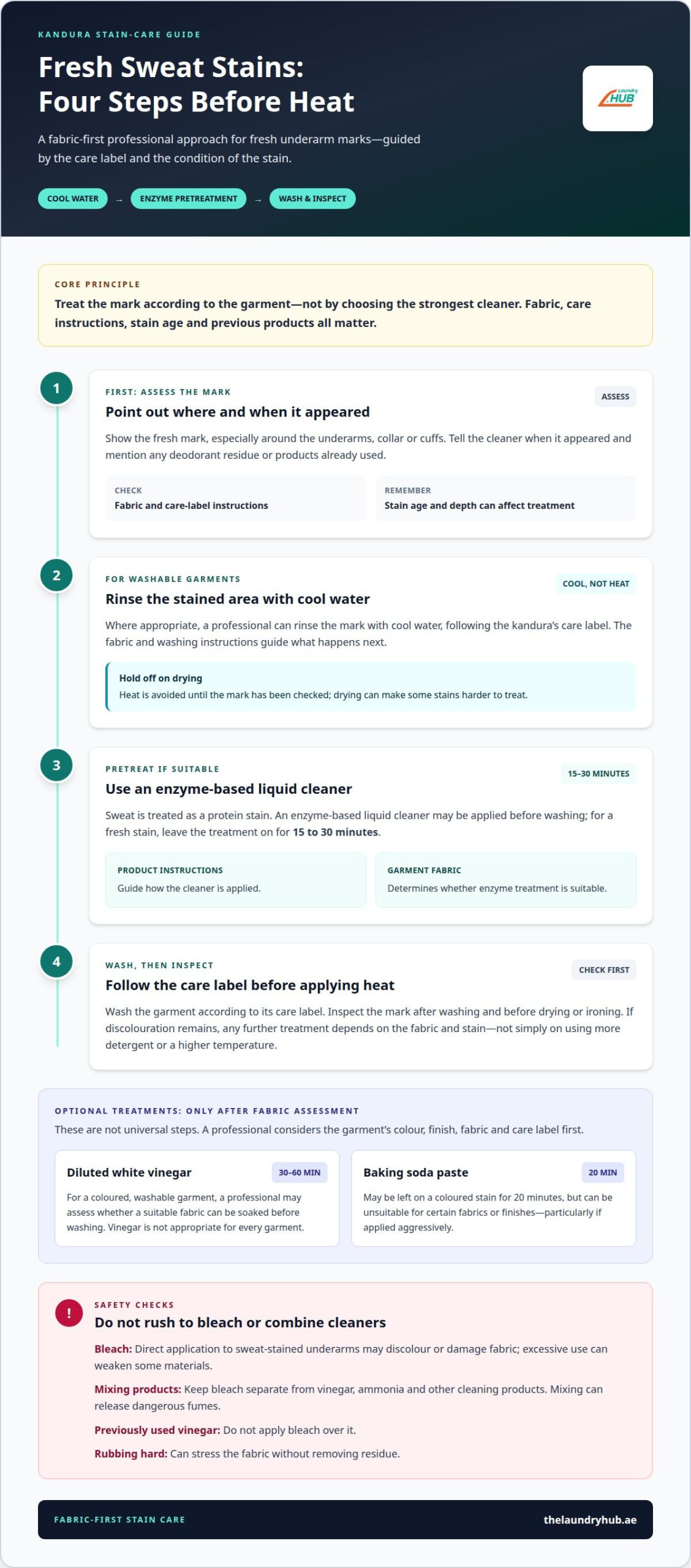
For a fresh mark, prompt assessment helps determine a suitable treatment for the garment’s fabric and care label. A laundry professional can use cool water and an enzyme-based liquid cleaner, then check the stain before drying.
-
How Professionals Treat Fresh Sweat Stains with Cold Water
Point out the fresh sweat mark, particularly around the underarms, collar or cuffs. For a washable kandura, a professional can rinse the stained area with cool water where appropriate, following the care label. The fabric and washing instructions guide the next step. Heat is avoided until the mark has been checked, as drying can make some stains harder to treat.
-
How Professionals Treat Protein Stains with Enzyme Detergent
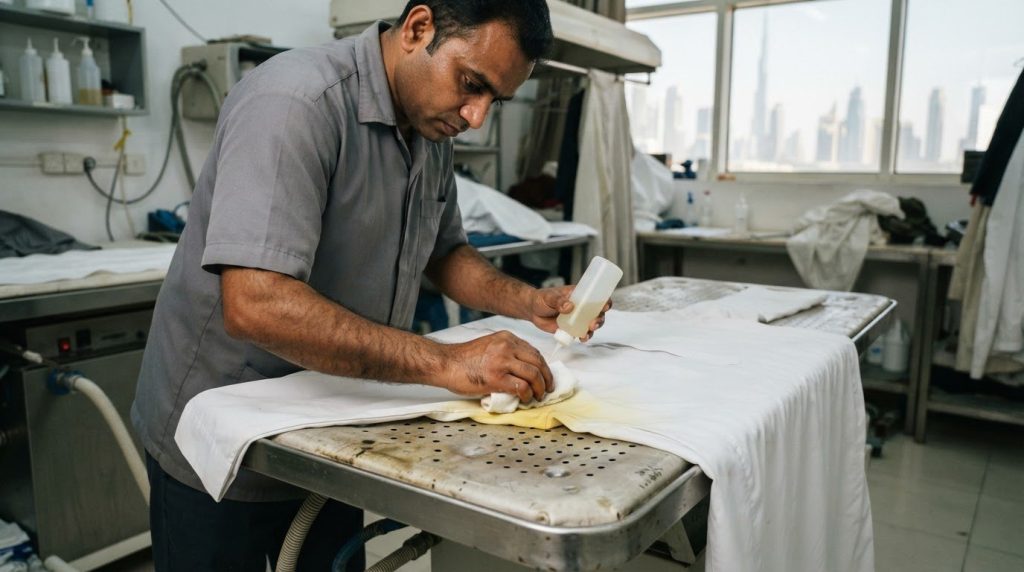
Tell the cleaner when the mark appeared and point out any deodorant residue. Sweat is treated as a protein stain, so an enzyme-based liquid cleaner may be applied before washing. For a fresh stain, the treatment is left on the fabric for 15 to 30 minutes, then the garment is washed according to its care label. Product instructions guide application, while the fabric determines whether enzyme treatment is suitable.
- For a coloured, washable garment, a professional may assess a diluted white-vinegar treatment against the fabric and care label. Suitable fabrics can be soaked for 30 to 60 minutes before washing. Vinegar isn’t appropriate for every garment, so the cleaner considers its finish and colour first. Baking soda also needs a cautious assessment: a paste may stay on a coloured stain for 20 minutes, but can be unsuitable for certain fabrics or finishes, particularly if applied aggressively.
- For yellow discolouration, the professional considers whether sweat and antiperspirant residue have built up over time. A suitable detergent or fabric-safe stain remover is selected according to its instructions and the garment’s care requirements. After washing, the mark is inspected before heat is applied. If discolouration remains, further treatment depends on the fabric and stain, not simply on using more detergent or a higher temperature.
How do professionals assess whether bleach is safe for yellow underarm stains?
- Inspect the underarms for sweat, body oils and deodorant residue before selecting treatment. Yellow marks can develop as these substances accumulate and react with fabric over time. Antiperspirants can contribute too: aluminium ingredients reduce sweating by blocking sweat ducts, while residue remains against the garment. The combination can leave a yellowed area that ordinary washing may not remove.
- Check the garment’s fabric, colour and care-label instructions before treating a stain. A white cotton kandura and a coloured cotton blend may respond differently to cleaning agents, while delicate fabrics need careful handling. These details help determine whether a treatment could discolour the cloth, weaken its fibres or affect its finish. The stain’s location and depth also matter.
- Avoid applying bleach directly to sweat-stained underarms. Bleach may discolour or damage fabric, and excessive use can weaken some materials. Hard rubbing can also stress the fabric without removing residue. A professional selects a suitable detergent or fabric-safe stain remover according to its instructions and the garment’s care requirements, keeping treatment focused on the mark and material.
- Keep bleach separate from vinegar, ammonia and other cleaning products. Mixing bleach with these cleaners can release dangerous fumes. If vinegar was used in an earlier treatment, don’t apply bleach over it. A professional assesses the stain and garment before choosing a compatible method, then checks the result before drying. Heat from an iron or dryer can make some remaining marks harder to treat, so inspect the garment first.
How Can You Prevent Sweat Stains in Dubai’s Heat?
Cleaning time depends on the fabric, stain age, care label and treatment required; older or heat-set marks may need further treatment. At handover, point out the affected area, explain when the stain appeared and mention any vinegar, bleach or other products already used.
- Apply antiperspirant to clean, dry skin before bed rather than just before dressing. This gives it time to dry before it touches a kandura or shirt. Deodorant residue can combine with sweat and contribute to yellow underarm marks, so letting it dry helps reduce transfer to fabric.
- Wear a vest or T-shirt beneath a kandura when practical. An extra layer can absorb sweat before it reaches the outer garment, particularly around the underarms. Choose a comfortable layer and change it when damp. This simple barrier can help prevent visible marks from building up.
- Wash sweaty clothes promptly instead of leaving them in a laundry basket. During Dubai’s hottest months, washing within a day or two can help limit buildup. Washing after each wear can also help prevent sweat and deodorant residue from accumulating. Tell the cleaner if a garment was stored damp or worn repeatedly before cleaning.
- Have the affected area inspected before applying heat. Check the mark after washing and treat it again if it remains. Tumble-dryer heat or ironing can make some stains harder to remove, so don’t heat the fabric until cleaning is complete and the mark has been reviewed.
- For an older stain, explain its history at handover, including previous washing and any vinegar or bleach use. The stain’s age, fabric and earlier treatment affect the next cleaning choice. A professional can assess the kandura before selecting a suitable method, rather than applying more product or rubbing the mark aggressively.
There is no fixed turnaround; it varies with the fabric, stain age, care label and treatment required. Older or heat-set stains may take longer because they can need further treatment.
Sweat-stain care for cotton and cotton-blend kanduras
For cotton and cotton blends, professionals match pretreatment and washing to the care label, colour and condition of the stain.
Professionals remove yellow sweat stains by assessing the fabric, treating the mark, then washing at the recommended temperature. They pretreat the affected area with a suitable product and inspect it before drying.
-
Professional Pretreatment for Sweat Stains on Cotton Kanduras
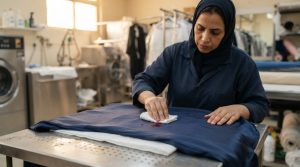
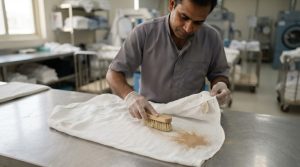
At handover, point out marks on the underarms, collar or cuffs and mention any earlier treatment. The professional checks the care label and whether the kandura is coloured, starched or embroidered. For coloured fabric, a stain remover can be tested on a small patch first. Pretreatment is applied carefully, without excess product or aggressive rubbing that could affect the fabric or finish.
-
Professional Washing of Kanduras to Remove Sweat Stains
Wash the pretreated kandura at the temperature and cycle recommended on its care label. The professional separates white garments from dark and coloured laundry and uses detergent in the recommended amount, since excess detergent may leave residue. After washing, the stain is checked before drying. If it remains, it can be treated again rather than exposed to heat.
-
Professional Removal of Yellow Sweat Stains from a Kandura
For stubborn yellowing, the professional considers the fabric, stain age and previous cleaning before selecting another treatment. An oxygen-based stain remover may be used for a persistent stain if the care label permits it. Delicate, starched or embroidered kanduras need particular care, and results on old stains depend on the fabric and mark.
For expert handling of a stained cotton kandura, request professional kandura cleaning.
The Laundry Hub
The Laundry Hub’s Laundry & Dry Cleaning service can help when yellow underarm marks need professional attention. It offers a practical next step for cotton and cotton-blend kanduras, especially when stains are stubborn, the fabric is delicate or home treatment has already been attempted.
At handover, point out the affected areas and share which products or cleaning methods you have used. This helps the cleaning team assess the garment and choose care suited to its fabric and condition. For a crisp finish after cleaning, The Laundry Hub also offers Steam Pressing.
For help with a sweat-stained kandura, contact The Laundry Hub.
Make your next kandura handover count
Give the garment a clear handover: identify where the mark appears and mention any previous treatments. That context helps the cleaning team assess the kandura’s condition and fabric before proceeding. For yellow sweat stain removal on a kandura in Dubai, professional assessment is a practical next step if a mark persists or you’re concerned about damaging the fabric.
The Laundry Hub also provides Shoe & Bag Care and curtain and carpet cleaning. For your kandura, share what you’ve noticed so its fabric and condition can guide the next step.
Contact The Laundry Hub for help with your kandura. A careful handover can set you on the right path to restoring its fresh, well-kept appearance.
Frequently Asked Questions
Why Do Sweat Stains Form on Clothes?
Yellow sweat stains form as sweat, body oils and antiperspirant residue accumulate and react with fabric. Underarms are particularly exposed, and repeated wear can leave residue that becomes harder to remove. Antiperspirants containing aluminium can contribute to buildup. A pale mark, for example, may yellow over time even if the garment looked clean after an earlier wash.
How do laundry professionals remove sweat odour from clothes?
Professionals wash garments promptly with a suitable detergent and ensure they dry completely. Treatment depends on the care label and fabric: a kandura and a delicate wool garment may need different handling. If odour remains, the garment’s condition and previous cleaning help guide the next approach. Avoid storing clothes while damp, as thorough drying is part of addressing lingering sweat odour.
Should you dry-clean clothes with stubborn underarm stains?
Dry cleaning is appropriate for garments labelled dry-clean-only and can be considered for delicate fabrics such as silk or wool. For yellow sweat stain removal on a kandura in Dubai, professionals consider the fabric and care label before choosing a cleaning method. Point out an underarm stain when arranging cleaning, especially if it has persisted through washing. The garment’s material and finish guide its care.
Do laundry professionals use hot or cold water on sweat stains?
There isn’t one water temperature for every garment. Professionals may rinse a fresh stain with cool water when the garment is washable, then follow its care label for the wash temperature and cycle. Cotton, blends and delicate fabrics can have different requirements. Follow the care label rather than choosing hot water simply because a mark looks set or difficult to remove.
Which stain removers do professionals consider safe for white kandura fabric?
Professionals select a detergent or fabric-safe stain remover that suits the kandura’s care instructions. An enzyme-based cleaner may be considered for fresh sweat marks, while an oxygen-based stain remover may suit a persistent stain if the label permits it. For yellow sweat stain removal on a kandura in Dubai, colour and care instructions help determine suitable treatment. Wash white garments separately from coloured clothes.
Can bleach damage a kandura or cause yellowing, and how do professionals assess the risk?
Yes. Bleach can discolour or damage fabric, and excessive use may weaken some materials. Professionals consider the kandura’s fabric, colour and care label before choosing treatment, as well as any products already applied to the stain. Never mix bleach with vinegar, ammonia or other cleaners because dangerous fumes can result. A fabric-safe stain remover is a more suitable option to assess.
