






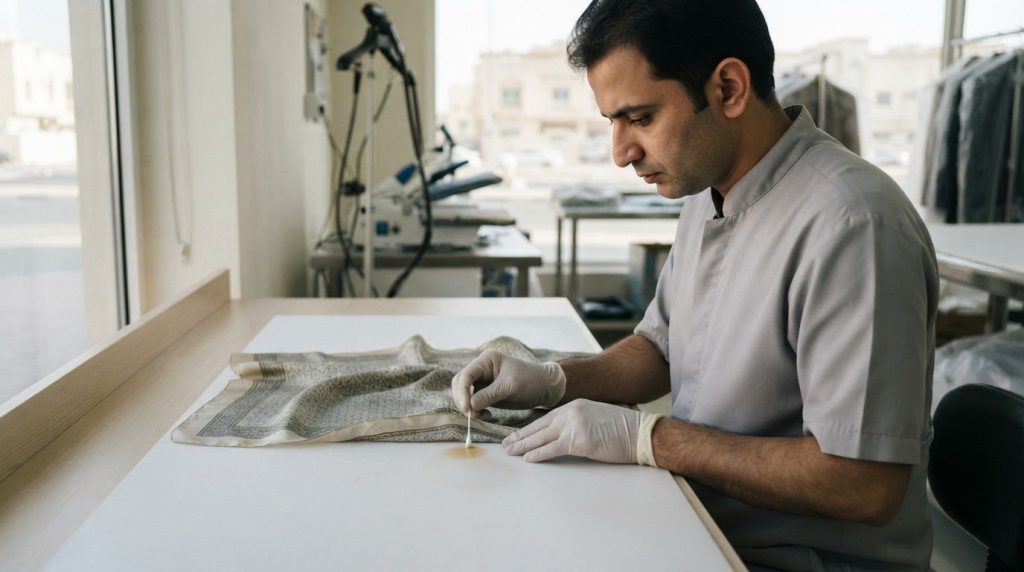
Yes, perfume can stain silk, and rubbing alcohol can damage the delicate fabric. For perfume alcohol stain removal on silk fabric, a cautious professional approach is safer than rubbing, soaking or experimenting with household products. Garments labelled “dry clean only” should be taken to a dry cleaner rather than treated at home.
A perfume alcohol stain on silk can be worrying, but the right response depends on the fabric and the mark. This guide explains what to do about a fresh stain, why vinegar and isopropyl alcohol need careful handling, and when professional cleaning is the safer choice. You’ll also learn how silk and satin differ in their care needs, so you can act promptly without risking further damage.
Key Takeaways
- Take a silk scarf with a perfume mark to a professional cleaner, especially if its care label says “dry clean only.”
- For a fresh mark, gentle blotting is safer than rubbing; friction and heat can make treatment more difficult.
- Vinegar and isopropyl alcohol aren’t interchangeable on silk. Alcohol can damage the fabric, so treatment should account for the stain and garment.
- Silk and satin need careful handling: avoid soaking or rubbing, and use a professional approach for dried or discoloured marks.
Does perfume stain silk?
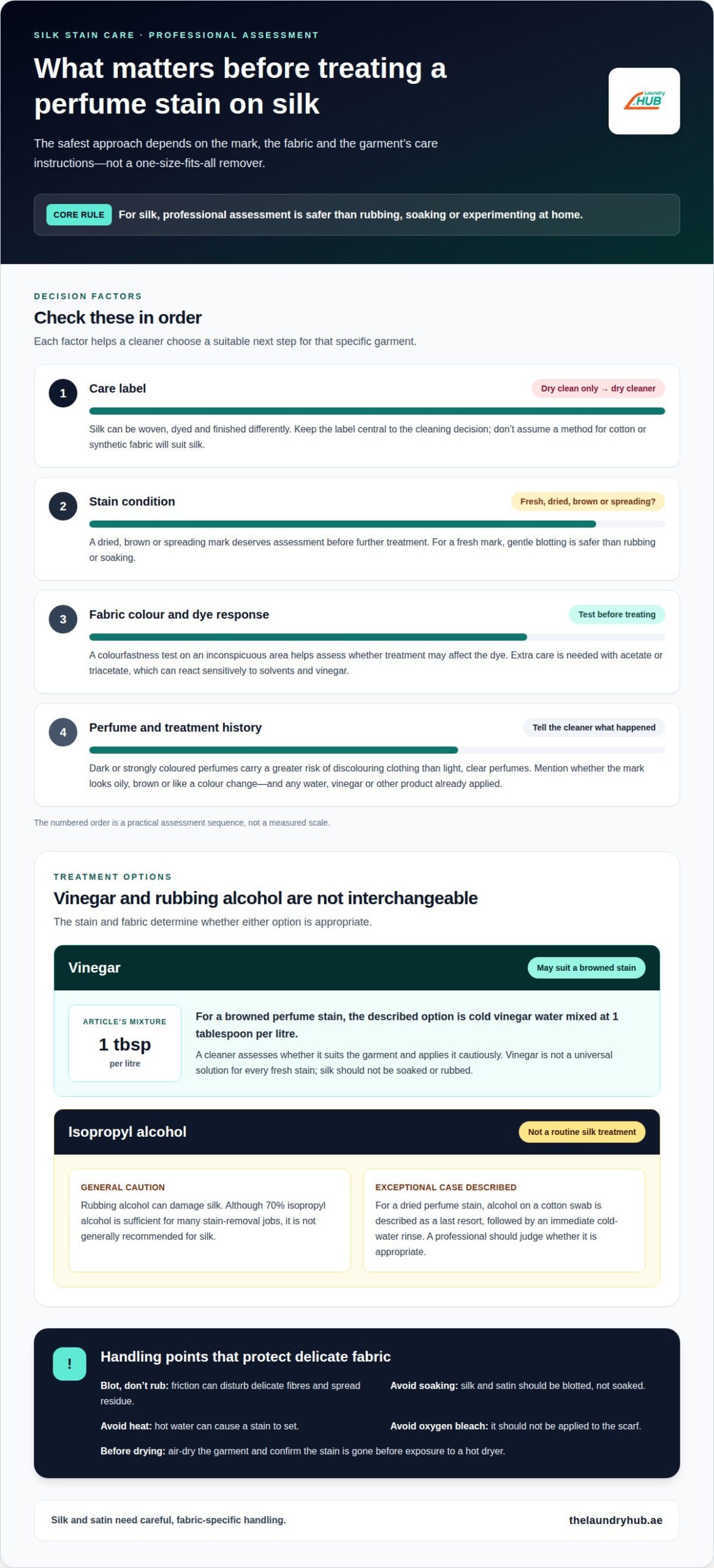
A perfume mark on silk should be assessed by a professional cleaner rather than treated at home. If the garment’s care label says “dry clean only,” take it to a dry cleaner.
- Show the cleaner the whole affected area. A silk scarf can show a mark where perfume touched the fibres, but the surrounding area may also have changed in colour. Point out where the perfume landed and whether the mark appeared immediately or later. This helps the cleaner assess the visible stain and choose an appropriate treatment for that specific garment.
- Describe the perfume and stain appearance. Dark or strongly coloured perfumes carry a greater risk of discolouring clothing than light, clear perfumes. Tell the cleaner which type was used, if you know, and whether the mark looks oily, brown or like a colour change. For example, a brown patch on a pale scarf may need a different assessment from a clear, fresh-looking spot.
- Keep the care label with the cleaning decision. Silk can be woven, dyed and finished differently, so the label helps determine suitable professional handling. A scarf marked “dry clean only” should go to a dry cleaner, not through a home wash. Don’t assume a method suitable for cotton or synthetic fabric also suits silk, and don’t apply oxygen bleach to the scarf.
- Seek professional cleaning if the mark is visible or has changed. A dried, brown or spreading stain deserves assessment before further treatment. Tell the cleaner if you’ve already applied water, vinegar or another product, since this can affect the stain’s appearance. For perfume alcohol stain removal on silk fabric, that treatment history and the scarf’s care label help guide the next step.
How professionals treat fresh perfume stains on silk
- Record the stain before treatment. A cleaner first notes where perfume landed, how recently it happened and whether the silk is coloured or patterned. The garment’s care label helps determine suitable handling. Details such as a pale scarf with a fresh, clear mark differ from a bright blouse with a coloured perfume spot. Sharing what touched the fabric helps the cleaner assess the stain without guessing.
- Blot rather than rub. For a fresh mark, a professional can gently dab with a clean cloth and cold water. Silk and satin should be blotted, not rubbed or soaked. Friction can disturb delicate fibres, while hot water can cause a stain to set. The cleaner works carefully around the mark, avoiding vigorous pressure that could spread residue into unaffected fabric.
- Test before treating the visible area. A colourfastness test on an inconspicuous part of the garment helps assess whether treatment may affect its dye. This matters for a vivid silk scarf as much as for a pale one. The cleaner can then select an appropriate approach for the specific fabric and stain, rather than applying a method designed for cotton or synthetic clothing.
- Choose a controlled cleaning method. Professional cleaning may involve targeted stain treatment followed by suitable garment care. Isopropyl alcohol should not be used casually on silk, and bleach is not a routine substitute for careful stain assessment. If a mark remains after initial treatment, the cleaner can reassess it before taking further steps. The garment should air-dry, and the stain should be confirmed gone before exposure to a hot dryer.
How professionals assess vinegar and isopropyl alcohol for silk perfume stains
No single household stain remover suits every silk garment. Professionals assess the fabric, dye and mark first. Vinegar may be appropriate for a browned stain, while rubbing alcohol can damage silk.
- Identify the stain and fabric. The cleaner checks whether the mark is fresh, dried or brown, then considers the garment’s colour and care label. This assessment matters because a treatment that works on washable clothes may harm silk. If the fabric includes acetate or triacetate, extra care is needed because these fibres can react sensitively to solvents and vinegar.
- Consider diluted vinegar only for the appropriate mark. For a browned perfume stain on silk, the described treatment is cold vinegar water mixed at 1 tablespoon per litre. A cleaner can assess whether this option suits the garment, then apply it cautiously. Vinegar isn’t a universal solution for every fresh stain, and silk shouldn’t be soaked or rubbed during treatment.
- Avoid routine use of isopropyl alcohol. Although 70% isopropyl alcohol is sufficient for many stain-removal jobs, rubbing alcohol is not generally recommended for silk because it can damage the fabric. A professional weighs that risk against the stain and the garment’s condition instead of treating alcohol as a default remover. The same caution applies to experimenting with household products.
- Reserve alcohol for exceptional cases. For a dried perfume stain, isopropyl alcohol on a cotton swab is described as a last-resort treatment, followed by an immediate cold-water rinse. A professional can judge whether that approach is appropriate before applying it. The treated area should be assessed before drying, so any residue or colour change remains visible and can be addressed.
Professional removal of perfume stains from silk and satin
For silk and satin, treatment depends on the stain’s age, the dye’s response and the fabric’s condition. Professionals assess these factors before choosing a method, rather than treating the garment like routine laundry.
-
How Professionals Treat Old or Set-In Perfume Stains on Silk
Bring the garment to a cleaner and describe any products already applied. For an old brown mark, a professional may assess glycerine followed by vinegar, allowing glycerine to sit for 30 minutes before the next step. A browned perfume stain on silk may also be treated with cold vinegar water at 1 tablespoon per litre. The cleaner avoids rubbing or soaking the fabric.
-
How Professionals Test Silk for Discoloration
Before treating the visible stain, a cleaner tests the selected method on an inconspicuous area, such as an inner seam. They check for colour transfer or changes in the silk’s appearance, then compare the test area with the untreated fabric. If the test shows a colour change, they avoid applying the same treatment to the stain.
- Match the process to the fibre. A detergent treatment with warm water may suit some washable clothes, but that doesn’t make it suitable for silk or satin. The cleaner considers the garment’s care label and construction before choosing a method. This distinction matters because a routine laundry process can affect delicate fabric differently from cotton or synthetic clothing.
- Reassess before drying. After treatment, the cleaner examines the stain and surrounding area for remaining colour or residue. The garment is air-dried, and its appearance is checked before any hot dryer is considered. Heat can set a remaining mark, so the effect of treatment should be assessed first.
For a silk or satin garment with a set-in mark, arrange professional dry cleaning with The Laundry Hub.
The Laundry Hub
The Laundry Hub offers Laundry & Dry Cleaning for garments that need professional care in Dubai. If perfume has marked a silk scarf, blouse or satin piece, professional cleaning is a sensible next step, particularly when the care label says “dry clean only.” Share what caused the stain and any products already applied, so the garment’s condition and treatment history can inform its assessment.
Delicate fabrics can react differently to stain treatments, so avoid experimenting with vinegar or alcohol before handing over a valuable garment. A fresh mark, a dried brown patch and a change in colour may each need a different assessment. The Laundry Hub provides laundry and dry cleaning for garment care, while Steam Pressing can help present a garment after cleaning.
Contact The Laundry Hub to discuss care for your perfume-marked garment.
Choose a careful next step for your silk garment
For perfume alcohol stain removal on silk fabric, consider the garment’s value, care label and stain history before taking the next step. Share those details with a professional before applying more products. This gives the cleaner useful context and helps avoid leaving treatment residue or further changing the fabric’s appearance. A measured approach is especially valuable for silk pieces you plan to wear or keep for years.
The Laundry Hub offers Laundry and Dry Cleaning, alongside Shoe & Bag Care and Curtain and carpet cleaning. These services support the care of garments and other valued household items through one provider. If your silk piece needs professional attention, contact The Laundry Hub for help. Take the next step with care, and give your garment a considered path forward.
Frequently Asked Questions
What Should a Professional Cleaner Do in the First Five Minutes?
A cleaner should limit further handling, inspect the care label and note the stain’s appearance. For a fresh perfume mark, gentle blotting with a clean cloth and cold water is a cautious first response. The cleaner should also ask what perfume was used and whether another product touched the silk. Avoid rubbing, heat and quick applications of household stain removers.
Which Treatment Method Should a Professional Cleaner Start With?
The cleaner should begin with assessment, not a strong solvent. Check the silk’s care instructions, colour and construction, then test a proposed treatment on a hidden area. For a fresh mark, controlled blotting with cold water may be considered. A dry-clean-only label, coloured perfume or delicate dye can affect which treatment is suitable.
Does perfume alcohol stain or damage silk fabric?
Yes. Perfume can leave a visible mark or discolour silk, particularly if it is dark or strongly coloured, and rubbing alcohol can damage the fabric. The stain’s appearance may depend on the perfume and the garment’s dye or finish. A pale silk scarf may show a coloured mark clearly, so don’t assume a stain is harmless just because the fabric feels dry.
How do professionals remove a perfume stain from silk safely, step by step?
A professional first reviews the care label and stain history, then examines the silk’s colour and weave. Next, the cleaner tests the selected method on a hidden area and treats the mark with controlled blotting rather than rubbing. Afterward, they inspect for remaining stain or dye change before drying. This sequence helps avoid applying a treatment blindly to the whole garment.
Should a professional cleaner blot or rinse a perfume stain on silk?
For a fresh mark, a cautious starting point is gentle blotting with a clean cloth and cold water, not rubbing or soaking. Rinsing is not a substitute for assessing the silk first, since excess moisture can affect the garment’s appearance or shape. If a specific treatment requires rinsing, the cleaner should control the water and handle the fabric carefully.
Can professionals use rubbing alcohol, vinegar, or dish soap on silk perfume stains?
Rubbing alcohol is generally avoided because it can damage silk. Vinegar may be considered for a browned mark, but it isn’t suitable for every garment. Dish soap solutions used for washable fabrics shouldn’t be assumed silk-safe: Cornell Cooperative Extension’s perfume-stain solution uses 5 ml of mild liquid hand-dishwashing detergent in about 240 ml of warm water. A cleaner assesses the silk before choosing.
